Section 1 of 13
Introduction
Introduction
2005 CDL Testing System (July 2017)
CDL Driver’s Manual COPYRIGHT © 2005 AAMVA All Rights Reserved COPYRIGHT © 2005 AAMVA. All rights reserved This material is based upon work supported by the Federal Motor Carrier Safety Administration under Cooperative Agreement No. DTFH61-97-X-00017. Any opinions, findings, conclusions or recommendations expressed in this publication are those of the Author(s) and do not necessarily reflect the view of the Federal Motor Carrier Safety Administration.
This material has been created for and provided to State Driver License Agencies (SDLAs) by AAMVA for the purpose of educating Driver License applicants (Commercial or Non-Commercial). Permission to reproduce, use, distribute or sell this material has been granted to SDLAs only. No part of this book may be reproduced or transmitted in any form or by any means, electronic or mechanical, including photocopying, recording, or by any information storage and retrieval system without express written permission from the author / publisher. Any unauthorized reprint, use, distribution or sale of this material is prohibited. Above all else, this manual and our Commercial Driver’s License (CDL) program is dedicated to improving safety on our highways. This manual provides information necessary to pass the knowledge examinations (written tests) that you will need to take in order to qualify for the CDL Learners Permit. Part Four of the manual explains the skills exam you will need to pass before the CDL is issued. The information in this manual provides general guidance and does not discuss all possible situations or circumstances contained in Federal or State laws which regulate CDL licensing. BASIC CDL REQUIREMENTS - Be 18 years of age with 1 year driving experience for driving intrastate - Be 21 years of age with at least 1 year driving experience to drive interstate commerce or to transport hazardous materials - Delaware resident - Not denied, suspended, disqualified, expired, revoked or cancelled in Delaware or any other state - Able to obtain medical certification under the Federal Motor Carrier Safety Regulations Under Part 391.41 – Physical Qualifications for Drivers - If you do not meet requirements of 49 CFR §391.41 Physical Qualifications for Drivers, you may be able to obtain a Delaware intrastate only restricted CDL medical waiver, if otherwise qualified to drive a motor vehicle (excluding transporting passengers or hazardous materials) - CDL holders must self-certify a driving status of non-excepted interstate, non-excepted intrastate, excepted interstate or excepted intrastate. TYPES OF CDL CDL CLASS A - Required for any combination of vehicles with a Gross Vehicle Weight Rating (GVWR) of 26,001 pounds or more, provided the GVWR of the towed unit(s) is in excess of 10,000 pounds. CDL CLASS B – Required for any single vehicle with a Gross Vehicle Weight Rating (GVWR) of 26,001 or more pounds, or any such vehicle towing a vehicle not in excess of 10,000 pounds. CDL CLASS C - Required for any single vehicle or combination of vehicles with a Gross Vehicle Weight Rating (GVWR) of less than 26,001 pounds or any such vehicle towing a vehicle with a GVWR not in access of 10,000 pounds that is either designed to transport 16 or more passengers, including the driver, or used in the transportation of hazardous materials which requires the vehicle to be placarded. Endorsements H Hazardous Material X Hazmat/ Tanker N Tanker P Passenger (Class A, B & C) S School Bus T Double/Triples Z Taxi Cab Restrictions B Corrective Lens C Mechanical Air D Prosthesis E Automatic Transmission F Outside Mirror G Daylight Only K CDL Intrastate Only L CMV without Airbrakes M No Class A Passenger N No Class A / B Passenger O No tractor trailer CMV P No passenger in CMV V Medical Variance X No Cargo Tank Vehicle Y Sex Offender Z No Full Air Brake PROCEDURES FOR OBTAINING A CDL First you will complete and sign an application for the CDL. By signing that application you certify you are providing correct personal information and an accurate driving history and you also consent to submit to chemical tests for controlled substances. Next you will take the necessary knowledge exams to qualify for the proper CDL. Section 1.1 on Page 1- 6 explains which written exams you will take for the vehicle you intend to drive. Once the appropriate knowledge exams are passed, a fee of $5.00 will be assessed and you will be issued a Commercial Learners Permit (CLP) which will allow you to drive a Commercial Motor Vehicle (CMV), accompanied by another licensed CDL driver. You may only drive the type vehicle for which you have tested and only with a CDL driver qualified in the same type CMV. You must hold your CLP for a minimum of 14 full days before you are able to perform the CDL skills exam. Finally, you will be scheduled, at your request, for the CDL skills exam. The three parts of the skills exam, (Pre-Trip Inspection, Basic Control Skills and On Road Driving), are fully described in Part Four of this manual. You should arrange for an appointment for the skills exam with the motor vehicle office or online. To arrange for a skills exam appointment please see the next page. COMMERCIAL DRIVER’S MANUAL DELAWARE - VERSION 4.0
(July 2017) (Please cancel your skills test appointment if you experience problems or need to re-schedule) For the skills exam, you are required to provide and test in a vehicle representative of the vehicle you will be driving. Make sure the vehicle is a CMV of the type you need (Class A, B or C), and the vehicle has air brakes if you need the airbrakes qualification. If the vehicle is not safe (cannot pass a Motor Vehicle inspection), is not insured, or not registered, Motor Vehicle examiners cannot accompany the driver in the vehicle; and, therefore, the examiner cannot administer the skills exam. You and/or the owner will be required to provide the vehicle’s registration, insurance, trailer registration when applicable and the accompanied driver’s license. SPECIAL CASES: FIREFIGHTERS, FARMERS, SCHOOL BUS DRIVERS AND HAZMAT DRIVERS Delaware has a special Non-CDL to identify Farmers and Firefighters who operate CMV’s under the CDL waiver provisions. The Non- CDL may not be used in interstate commerce and may not be used in for-hire situations. For further information on the Non-CDL contact a motor vehicle office or visit our website at www.dmv.de.gov. All Delaware School Bus Drivers are required to have a CDL and meet additional Delaware Department of Education (DOE) school bus training and medical requirements. Once all CDL and DOE requirements are met, DMV may issue a CDL license with a P and an S endorsement as well as an M or N restriction, contingent upon the vehicle class. The Federal Transportation Security Administration (TSA) and the U.S. Department of Transportation have issued rules to secure the transport of hazardous materials, including explosives. The rules require a safety threat assessment on commercial drivers certified to transport hazardous materials (hazmat) and all commercial drivers applying for a hazmat endorsement. The security threat assessment includes the collection of an individual’s fingerprints, and verification of United States Citizenship, immigration eligibility or permanent legal presence in the United States. After May 31, 2005, no CDL with hazmat endorsement may be issued unless the applicant has first undergone the security threat assessment and obtained clearance from the TSA. All applicants will be required to go to their nearest DMV to take a written test for the hazmat endorsement, show proof of citizenship (U.S. birth certificate or applicable immigration papers), and pay the required $5 endorsement fee. All hazmat applicants must also pay a fee directly to TSA approved agent for a criminal background check, complete a TSA application, and make an appointment to have their fingerprints taken by a TSA agent. Delaware's TSA agent located in Dover - Bennett Security and in New Castle- American Driver Training Academy. For more specific instructions, please obtain a hazmat information packet at a motor vehicle office or visit our website at www.dmv.de.gov. SUSPENSION/DISQUALIFICATION/REVOCATIONS As professionals, commercial drivers are held to higher standards. Section 1.3 on page 1-8, of this manual explains when the CDL must be disqualified. Please review this section very carefully and pay close attention to how these specified violations will affect your CDL driving privileges. You should also know that all states are required to forward CMV violations back to the driver’s home state. The Delaware Division of Motor Vehicles is very serious about CMV violations, primarily because of the importance of maintaining public safety, but also because States are obligated to follow federal CDL regulations. To not abide by these sanctions not only violates Delaware law, but risks federal funds needed to maintain our highways, and jeopardizes the nationwide qualifications of Delaware CDL drivers. A national “one license per driver concept” requires all drivers to have only one driver’s license, and because of this concept driving privileges for regular vehicles is also contained in your CDL. This also means that actions impacting your CMV privileges may also affect your regular vehicle privileges, and actions in your private vehicle may also affect your CDL privileges. It is important to understand that violations in your private vehicle, violations in your commercial vehicle, or a combination of violations in both vehicles may cause an unprofessional driver to lose his/her CDL. If your driver’s license is suspended, revoked, or disqualified, both your CDL privileges and your regular automobile privileges will be lost. If you lose your license all CDL testing will have to be repeated. This section is not designed to explain or cover all portions of the law, but rather to simply explain what may happen to the very few of our Delaware Commercial Vehicle Drivers who repeatedly violate the laws of Delaware and other States. Any single traffic violation involving alcohol or drugs will result in severe penalties - no exceptions. SKILLS TEST APPOINTMENTS: Delaware City (302) 832-5176 Dover (302) 744-2515 Georgetown (302) 853-1003 Wilmington (302) 434-3220
C O N G R A T U L A T I O N S First - be safe, and then - be proud, you deserve it! Less than 5% of Delaware drivers are qualified to drive commercial vehicles. You inherit a reputation as a guardian and protector on our country’s highways, and you represent the better drivers of the State of Delaware wherever you travel. Welcome to this very select group, and call us at (302) 744-2572 if we can do anything to improve safety on our highways. No person shall drive a motor vehicle on a public street or highway of this State if he/she does not have a license to operate it. Failure to have the proper license or endorsement may lead to, at a minimum, fines and/or the loss of driving privileges. A person who fails to provide identification or who fails to explain his/her actions to the satisfaction of the officer, may be detained, further questioned, and investigated. A detention does not mean a person is under arrest. At the end of the detention period, which may not exceed two hours, the person will either be released, or arrested and charged with a crime. You may refer to 11 Del. C. §1902, 21 Del. C. §2701 and 21 Del. C. §2721 for additional information. The role and procedures of a law-enforcement officer in general and during a traffic stop An officer will initiate a traffic stop by giving a visible or audible signal, which could include using his/her emergency lights or sirens. The officer may approach your vehicle from either the driver or passenger side, identify him/herself and his/her agency, and state the reason for the traffic stop. Many times the officer will ask the driver if he/she has any reason for committing the traffic violation. Driving a motor vehicle is a privilege, not a right. To comply with the law both the operator and the vehicle they are driving need to satisfy certain requirements. One of the roles of an officer is to enforce those safety requirements. The officer will ask for your driver license, proof of insurance, and vehicle registration. The officer may ask a series of questions. The officer may return to his/her vehicle to conduct inquires. You and your passengers should remain in your vehicle at all times unless instructed otherwise by the officer. What to Do and Expect When Stopped by Law Enforcement Law enforcement officers conduct traffic stops because they observe a traffic violation or are conducting a police investigation. Being stopped by a law enforcement officer can be a stressful experience but knowing what to do during the stop will help ensure your safety, the safety of other motorists, and the safety of the officer. When you see emergency lights behind you, stay calm, activate your turn signal, and pull off or to the side of the roadway as soon and safely as possible. When pulling over for an emergency vehicle, movements should be made to the right side of the roadway, whenever possible. Turn off the ignition and radio, and stay in your vehicle unless directed by the officer to exit. Keep your hands on the steering wheel so they are easily observable. Ask your passengers to remain calm and to stay in the vehicle while keeping their hands in plain view as well. Give the officer your full attention. Cell phones and mobile devices should not be used by you or any of your passengers. Do not make sudden moves or search for your driver’s license or vehicle documents – wait for the officer to give you instructions. If you have a weapon(s) in the vehicle, inform the officer upon first contact. If it’s nighttime, the officer may direct a spotlight at your vehicle once stopped. To assist with visibility, turn on your interior lights as soon as you stop to help the officer see inside your vehicle. The officer will usually explain why they stopped you and may ask you questions about your trip. If the officer isn’t in uniform they will show you their law enforcement credentials or you may ask to see them. Follow all instructions the officer gives you or your passengers. The officer may ask to see your driver license, proof of insurance, and vehicle registration. If the documents are out of your reach, tell the officer where they are before you reach for them. If you have questions, politely ask for clarification. If the officer asks you to exit the vehicle, stay safely away from traffic and keep your hands in plain view. When the officer completes their interaction with you they may issue a warning or a traffic ticket which may include a fine. The officer will typically explain whatever action is being taken. If you have questions, respectfully ask the officer to clarify. If you disagree with the officer’s decision to issue a traffic ticket, don’t prolong the contact by arguing with the officer. If you wish to contest the ticket, you will have the opportunity to explain your point of view of what happened in court. Your acceptance of a traffic ticket is not an admission of guilt. If you believe the officer acted inappropriately, document the officer’s behavior and report it to the officer’s agency in a timely manner. The name of the officer and law enforcement agency will be on the ticket or you may ask the officer to provide this information. The enforcement of traffic laws is an effective tool in changing unsafe driving behavior and reducing crashes. If you receive a warning or a ticket for a traffic violation, its purpose is to deter illegal and/or unsafe behavior. Good communication from all involved parties can make a traffic stop a safe experience for all parties involved. How and where to file a compliment on behalf of or a complaint against a law-enforcement officer You should contact the officer’s agency via means determined by such agency. Most agencies have a website with contact information. It is the goal of law enforcement to protect the public and conduct traffic stops in a manner that protects the safety of everyone involved. Your cooperation with law enforcement is the best way to ensure that your safety, and that of others, is not compromised during the stop. WHAT TO DO AND EXPECT WHEN STOPPED BY LAW ENFORCEMENT An individual’s constitutional and other legal rights during a traffic stop In accordance with 11 Del. C. §1902 an individual must provide his/her name, address and an explanation as to why he/she is driving on the roadway and where he/she is going. Similarly, passengers in a vehicle must also provide their information and/or exit the vehicle, if requested to do so by the officer. An individual may ask the officer to identify them self and the agency that employs him/her. An individual’s vehicle may be searched on-scene if consent is provided to the officer to do so, if the officer believes he/she has probable cause to do so, or as part of an inventory assessment of a vehicle that is being towed. During roadside investigations a person does not have a right to an attorney; however, that right will present itself later in the process. Laws regarding questioning and detention by a law-enforcement officer, proof of identity and consequences for failure to comply The Federal Motor Carrier Safety Improvement Act of 1999 (MCSIA) requires a commercial driver license (CDL) holder to be disqualified from operating a commercial motor vehicle (CMV) when convicted of certain types of moving violations in a private passenger vehicle or in a CMV. No CDL driving authority is permitted when any driving privileges are suspended, revoked, disqualified, denied, or cancelled. This document provides an overview of the MCSIA disqualifying violations and is meant to only cover major elements of Federal and Delaware law and is subject to change.
MAJOR VIOLATIONS • Administrative per se (probable cause) for operating a CMV with a blood alcohol concentration at or above .04. • Administrative per se (probable cause) for operating a motor vehicle with a blood alcohol concentration at or above .08. • Operating a CMV while your blood alcohol concentration is .04 or higher. • Operating a motor vehicle under the influence of alcohol. • Operating a motor vehicle under the influence of a controlled substance. • Refusal to take an alcohol test. • Leaving the scene of an accident. • Using a motor vehicle to commit a felony (not a traffic offense). • Causing a fatality through negligent operation of a CMV. • Driving a CMV when as a result of prior violations committed while operating a CMV, the driver’s license is revoked, suspended, disqualified, canceled, denied, barred, or withdrawn. • Using a vehicle in the commission of a felony involving controlled substances. If convicted of a Major violation in a private passenger vehicle or in a CMV, your CDL will be disqualified for one year for the first offense. Your CDL will be disqualified for three years if the first Major violation occurs while operating a CMV that is placarded for hazardous materials. If convicted of a second Major violation in a private passenger vehicle or in a CMV, your CDL will be disqualified for life. Additionally, your CDL will be disqualified for life if convicted of using a CMV to commit a felony involving controlled substances.
SERIOUS TRAFFIC VIOLATIONS • Excessive speeding (15 mph or more above the posted limit). • Reckless driving. • Improper or erratic lane changes. • Following a vehicle too closely. • Violating state or local law relating to motor vehicle traffic control arising in connection with a fatal accident. • Driving a CMV without obtaining a CDL. • Driving a CMV without a CDL in the driver’s possession. • Driving a CMV without the proper class of CDL and/or endorsements. If convicted of two Serious Traffic violations in a CMV within any three-year period, your CDL will be disqualified for 60 days. Your CDL will be disqualified for 120 days if convicted of three or more Serious Traffic violations in a CMV within any three-year period. Additionally, if convicted of a Serious Traffic violation in a private passenger vehicle and your private passenger vehicle driving privileges are suspended as a result thereof, your CDL may also be disqualified accordingly. VIOLATING OUT-OF-SERVICE ORDERS If convicted of Violating an Out-Of-Service Order in a CMV, your CDL will be disqualified for no less than 180 days or more than 1 year for a first offense. If convicted of Violating an Out-Of-Service Order while transporting hazardous materials in a CMV, your CDL will be disqualified for no less than 180 days or more than 2 years for a first offense. Your CDL will be disqualified for no less than one year or more than 5 years for a second offense within any ten-year period. Your CDL will be disqualified for no less than 3 years nor more than 5 years for a second offense while transporting hazardous materials within any ten-year period. Your CDL will be disqualified for no less than 3 years or more than 5 years for three or more offenses within any ten-year period. Disqualification periods for violating an Out-of-Service Order will be determined by the court. RAILROAD-HIGHWAY GRADE CROSSING VIOLATIONS Railroad-Highway Grade Crossing violations include violation of a federal, state or local law or regulation pertaining to the following six offenses: • For drivers who are not required to always stop, failing to stop before reaching the crossing if the tracks are not clear. • For drivers who are not required to always stop, failing to slow down and check that the tracks are clear of an approaching train. • For drivers who are always required to stop, failing to stop before driving onto the crossing. • For all drivers failing to have sufficient space to drive completely through the crossing without stopping. • For all drivers failing to obey a traffic control device or the directions of an enforcement official at the crossing. • For all drivers failing to negotiate a crossing because of insufficient undercarriage clearance. If convicted of a Railroad-Highway Grade Crossing violation in a CMV, your CDL will be disqualified for no less than 60 days for the first offense. Your CDL will be disqualified for no less than 120 days for a second offense within any three-year period. Your CDL will be disqualified for no less than 1 year for a third offense within any three-year period. IMPORTANT INFORMATION FOR CDL HOLDERS
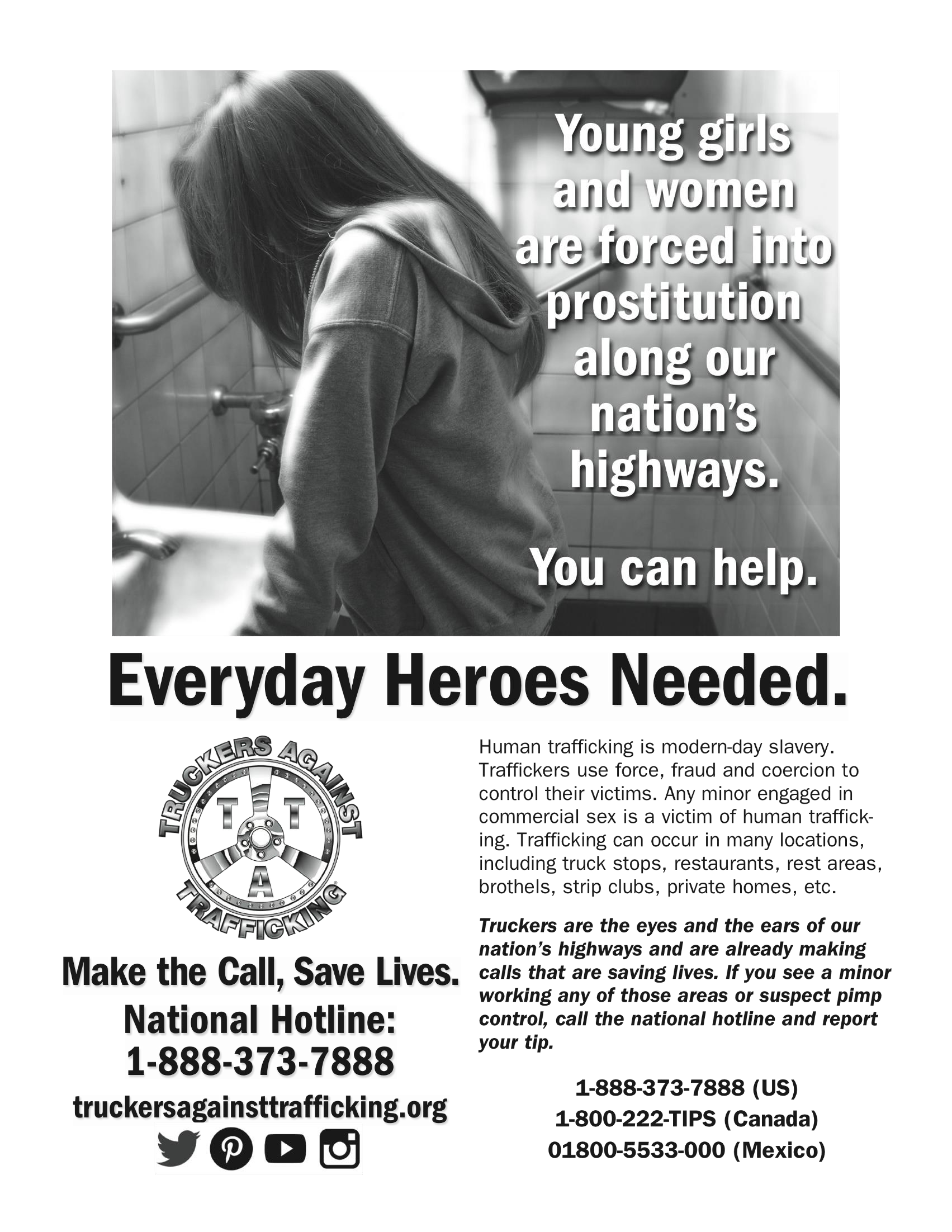

















In January 2015, an RV pulled into a truck stop in Virginia. Observant professional truck driver Kevin Kimmel recognized suspicious activity around that RV, which had pulled back by the truck line, and decided something was off. Instead of turning a blind eye, he made a call that brought law enforcement out to the scene within a few minutes. After interviewing the occupants of the vehicle, they discovered that a young woman, 20 years old, had been kidnapped from Iowa two weeks prior. She had been beaten, raped, her whole body burned by instruments heated on the RV stove, branded and starved. She was being sold by her traffickers, Laura Sorenson and Aldair Hodza, through sex ads on Craigslist, where men were purchasing her and then arriving at the RV to rape her. She was dying from malnutrition and the torture she was subjected to … had the call not been made that brought law enforcement out to that truck stop, doctors said she would have died within the next few days. Now a recovering survivor, this young woman calls Kimmel her guardian angel. He calls himself a Trucker Against Trafficking. Truckers Against Trafficking is a non-profit organization that has been working with the trucking industry since 2009 to provide the needed training and tools to enable members of the industry to both recognize human trafficking when they see it happening and to know what actions to take to enable law enforcement to effectively fight this crime. Through this training and these tools, truckers are becoming Everyday Heroes like Kevin Kimmel, who was also named TAT’s 2015 Harriet Tubman Award winner.

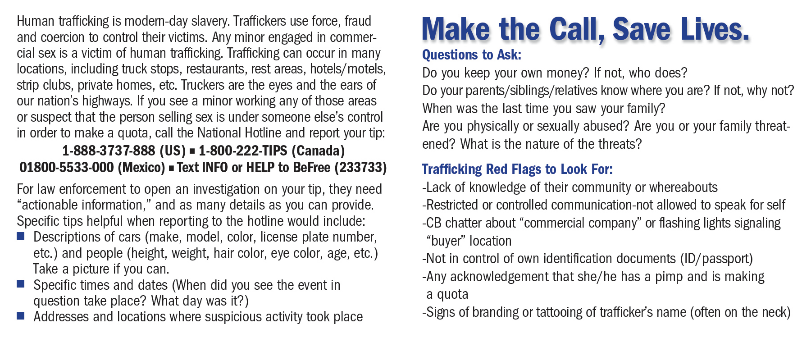
One of the tools TAT provides is a wallet card with red flags to look for, questions to ask if you suspect someone is a victim and actionable information to report. This wallet card is available by App, from the appropriate App Store, on all smart phones, whether Android, iPhone or Windows format, as well as by emailing tat.truckers@gmail.com, for a version to carry in your wallet. Additionally, TAT provides a powerful, 26-minute training video on its website (www.truckersagainsttrafficking.org), which, when watched along with taking and passing a short test, certifies drivers as TAT-Trained, a designation which can go on your resume. Because professional drivers often find themselves in locations frequented and exploited by human traffickers, they are in a unique position to recognize the signs of human trafficking and to make the call that can lead to victim recovery and perpetrator arrests. Get your wallet card today. Be an Everyday Hero! Make the call (1-888-3737-888); save lives!

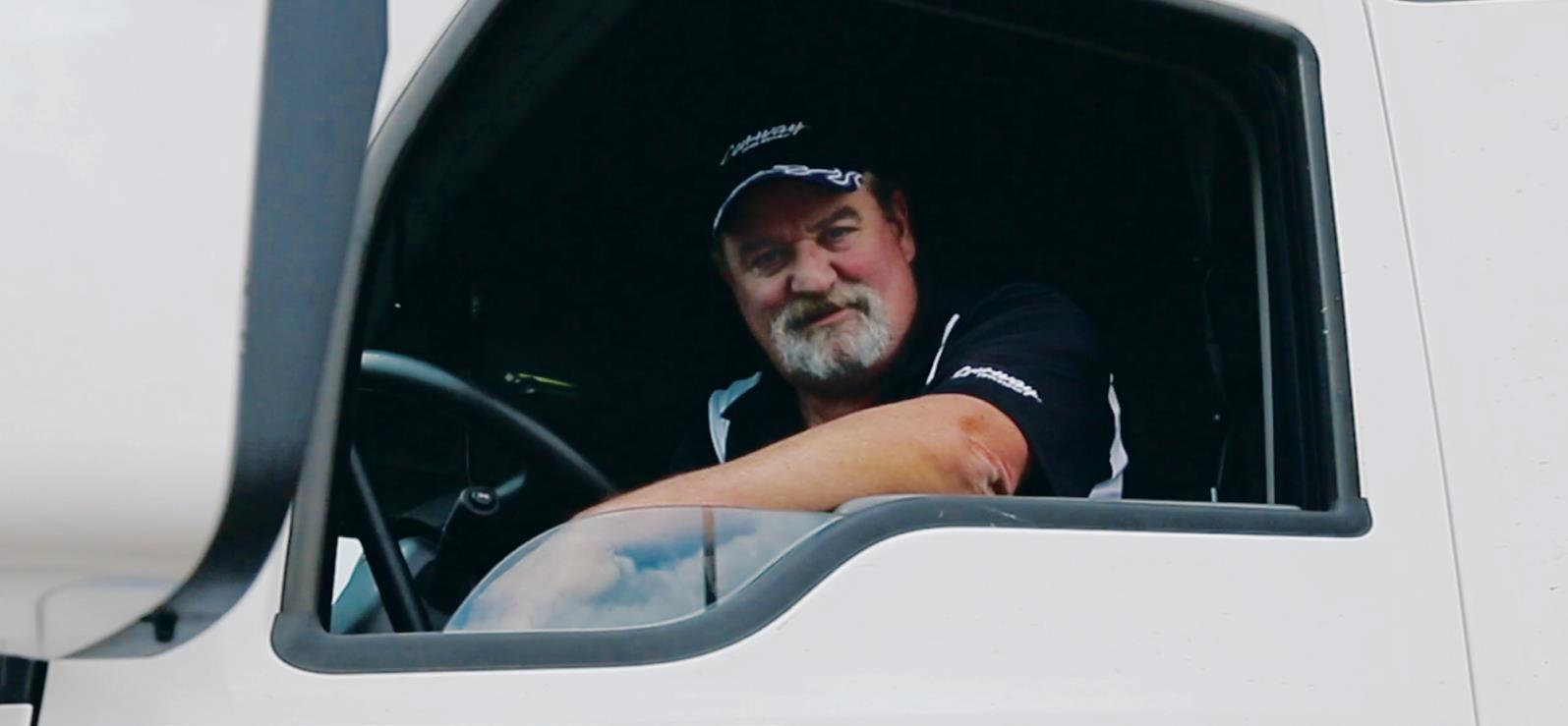






Table of Contents
Introduction ......................................................................................................................................... 1-1
Driving Safely ................................................................................................................................... 2-1
Transporting Cargo Safely ............................................................................................... 3-1
Transporting Passengers Safely ............................................................................... 4-1
Air Brakes ............................................................................................................................................. 5-1
Combination Vehicles ............................................................................................................ 6-1
Doubles and Triples ................................................................................................................. 7-1
Tank Vehicles .................................................................................................................................. 8-1
Hazardous Materials ................................................................................................................ 9-1
School Bus ........................................................................................................................................ 10-1
Vehicle Vehicle Inspection ............................................................................................. 11-1
Basic Vehicle Control Skills Test ............................................................................ 12-1
On-Road Driving ......................................................................................................................... 13-1