Section 1 of 13
Introduction
Introduction


GET NEWS AND UPDATES AT: http://tpr.fmcsa.dot.gov
PROVIDER REGISTRY
COMING FEBRUARY 7, 2022 Once operational, the FMCSA Training Provider Registry will retain a record of which applicants for a commercial driver’s license (CDL) have completed the new training and certification process outlined in the Entry-Level Driver Training (ELDT) regulations. For more information on the ELDT requirements, see page 2.
What is the Training Provider Registry?



The Training Provider Registry is a web system that will help CDL applicants connect with qualified training providers to get the training they need to safely operate commercial motor vehicles (CMVs). It will also improve safety on our Nation’s roads by receiving, retaining, and relaying a record of CDL applicants that have successfully completed the required entry-level driver training. FMCSA has established an interim final rule that establishes February 7, 2022 as the launch date of the Training Provider Registry. On this date, anyone subject to the ELDT requirements must comply with them.
Who will access information from the Training Provider Registry?
Entry-level drivers will SEARCH for a training provider using the list on the Training Provider Registry website. Registered training providers* will SUBMIT driver certification information to FMCSA after a driver successfully completes training. States will VERIFY a driver’s completion of required training using data made available by the Training Provider Registry before administering relevant tests.
TRAINING
*When registering, training providers must self-certify that they meet all requirements in ELDT regulation requirements. Drivers do not need to register for the Training Provider Registry. Only training providers will register and provide information to the registry. •Obtain a Class A or Class B CDL for the first time •Upgrade an existing Class B CDL to a Class A CDL •Obtain a school bus (S), passenger (P), or hazardous materials (H) endorsement The requirements only apply to individuals who obtain a CDL or an S, P, or H endorsement on or after February 7, 2022. Any individual currently exempt from taking a skills test to obtain a Class A or Class B CDL, or S or P endorsement, is not subject to ELDT requirements.
What types of training must entry-level drivers complete? The Training Provider Registry ensures that entry-level drivers receive training and demonstrate proficiency in the following areas:
THEORY TRAINING | BEHIND-THE-WHEEL (BTW) TRAINING
• Lectures, demonstrations, computer-based, online learning, etc. • May use a simulator • No minimum number of hours; must score at least 80% on assessment • Training topics include: Basic Operation, Safe Operating Procedures, Advanced Operating Practices, Vehicle Systems and Reporting Malfunctions, and Non-Driving Activities (e.g., Hours of Service) | • Actual operation of a CMV • Takes place on a range or public road • May not use simulator to meet requirements • No minimum number of hours, training provider will determine driver’s proficiency • Basic vehicle control skills and mastery of basic maneuvers
How does the Training Provider Registry support the ELDT Program?
The ELDT regulations will save lives by: The Training Provider Registry will be a critical piece of the Entry-Level Driver Training Program. By receiving and retaining driver certification information from training providers and relaying it to States, the Training Provider Registry will ensure that the requirements of the Entry-Level Driver Training (ELDT) regulations are met. •Ensuring that only qualified drivers receive a CDL, upgrade, or endorsement •Setting a national baseline for entry-level driver training •Identifying standards that training providers must meet Who is considered an entry-level driver?

Entry-level CMV operators in interstate and intrastate commerce who are applying to: Which drivers are not subject to the ELDT requirements? A CDL applicant with a valid commercial learner’s permit (CLP) issued before February 7, 2022, is not subject to the ELDT requirements as long as the applicant obtains a CDL before his or her CLP expires.

•Giving States information they need at critical safety checkpoints
Attention Commercial Drivers
Commercial Driver’s License Drug and Alcohol Clearinghouse The Clearinghouse is a secure online database that provides FMCSA and employers the ability to identify real-time drivers who are prohibited from operating a CMV based on DOT drug and alcohol program violations and ensure that such drivers receive the required evaluation and treatment before operating a CMV on public roads. Specifically, information maintained in the Clearinghouse enables employers to identify drivers who commit a drug or alcohol program violation while working for one employer, but who fail to subsequently inform another employer as required by current regulations. Records of drug and alcohol program violations remain in the Clearinghouse for five years, or until the driver has completed the return-to-duty process, whichever is later. The Clearinghouse contains only violations that occurred on or after the rule’s implementation date of January 4, 2020. For additional information, visit the Clearinghouse website at: https://clearinghouse.fmcsa.dot.gov "No Show" Examination Fee (Minnesota Statues, section 171.13) Effective November 1, 2021, if an applicant fails to appear for a skills (road) test appointment, or fails to cancel the appointment within 24 hours of the appointment time, a $20 fee will be added to the application fees. Part A Minnesota Commercial Driver’s License Requirements ............................................................................... 1 Class of Licenses ........................................................................................................................ 1 Endorsements and Restrictions ................................................................................................... 2 Commercial Driver’s License Tests .............................................................................................. 3 Medical Requirements ................................................................................................................. 6 General Information ..................................................................................................................... 9 Information Directory .................................................................................................................................... 15 Minnesota Trucking Regulations ................................................................................................................. 16 Part B Minnesota School Bus Driver’s Handbook...................................................................................................19 AAMVA Commercial Driver License Manual Introduction ............................................................................................................................... 1-1 Driving Safely ........................................................................................................................... 2-1 Transporting Cargo Safely ........................................................................................................ 3-1 Transporting Passengers Safely ............................................................................................... 4-1 Air Brakes ................................................................................................................................. 5-1 Combination Vehicles ............................................................................................................... 6-1 Doubles and Triples .................................................................................................................. 7-1 Tank Vehicles ........................................................................................................................... 8-1 Hazardous Materials ................................................................................................................. 9-1 Vehicle Inspection ................................................................................................................... 10-1 Basic Vehicle Control Skills Test ............................................................................................. 11-1 On-Road Driving ..................................................................................................................... 12-1 *To determine what sections to study, see chart on page 1-2 This manual is a summary of Minnesota’s commercial driver’s license requirements. For complete standards, consult Minnesota state statutes and rules. This document is not a proper legal authority to cite in court. For more information on Minnesota driving laws and rules for all drivers, refer to the Minnesota Driver’s Manual. This manual is printed by permission of the Minnesota Department of Public Safety. This Commercial Driver’s Manual is prepared by the Division of Driver and Vehicle Services with permission of the Minnesota Department of Public Safety. This information can be made available in alternative format to individuals with disabilities. For assistance, call (651) 297-3298 or TTY(651) 282-6555. Form Number PS30002-33 (01/2022) Table of Contents Minnesota Commercial Driver’s License Requirements The Commercial Motor Vehicle Safety Act of 1986 requires each state to meet the same minimum standards for commercial driver licensing. You must have a commercial driver’s license (CDL) to operate any of the following commercial motor vehicles (CMV) in Minnesota: A combination of vehicles in which the gross combination weight (GCW) is more than 26,000 pounds and the towed unit has a gross vehicle weight (GVW)* of more than 10,000 pounds — Minimum age is 18** • A single vehicle with a GVW exceeding 26,000 pounds — Minimum age is18.** • A vehicle designed to transport more than 15 passengers, including the driver — Minimum age is 18.** • Any size vehicle that requires hazardous materials placards — in most cases, you must be 21 years of age to transport hazardous materials. *** • Any size vehicle outwardly equipped and identified as a school bus — Minimum age is 18. *Minnesota law defines gross vehicle weight (GVW) as the greater of: The actual weight of the vehicle or combination of vehicles plus the weight of the load, or the manufacturer's gross vehicle weight rating (GVWR). **The minimum age listed is that at which you may apply for a Minnesota CDL. State and federal motor carrier regulations may set different age limits for operating a CMV. ***A driver of a motorized tank truck vehicle having a capacity of less than 3,500 gallons, who is engaged in the intrastate transportation of petroleum products, or employees of fertilizer or agricultural chemical retailers that transport agricultural chemicals directly from the retailer location to a farm, must be at least 18 years of age. Drivers using these exceptions must operate exclusively within Minnesota. Contact the Minnesota Department of Transportation (MnDOT), Office of Motor Carrier Services for complete information. Interstate transportation refers to trade, traffic, or transportation between: • A state and another state or country, or • Two places in a state on a route that goes through another state or country, or • Two places in a state as part of trade, traffic, or transportation originating or terminating outside the state Intrastate commerce refers to any trade, traffic, or transportation that occurs entirely within the state of Minnesota and that is not interstate or foreign commerce. Intrastate transportation refers to transportation that does not involve interstate travel. Commercial Motor Carrier Requirements If you operate any class of vehicle as an employer or employee, you may be subject to commercial motor carrier requirements. This includes driving single unit and combination vehicles of over 10,000 pounds GVW (such as construction vehicles) and vehicles used to deliver packages and other articles. Also included are vehicles designed or used to transport more than eight passengers (including the driver) for compensation. The requirements may include the need to possess a valid U.S. Department of Transportation (DOT) medical examiner's certificate, and restrictions on the number of hours you may drive. There may also be vehicle maintenance, insurance, and inspection requirements. For additional information, contact the State Patrol at (651) 405-6196 or the MnDOT Office of Freight and Commercial Vehicle Operations at (651) 215-6330 or visit their website at http://www.dot.state.mn.us/cvo/ . Commercial Driver’s License Classes Class A — Any vehicle towing a unit of more than 10,000 pounds GVWR with a gross combination weight rating (truck plus trailer) over 26,000 pounds.
Part A:
Class C — A single-unit vehicle, 26,000 pounds GVWR or less, with one or more of the following endorsements: • Hazardous materials • Passenger • School bus (with passenger endorsement) Your license may be restricted to the size and type of vehicle you use for the road test. Unless the CMV used for testing has air brakes, you will be restricted to driving vehicles without air brakes, even if you passed the air brake knowledge test. Endorsements and Restrictions Additional testing and fees are required to add endorsements or remove restrictions from your CDL. Adding school bus and passenger transport endorsements requires a road test in an appropriate vehicle. To renew a hazmat or school bus endorsement, you need to retake the knowledge test. The knowledge test is not required to renew licenses with other endorsements. In order to renew or upgrade your driver’s license with school bus, hazmat or other endorsements, you must pass a written test for each endorsement. Endorsements: Restrictions: (H)Hazardous Materials* (E) Automatic Transmission CMV (N) Tank Vehicle (K)Intrastate only (P)Passenger Transport (L) Vehicles without airbrakes (S)School Bus (M)No Class A passenger bus (T)Doubles/Triples (N)No Class B passenger bus (X)Tanker and Hazardous Materials (O) No Tractor-trailer CMV (P) No passengers in CMV bus (V)FMCSA waiver (W)Buses less than 24 passenger capacity (X)No cargo in CMV tank vehicle (Z) Air over hydraulic brake system *See page 11 for more information about the HazMat endorsement. Fees for Commercial Driver's License (CDL) Fees listed are for both standard and REAL ID compliant driver’s licenses. Enhanced driver’s licenses include an additional $15.00 fee. Over 21: Under 21 (Intrastate only): Class A $51.00 Class A $31.00 B $43.00 B $43.00 C $36.00 C $36.00 Class A, B, or C instruction permit ................................................................................... $10.50 Examination fee for each endorsement ........................................................................... $2.50 School bus physical processing fee – original and renewal application .......................... $4 Motorcycle endorsement renewal fee .................................................................................... $17 Enhanced license fee (in addition to regular license fee) ................................................ $15 Duplicate license fee ........................................................................................................ $17 Total license fee includes additional fees per Minnesota Statutes, section 171.06, subdivision 2. Retesting fee: Third and subsequent knowledge test (after failing first two) .................... $10 Retesting fee: Third and subsequent road/skills test (after failing first two) ...................... $20 No Show Fee (road/skills test) ......................................................................................... $20 Class B — A single-unit vehicle that is over 26,000 pounds GVWR. • For a passenger endorsement, the skills (road) test must be passed in a bus with a GVWR greater than 26,000 pounds and a passenger capacity of more than 15, including the driver. • For a school bus endorsement, the skills test must be passed in a school bus with a GVWR greater than 26,000 pounds and a passenger capacity of more than 15, including the driver.
To add endorsements to an existing CDL, you must pass the appropriate tests and apply for a duplicate license. Adding school bus, passenger or motorcycle endorsement requires a road test in an appropriate vehicle. You have up to 30 days after becoming a Minnesota resident to transfer your previous home state CDL to a Minnesota CDL. • Drivers operating an authorized emergency vehicle, as defined in Minnesota Statutes, section 169.011, subdivision 3,whether or not in excess of 26,000 pounds gross vehicle weight. • Drivers operating all farm trucks if the farm truck is: o Controlled and operated by a farmer, including operation by an immediate family member or an employee of the farmer. o Used to transport agricultural products, farm machinery, or farm supplies, including hazardous materials, to or froma farm. o Not used in the operations of a common or contract motor carrier as governed by Code of Federal Regulations, title 49, part365. o Used within 150 miles of the farm. • Drivers operating a recreational vehicle as defined in section 168.002, subdivision 27 that is operated for personal use. • Backup snowplow drivers who are operating a commercial motor vehicle for the purpose of removing snow or ice from a roadway by plowing, salting, or sanding if the person: o Is an employee of a local unit of government with a population of 3,000 or less. o Is operating within the boundaries of the local unit of government. o Holds a valid Class D driver’s license. o Except in the event of a lawful strike, is temporarily replacing the employee who normally operates the vehicle but either is unable to operate the vehicle or is in need of additional assistance due to a snow emergency as determined by the local unit of government. Commercial Driver's License Tests Knowledge Tests. You will take one or more CDL knowledge tests, described later in this manual, depending on class of license and endorsements. The knowledge test is offered in English, on paper or on a computer. Headphones are available to allow you to hear the questions as you read them. You may attempt each knowledge test once per day. You must be at least 18 years old and have a valid Minnesota driver’s license in order to obtain a Minnesota commercial learner permit (CLP). All applicants must obtain a CLP, which will allow them to practice driving the commercial vehicle only with another driver with the same class license and applicable endorsements or higher. The fee for the CLP is $10.50. The CLP must be held for 14 calendar days before being able to take the CDL road tests. The process to apply for the CLP requires: • Passing all the applicable knowledge tests for the class and endorsements desired. • Submitting a self-certification form and providing a valid medical examiner certificate, if applicable. • Providing citizenship documents which includes: o Valid, unexpired U.S. Passport or Passport card o Certified copy of birth certificate from a U.S. State, Puerto Rico, Virgin Islands, Guam, American Samoa or the Northern Mariana Islands o Consular Report of Birth Abroad issued by the U.S. Department of State o Certificate of Naturalization issued by DHS o Certificate of Citizenship issued by DHS o Valid, unexpired Permanent Residence Card Or o Unexpired employment authorization document issued by USCIS or an unexpired foreign passport accompanied by an approved I-94form If the name on your U.S. passport, birth certificate or permanent residency card has changed you must also present proof of your legal name change(s). Acceptable proof consists of certified marriage certificates, certified divorce decrees or other certified court orders. Divorce decrees or other court orders must specify the name change. Your identity and name change documents need to show a clear link between your citizenship or permanent residency document and your current name. Commercial learner permits are valid for 180 days and are not renewable; you must retake the knowledge tests for another CLP. While practice driving with a CLP: • You must be accompanied by a valid licensed driver with the same class of license and endorsements or higher. • Drivers practicing to obtain a passenger and/or school bus endorsement are prohibited from operating a CMV carrying passengers other than the accompanied licensed driver, other trainees or test examiners. Who is Exempt from CDL Licensing in Minnesota? Federal law allows states the option to waive certain kinds of drivers from the requirement to obtain a CDL. In Minnesota, the following drivers are not required to hold a CDL:
A currently licensed CDL driver who wishes to upgrade to a higher class or is taking the CDL skills test to add endorsements or remove restrictions, must take all knowledge tests that are applicable to the CMV they will test in and apply for a CLP, regardless of the class of license the driver currently holds. If the driver currently holds a CDL with either school bus or hazardous materials and the upgrade will change the year of expiration on their driver’s license, the school bus or hazardous materials knowledge tests will need to be passed. When a CDL road test is required, CDL knowledge tests applicable to the vehicle type to be used for the road test must be passed and a CLP applied for and held for 14 calendar days prior to the road test. This includes: • Air brake knowledge test if testing in a CMV with air brakes. • Tanker knowledge test if testing in a CMV having an individual tank with a rated capacity of more than 119 gallons and an aggregate rated capacity of 1000 gallons or more either permanently or temporarily attached to the vehicle or chassis. • Hazardous materials knowledge test if testing in a CMV that is placarded. The CMV must be empty for the road test. • Passenger knowledge test if testing in a bus with more than 15 passengers, including the driver. • Passenger and school bus knowledge tests if testing in a school bus. The following chart will determine which knowledge test(s) are needed when obtaining or upgrading your CDL.
CLP Class | Knowledge Tests | | | | |
| General Knowledge | Air Brake | Combination | Passenger | School Bus | Tanker
B | X | X* | | | | X**
B w/Pass. | X | X* | | X | |
B w/P & SB | X | X* | | X | X |
A | X | X* | X | | | X**
*Air brake knowledge test is only required if the CMV used for the road test is equipped with air brakes or an air over hydraulic brake system. **Tanker knowledge test is only required if the CMV used for the road test is a tank vehicle. Skills Tests. When you pass the required knowledge tests, applied for the CLP and held the CLP for 14 calendar days from the date of application, you may take the CDL skills test. The CDL skills test is broken into three phases: (1) the pre-trip inspection; (2) the basic control skillsand (3) the road test. You must take these tests in the type of vehicle for which you wish to be licensed. When taking the skills tests, you must show proof of the GVWR (Gross Vehicle Weight Rating) to the examiner. If you are testing in a bus,you must also show proofofthe passenger capacity. This information is usually located on a metal tag or sticker on the left doorframe or in the cab of the vehicle. The CMV used for testing must display valid inspection stickers and show proof of current insurance when applicable. Trucks must have a securely fastened passenger seat, and the passenger door must open from the inside and outside. The driver and passenger seatbelts must work properly. Seats and seatbelts should be clean. No smoking is allowed during the test. The vehicle must be clear of smoke before the examiner enters the vehicle. • It is prohibited to operate a CMV with double or triple trailers. • Drivers practicing driving with a tank endorsement can only operate an empty tank vehicle. Drivers practicing to obtain a tank endorsement are prohibited from operating any tank vehicle that previously contained hazardous materials that has not been purged of any residue. • It is prohibited to operate a CMV transporting hazardous materials.
• A Class A road test will not be allowed for a tow truck towing another vehicle. The only exception is if the towed unit has a functional braking system when the service brake is applied by the driver. • To remove the automatic transmission restriction, the complete road test must be taken in the highest class of vehicle that the driver iseligible to operate. The automatictransmission restriction is class specific. Class A CDL holders who do not have the O restriction would need to test in a tractor semi-trailer combination to remove the automatic transmission restriction. • For all Class A tests, apply the trailer brakes and attempt to pull forward to test the trailer connection before leaving the curb. Pre-trip Inspection Purpose: The pre-trip inspection determines whether the vehicle is safe to drive. Minnesota law requires drivers to complete a daily inspection. For the test, you will perform a complete or partial pre-trip inspection. Test Procedure: Drivers will be asked to perform a pre-trip inspection of the vehicle and to explain to the examiner what is being inspected and why. The examiner will mark on a scoring form each item that you correctly inspect and explain. Checklists are available at driver exam stations and in section 10 of this manual. You may use the checklist during the pre-trip inspection portion of the test. The vehicle must be safe and all major systems must work properly. This includes the lights, air brakes or other braking system and emergency brakes. Any major system that does not work properly must be repaired before the road test will be given. During the pre-trip inspection you must point out each item to the examiner and explain what problems you would look for on a cold vehicle. You must mention the main points listed (see section 10 of this manual) in order to get credit for checking that item. You are not required to get under the vehicle or check fluids. Practice time may be assigned if the pre-trip inspection is failed. A $20 testing fee will be charged on the third or subsequent attempt to pass the pre-trip inspection. Driver’s training is required after a fourth road test is failed. Basic Control Skills Purpose: The basic control skills test determines your ability to control the vehicle. Set-up: The test consists of exercises performed in an area marked out by lines and/or traffic cones. • Straight backing exercise — You will be asked to back your vehicle in a straight line between two rows of cones without touching or crossing over the exercise boundaries. • Offset backing exercise — You will be asked to back your vehicle, either to the right or the left, into an adjacent lane. • Alley dock exercise — You will be asked to back your vehicle into an alley, bringing the rear of your vehicle as close as possible to the rear of the alley without going beyond the exercise boundary. Note: There is a five-minute time limit on each of the above exercises. It is acceptable for the driver to exit the vehicle during the offset backing and alley dock exercises, but the time used to exit the vehicle and assess the situation is included in the five-minute time limit. The examiner will explain how each exercise is to be done. You will be scored on how well you stay within the exercise boundaries, how many corrections you make and observation skills. Road Test. Purpose: The road test evaluates your ability to drive safely in a variety of situations. Testing Procedure: The test drive is taken over a route specified by the examiner. It may include left and right turns, intersections, railway crossings, curves, rural or semi-rural roads, city multi-lane streets, expressway driving and multi-turn lane maneuvers. • A truck tractor without a semitrailer is not acceptable for a Class B road test. • Covered farm vehicles are not considered commercial motor vehicles. All commercial motor vehicles must have an annual vehicle inspection in order to be used for a CDL road test. You will drive over the test route, following instructions given by the examiner. During the route the examiner will score specific tasks such as turns, merging, lane changes and speed control. The examiner will also score whether you correctly perform tasks such as signaling, searching for hazards and lane positioning. The examiner will not try to trick you or direct you to do anything that is illegal. Practice time may be assigned if the road test is failed. A $20 testing fee will be charged on the third or subsequent attempt to pass the road test. Driver’s training is required after a fourth road test is failed. Medical Requirements Under the driver qualification rules, a driver must be physically qualified to drive a commercial motor vehicle. Details for medical examinations are found in Code of Federal Regulations, title 49, section 391.43. For medical examinations conducted on and after May 21, 2014, the medical examination must be completed by a certified medical examiner who is listed on the National Registry of Certified Medical Examiners per 49 CFR 391.42. The locations of certified medical examiners are found on the National Registry, visit https://nationalregistry.fmcsa.dot.gov/NRPublicUI/home.seam. Recent changes in federal regulations and state law requires all CDL holders and drivers applying for a Commercial Learner Permit (CLP) to certify their commercial operating status. CDL holders and CLP applicants subject to medical examination requirements will need to submit a valid medical examiner’s certificate to the Department of Public Safety. Minnesota drivers applying for an original, renewal or duplicate commercial driver’s license (CDL) and Minnesota drivers applying for a commercial learner’s permit (CLP) will be required to self-certify their medical certification status by completing the Commercial Driver License Medical Self-certification Form. This form is available on the DVS Website at drive.mn.gov. CDL holders who are subject to medical examination requirements must provide a valid medical examiner’s certificate and any accompanying medical waivers at the time of application. The medical examiner’s certificate information will be noted on the individual’s driving record. Commercial drivers who have been granted a medical waiver are required to have the medical waiver in their possession while driving commercial motor vehicles. Medical Certificate Renewal. A CDL holder will be required to complete the Commercial Driver License Medical Self-certification Form and submit their valid medical examiner’s certificate issued from a certified medical examiner before the medical certificate on file expires. Generally, a medical examiner’s certificate will expire every two years. Depending on a driver’s medical history, medical examiner’s certificates could be issued for less than two years. The Department of Public Safety will send a notice to the driver’s last known address 60 days prior to the expiration date of the medical examiner’s certificate or waiver that is on file in the driver’s record. The driver must submit the completed Commercial Driver License Medical Self-certification form and their valid medical examiner’s certificate to the DVS CDL Unit. This can be submitted using the Online Services on the DVS website at: https://dps.mn.gov/divisions/dvs/online-selfservices/Pages/default.aspxlink , via mail, fax or submit in person at a location that accepts driver license applications. It must be received on or before the expiration of the last medical examiner’s certificate that is on file with the department to keep CDL driving privileges valid.
If a driver does not pass the medical examination or submit the medical examiner’s certificate within two years of the date of the last examination, the commissioner of public safety will notify the driver that their CDL privileges are no longer valid. If the CDL is downgraded because of failure to submit the required medical examiner’s certificate, the driver may reinstate their CDL and endorsements within one year by submitting a valid medical examiner’s certificate. If downgraded or voluntarily surrendered for more than oneyear, the driver must retake the applicable CDL knowledge and road tests and reapply for the CDL. Medical Waivers Interstate drivers must submit medical waiver requests to the U.S. DOT (Federal Motor Carrier Safety Administration). Interstate waiver information can be found at http://www.fmcsa.dot.gov/medical/driver-medical-requirements/driver-medical-fitness-duty. Drivers issued the medical variance from the U.S. DOT (Federal Motor Carrier Safety Administration) will have an indicator placed on their Minnesota CDL. Drivers with this medical variance are restricted from operating a commercial motor vehicle in Canada. Commercial drivers may be granted an intrastate waiver from the following physical qualification requirements: vision, deaf and hard of hearing, and limb impairment. Intrastate drivers must submit requests for medical waivers to the MnDOT’s Office of Motor Carrier Services. Intrastate waiver forms can be obtained from the MnDOT Website at: http://www.dot.state.mn.us/cvo/credentials.html. Commercial drivers with a school bus endorsement may be granted an intrastate waiver from the following physical qualification requirements: vision, and limb impairment. Requests for school bus medical waivers are submitted to the Department of Public Safety, Driver and Vehicle Services. School bus medical waiver forms can be obtained from the DVS Website at: https://dps.mn.gov/divisions/dvs/forms-documents/Pages/drivers-license-forms.aspx. Commercial drivers granted an intrastate waiver or who self-certify intrastate will have a restriction placed on their driving record limiting operation to intrastate only. Note: Any medical waiver(s) granted must always be in the driver’s possession when operating commercial motor vehicles. Check a driver’s license and CDL medical status at drive.mn.gov. Federal Motor Carrier Safety Regulations 49 CFR 391, Physical Qualifications for Drivers. a) A person shall not drive a commercial motor vehicle unless he/she is physically qualified to do so and, except as provided in §391.67, has on his/her person the original, or a photographic copy, of a medical examiner’s certificate that he/she is physically qualified to drive a commercial motor vehicle. b) A person is physically qualified to drive a commercial motor vehicle if that person: 1) Has no loss of a foot, a leg, a hand, or an arm, or has been granted a waiver pursuant to §391.49; 2) Has no impairment of: (i)A hand or finger which interferes with prehension or power grasping; or (ii) An arm, foot, or leg which interferes with the ability to perform normal tasks associated with operating a commercial motor vehicle; or any other significant limb defect or limitation which interferes with the ability to perform normal tasks associated with operating a commercial motor vehicle; or has been granted a waiver pursuant to §391.49. 3) Has no established medical history or clinical diagnosis of diabetes mellitus currently requiring insulin for control; 4) Has no current clinical diagnosis of myocardial infarction, angina pectoris, coronary insufficiency, thrombosis, or any other cardiovascular disease of a variety known to be accompanied by syncope, dyspnea, collapse, or congestive cardiac failure; 5) Has no established medical history or clinical diagnosis of a respiratory dysfunction likely to interfere with his/her ability to control and drive a commercial motor vehicle safely; 6) Has no current clinical diagnosis of high blood pressure likely to interfere with his/her ability to operate a commercial motor vehicle safely; 7) Has no established medical history or clinical diagnosis of rheumatic, arthritic, orthopedic, muscular, neuromuscular, or vascular disease which interferes with his/her ability to control and operate a commercial motor vehicle safely; 8) Has no established medical history or clinical diagnosis of epilepsy or any other condition which is likely to cause loss of consciousness or any loss of ability to control a commercial motor vehicle; 9) Has no mental, nervous, organic, or functional disease or psychiatric disorder likely to interfere with his/her ability to drive a commercial motor vehicle safely; 10)Has distant visual acuity of at least 20/40 (Snellen) in each eye without corrective lenses or visual acuity separately corrected to 20/40 (Snellen) or better with corrective lenses, distant binocular acuity of at least 20/40 (Snellen) in both eyes with or without corrective lenses, field of vision of at least 70 degrees in the horizontal meridian in each eye, and the ability to recognize the colors of traffic signals and devices showing standard red, green, and amber; 11)First perceives a forced whispered voice in the better ear at not less than 5 feet with or without the use of a hearing aid, or, if tested by use of an audiometric device, does not have an average hearing loss in the better ear greater than 40 decibels at 500 Hz, 1,000 Hz and 2,000 Hz with or without a hearing aid when the audiometric device is calibrated to the American National Standard (formerly ASA Standard) Z24.5-1951; 12)Does not use any drug or substance identified in 21 CFR 1308.11 (i)Schedule I, an amphetamine, a narcotic, or other habit-forming drug. (ii) Does not use any non-Schedule I drug or substance that is identified in the other Schedules in 21 part 1308 except when the use is prescribed by a licensed medical practitioner, as defined in §382.107, who is familiar with the driver's medical history and has advised the driver that the substance will not adversely affect the driver's ability to safely operate a commercial motor vehicle; and 13)Has no current clinical diagnosis of alcoholism. Commercial Driver License Medical Requirements Bicycles are legal vehicles on Minnesota roads and they share the same rights and responsibilities as other vehicles. Bicycle lanes are designed to separate bicycle traffic from normal vehicle traffic. It is illegal to drive in these lanes except to enter or leave the road or to prepare for a turn. Before crossing a bicycle lane, make sure it is safe to do so. Yield the right-of-way to approaching bicyclists. When the bicycle lane is clear, signal your intention to turn and then move into the bicycle lane before making the turn. Use caution when passing a bicyclist. When passing, the law requires at least three feet between the side of your vehicle and the bicyclist. When approaching turns, be sure to check side mirrors for bicyclists.
Zipper Merge When most drivers see the first “lane closed ahead” sign in a work zone, they slow quickly and move to the lane that will continue through the construction area. This can cause dangerous lane switching that is unexpected to other drivers, serious crashes and road rage. When you see the “lane closed ahead” sign and traffic is backing up, stay in your current lane up to the point of merge. Then take turns with other drivers to safely and smoothly ease into the remaining lane.
Large Vehicles Must Yield in Roundabouts In multiple lane roundabouts, if two vehicles with a total length in excess of 40 feet, a total width of 10 feet, or any combination of vehicles, approach and drive through at approximately the same time, the vehicle on the right must yield the right of way to the vehicle on the left and, if necessary, reduce speed or stop.
Hand-held Mobile Telephone Effective January 3, 2012, a commercial motor vehicle (CMV) driver is restricted from holding a mobile telephone to conduct a voice communication and dialing a mobile telephone by pressing more than a single button. Hands-free use is allowed via either an earpiece or the speakerphone function of the mobile telephone. Use of a hand-held mobile telephone means: 1.Using at least one hand to hold a mobile telephone to conduct a voice communication; 2.Dialing a mobile telephone by pressing more than a single button; or 3.Reaching for a mobile telephone in a manner that requires a driver to maneuver so that he or she is no longer in a seated driving position, restrained by a seat belt that is installed in accordance with 49 CFR 393.93and adjusted in accordance with the vehicle manufacturer’s instructions. • A driver of a CMV who desires to use a mobile phone while driving will need to use a mobile telephone (such as hands-free) located in close proximity to the driver that can be operated in compliance with this rule. • The ease of “reach” or accessibility of the phone is relevant only when a driver chooses to have access to a mobile telephone while driving. Essentially, before driving the vehicle, the CMV driver must be ready to conduct a voice communication on a mobile telephone. Sharing the Road with Bicyclists
A driver's CDL will be disqualified after two or more convictions of any state law on hand-held mobile telephone use while operating a CMV. Disqualification is 60 days for the second offense within 3 years and 120 days for three or more offenses within 3 years. In addition, the first and each subsequent violation of such a prohibition are subject to civil penalties imposed on such drivers, in an amount up to $2,750. Motor carriers must not allow nor require drivers to use a hand-held mobile telephone while driving. Employers may also be subject to civil penalties in an amount up to $11,000. There is an emergency exception that allows CMV drivers to use their hand-held mobile telephones if necessary to communicate with law enforcement officials or other emergency services. Research commissioned by FMCSA shows that the odds of being involved in a safety-critical event(e.g., crash, near-crash, unintentional lane deviation) is 6 times greater for CMV drivers who engage in dialing a mobile telephone while driving than for those who do not. Dialing drivers took their eyes off the forward roadway for an average of 3.8 seconds. At 55 mph (or 80.7 feet per second), this equates to a driver traveling 306 feet, the approximate length of a football field, without looking at the roadway. Implied Consent Law If you drive a CMV on public roads in the state of Minnesota, you have automatically given your consent to a test of your blood, breath or urine to determine alcohol and/or drug concentration. The following drug tests require urine samples: 1.Marijuana (THC metabolite) 2.Cocaine 3.Amphetamines 4.Opiates (including heroin) 5.Phencyclidine (PC) If you refuse to submit to a chemical test, you will be disqualified from operating a commercial motor vehicle for a period of one year and your driver’s license will be revoked for one year. Alcohol Offenses Revocation of Class D (Non-CDL) Privileges and Disqualification of CDL Privileges You may not drink alcohol while you are on-duty or consume any alcoholic beverage within four hours before you go on duty. If you are found to have a blood alcohol concentration of .08 percent or more while operating a non-commercial vehicle, your Class D driving privileges will be revoked and you will be disqualified from driving CMVs for at least one year. Commercial License Disqualifications You will lose your CDL for at least one year for a first offense if: Driving means operating a commercial motor vehicle on a highway, including while temporarily stationary because of traffic, traffic control device, or other momentary delays. Driving does not include operating a commercial motor vehicle when the driver has moved the vehicle to the side of, or off, a highway and has halted in a location where the vehicle can safely remain stationary.
1.You drive a CMV under the influence of alcohol or a controlled substance (for example, illegal drugs). 2.You refuse to submit to an alcohol or drug test. 3.You drive a CMV when your blood alcohol concentration is 0.04 percent or more. 4.Your blood alcohol concentration is less than 0.04 percent but you have any detectable amount, you will be put out of service for 24 hours. 5.You leave the scene of an accident involving a CMV that you were driving. 6.You use a CMV to commit a felony. 7.You drive with a revoked, suspended, canceled, denied or disqualified CDL. 8.You cause a fatality through negligent or criminal operation of a CMV. 9.You commit an offense in another state that would be grounds for disqualification in Minnesota. A second disqualifying offense will result in losing your CDL privileges for life. You will also lose your CDL for life if you use a CMV to commit a felony involving a controlled substance. Other Offenses • If you have committed two serious traffic violations while operating a CMV within a three-year period, you will lose your CDL for at least 60 days. • If you have committed three serious traffic violations while operating a CMV within a three-year period, you will lose your CDL for at least 120 days. Note: A limited license will not be issued for a Class A, B or C license. If qualified, a limited license may be issued for Class D driving only Notice of Violation by Commercial Driver The holder of a Minnesota CDL who is convicted of a criminal offense; a serious traffic violation, as defined in Code of Federal Regulations, title 49, section 383.5; or of violating any other state or local law relating to motor vehicle traffic control, other than a parking violation, in any type of motor vehicle in another state or jurisdiction, shall notify the person’s employer within 30 days after the date of conviction.
Railroad Grade Crossing When approaching a railroad grade crossing you must stop your vehicle at least 15 feet and no more than 50 feet from the nearest railroad track when: • A clearly visible electric or mechanical signal device warns of the immediate approach of a railroad train. • An approaching railroad train is plainly visible and is in hazardous proximity. • A flag person is signaling the approach or passage of a train or when a crossing gate is lowered. The following vehicles are required to stop at all railroad grade crossings: • Buses carrying passengers • School buses (whether carrying passengers or not) • Placarded vehicles Railroad Grade Crossing Violation You will be disqualified from operating a commercial motor vehicle for: • 60 days if you are convicted of a railroad grade crossing violation. • 120 days if, during any three-year period, you are convicted of two railroad grade crossing violations arising from separate incidents. • One year if, during any three-year period, you are convicted of three or more railroad grade crossing violations arising from separate incidents. Stalling on Railroad Tracks If your vehicle becomes stalled on railroad tracks and a train is approaching, leave the vehicle. To avoid being struck by debris from the collision keep a safe distance from the tracks. Walk quickly in a 45 degree angle away from the tracks in the direction from which the train is approaching. If a first disqualifying offense occurs while you are operating a CMV that is placarded for hazardous materials, you will lose your CDL for at least three years.
Emergency Notification System (ENS) for Highway-Rail Grade Crossings Every highway-rail crossing has an Emergency Notification System (ENS) sign that provides a 24/7/365 telephone number to call to report problems or emergencies at the railroad location. The blue colored ENS sign is located on the railroad crossing posts or the metal control box near the tracks. The ENS is for those emergencies that would require stopping train traffic due to an obstruction or any other problem at the crossing. By providing the DOT number on the sign, the dispatchers know exactly where the grade crossing is and can notify trains moving in that direction to either come to a stop or be placed on a speed restriction. You must have held a valid driver's license for at least one year, and during the last two years: • Have not had more than one license. • Have not had your driving privileges suspended, revoked or cancelled for any reason while driving any type of motor vehicle. • Have not had any accident in which you were cited. • Have not been convicted of driving under the influence of alcohol or a controlled substance, leaving the scene of an accident, committing any felony involving a motor vehicle or any other serious traffic violations. To upgrade to a restricted seasonal CDL, you may apply at any driver's license renewal office or a driver exam station that accepts driver's license applications. You will be required to provide proof of citizenship. Application will include the requirement to self-certify your medical certificate status by completing the Commercial Driver License Medical Self-Certification form and provide a valid medical examiner’s certificate, if applicable. You will pay the full fee for the upgrade of license class you choose, including the motorcycle endorsement renewal fee if your license is so endorsed. To renew your seasonal license the following year you must apply for a duplicate license to have your license restrictions updated. Restrictions You may operate a CMV only during the seasonal period that you select, which may not exceed 180 days in a 12-month period. You may drive non-commercial vehicles all year. You must renew the restricted seasonal CDL before your driving season starts. You have the option of the standard 180 consecutive day seasonal CDL, or a 60-day seasonal CDL available in three 60 day-day blocks of time. A 60-day seasonal CDL functions like a traditional 180-day seasonal CDL but provides more flexibility to space out commercial driving privileges during busy seasons. Each seasonal CDL application transaction requires the completion of the seasonal CDL waiver form (PS30060). You may not drive a CMV outside of a 150-mile radius of your place of business or the farm you are serving. When you are driving a vehicle that is required to display hazardous materials placards, you are strictly limited to: • 1,000 gallons or less of diesel fuel • Liquid fertilizers, including anhydrous ammonia, in vehicles with a total capacity of 3,000 gallons or less • Solid fertilizers that are not mixed with any organic substance You are subject to all CDL disqualification penalties. You must maintain a good driving record or your commercial driving privileges will be cancelled. For more information, contact a driver's license examination station in your area. Restricted Seasonal Commercial Driver's License You may qualify for a restricted Class B or C CDL without taking any tests if you are employed as a seasonal driver for a farm retail outlet or supplier, an agri-chemical business, a custom harvester or a livestock feeder. It is unlawful for any person to: 1. Display or have in possession any fictitious or altered driver's license or Minnesota identification card. 2. Use another name or a fictitious name and date of birth on any application for a driver's license or Minnesota identification card. 3. Alter any driver's license or Minnesota identification card. 4. Use another person’s driver's license or Minnesota identification card. 5. Lend your driver's license or Minnesota identification card to any other person. 6. Take any part of the driver's license examination for another or permit another to take the examination for you. 7. Make a counterfeit driver's license or Minnesota identification card. 8. Give a name and date of birth of another person, or give a fictitious name and date of birth to a police officer for the purpose of falsely identifying yourself. 9. Display as a valid driver's license any canceled, revoked or suspended driver's license. (A person whose driving privileges have been withdrawn may display a driver's license only for identification purposes.) Penalty: Any person who violates provisions (7) or (8) is guilty of a gross misdemeanor. Any person who violates any other provision is guilty of misdemeanor
Hazardous Materials Endorsement Background Check Federal and state laws have been enacted to address national security concerns regardingthe transportation of hazardous materials (HazMat). The Transportation Security Administration (TSA) will conduct a routine national background check that includes a review of criminal, immigration and FBI records. Any applicant with a conviction (military or civilian) for certain violent felonies over the past seven years, or who has been found mentally incompetent, will not be permitted to obtain or renew the HazMat endorsement. The checks also will verify that the driver is a U.S. citizen or a lawful permanent resident as required by the USA PATRIOT Act. Only drivers applying for the HazMat endorsement will be affected. If disqualified to hold the HazMat endorsement, drivers may continue to transport all non-hazardous cargo. The federal rule provides an appeal process through TSA for cases in which the database information is incorrect, to ensure that no driver loses the HazMat endorsement due to inaccurate records. Also, drivers who committed a disqualifying offense, were found to be mentally incompetent or were committed to a mental institution may be granted a waiver if they prove that they are rehabilitated and capable of safely transporting hazardous materials. The following list of crimes, identified in 49 CFR 1572.103, disqualifies you from a HazMat endorsement. All of the crimes listed are disqualifying regardless of the jurisdiction; civilian or military. Unlawful acts relating to your driver's license (5)years before the date of your application:
Arson | Dishonesty, fraud, or misrepresentation, including identity fraud and money laundering, where the money laundering is related to a crime listed in this section (except welfare fraud and passing bad checks)
Assault with intent to murder | Robbery
|
Kidnapping or hostage taking | Bribery
Rape or aggravated sexual abuse | Smuggling
|
Extortion | Immigration violations
Unlawful possession, use, sale, manufacture, purchase, | Conspiracy or attempt to commit any of the crimes listed in this
distribution, receipt, transfer, shipping, transporting, delivery, |
| section
import, export of, or dealing in a firearm or other weapon |
|
Distribution of, possession with intent to distribute, or importation of a controlled substance | Violations of the Racketeer Influenced and Corrupt Organizations Act; 18 U.S.C. 1961, et seq. or a state law that is comparable, other than any permanently disqualifying
Fraudulent entry into a seaport as described in 18U.S.C. | Voluntary manslaughter
1036, or a comparable state law |
|
These crimes disqualify you for a lifetime:
Any crime listed in 18 U.S.C. 2332b(g) – Terrorism, or a state law that is comparable, or conspiracy to commit such crime | Unlawful possession, use, sale, distribution, manufacture, purchase, receipt, transfer, shipping, transporting, import, export, storage of, or dealing in an explosive or explosive device
Espionage or conspiracy to commit espionage | Sedition or conspiracy to commit sedition
|
Treason or conspiracy to commit treason | Murder
Violations of the Racketeer Influenced and Corrupt |
|
Organizations Act,18 U.S.C. 1961, et seq., or a State law that |
is comparable, where one of the predicate acts found by jury | Conspiracy or attempt to commit crimes listed in this section
or admitted by the defendant, consists of one of the |
permanently disqualifying crimes |
|
A crime involving a transportation security incident | Improper transportation of a hazardous material under 49 U.S.C 5124 or a State law that is comparable
Threat or maliciously conveying false information knowing the |
same to be false, concerning the deliverance, placement, or |
detonation of an explosive or other lethal device in or against |
a place of public use, a state or government facility, a public |
transportations system, or an infrastructure facility |
Fingerprints Drivers who have, or desire, a HazMat endorsement are required to submit fingerprints as part of the license upgrade or renewal process. The Transportation Security Administration (TSA) will use the fingerprints to initiate a routine national background check. TSA requires proper ID and charges a fee for this service. For More Information… For TSA fingerprinting locations and other Hazardous Materials Endorsement information visit the DVS Website at drive.mn.gov. These crimes disqualify you for seven (7) years, if you were convicted during the seven (7) years before the date of your application or you were released from incarceration for any of these crimes during the five
Information Directory Web Services and Information Driver and Vehicle Services ......................................................................................................... drive.mn.gov Minnesota Commercial Vehicle Operation ............................................................... www.dot.state.mn.us/cvo Minnesota Electronic Credentialing ................................................................ https://mnec.exploredata.com Minnesota State Patrol .................................................................................................................. dps.mn.gov Minnesota Department of Transportation ........................................................................ www.dot.state.mn.us Minnesota Road Conditions ................................................................................................... www.511mn.org Federal Internet Information Federal Motor Carrier Safety Administration (FMCSA) website ............................................ www.fmcsa.dot.gov FMCSA Rules and Regulations ........................... www.fmcsa.dot.gov/rules-regulations/rules-regulations.htm FMCSA Medical Program ........................... www.fmcsa.dot.gov/rules-regulations/topics/medical/medical.htm FMCSA Motor Carrier Safety Programs ........................................................... http://www.fmcsa.dot.gov/safety FMCSA Nat’l Registry of Certified Medical Examiners ........................................................................ https://nationalregistry.fmcsa.dot.gov/NRPublicUI/home.seam FMCSA Regulations: Revised Hours of Service Regulations ................................................................................... http://www.fmcsa.dot.gov/regulations/hours-of-service Office Locations Driver’s license and motor vehicle services are available at more than 200 locations throughout the state. Office location information is available 24/7. Visit drive.mn.gov or call (651) 297-2005. Contacts Email: dvs.driverslicense@state.mn.us. Telephone: Commercial Driver’s License Unit .................................................................................................... (651) 297-5029 Knowledge and Road Test Office Locations .............................................................................. (651) 297-2005 Road Test Appointment Scheduling (Metro only).............................................................................. (651) 284-1234 General Information .................................................................................................................. (651) 297-3298 Vehicle Registration and Title .......................................................................................................... (651) 297-2126 State Patrol Information ............................................................................................................. (651) 201-7100 Customer Assistance for Hearing Impaired (TTY/TDD) .................................................................... (651) 282-6555
For other resources and information about CDL and commercial motor vehicles, contact: MnDOT Office of Freight and Commercial Vehicle Operations ............................................... (651) 215-6330 Minnesota State Patrol Commercial Vehicle Enforcement Section ...............................................(651) 405-6196 MnDOT Over Dimension Permit Section ................................................................................. (651)296-6000 Interstate Vehicle Registration (Driver & Vehicle Services Prorate Office) .............................. (651) 205-4141
To contact the above offices through the relay service for hearing impaired individuals, call toll free: 1 (800) 627-3529
Information Directory
Information Directory The following information is included for your benefit and will not be included in any CDL testing. Because the information that follows is a general summary of the laws and rules, it should not be relied upon for the legal requirements of the rules. Further information on motor carrier regulations, including driver qualification requirements (health certificates), drug testing and hazardous materials may be obtained from: MnDOT Office of Freight and Commercial Vehicle Operations 395 John Ireland Blvd. St. Paul, MN 55125 (651) 215-6330 CVO Website: http://www.dot.state.mn.us/cvo Minnesota Trucking Regulations: https://www.dot.state.mn.us/cvo/mntruckbook/index.html
Driver Qualification Rules A carrier in Minnesota is subject to the rules for driver qualifications if it operates vehicles that are: • Any size, operating for-hire in intrastate commerce, unless providing transportation described in Minnesota Statute 221.025, clauses (f), (j), (l), and(m) • Over 10,000 pounds GVWR, operating in interstate commerce • Over 10,000 pounds GVWR, operating as a private carrier in intrastate commerce • Any size, transporting hazardous material of a type or quantity that requires the vehicle to be placarded Exception: The driver qualification rules do not apply to vehicles controlled by a farmer and operated by a farmer or farm employee to transport agricultural products, farm machinery, or supplies to or from a farm, if the vehicles are not used in for-hire operations and are not carrying hazardous materials in a quantity requiring the vehicle to be marked or placarded. Alcohol and Drug Testing Requirements The Federal Highway Administration has rules requiring alcohol and drug testing of drivers who are required to have a commercial driver's license. The DOT rules include procedures for urine drug testing and breath or saliva testing. Pre-employment (drug), post-accident, reasonable suspicion, random, return-to-duty and follow-up tests are required. Employers must provide their employees with detailed information about alcohol misuse, the employer's policy, and the testing requirements and how and where drivers can get help for alcohol and controlled substance abuse. Drug testing is conducted by analyzing a driver's urine specimen. The analysis is performed at laboratories certified and monitored by the Department of Health and Human Services. Maximum Vehicle Dimensions and Weights These are the maximum vehicle dimensions, loaded or unloaded, that may be operated on Minnesota highways: Height: 13 feet, 6 inches. Width: 8 feet, 6 inches, exclusive of rearview mirrors or temporary load securing devices which may extend an additional three inches on each side of the vehicle or load.
Minnesota Trucking Regulations
Minnesota Trucking Regulations VEHICLE MAXIMUM LENGTH Each trailer or semi-trailer of a twin trailer combination ........................................... 28'6" Single motor vehicle ....................................................................................................... 40' Trailer, two-vehicle combination ...................................................................................... 45' Mobile Crane ............................................................................................................ 48' Semi-trailer, two-vehicle combination .............................................................................. 48' Semi-trailer, two vehicle combination, distance from kingpin to center of rear axle group 43 '0” or less ............................................................................................ 53' Truck-tractor with semi-trailer combination, twin trailer combination, drive-away saddle mount combination* ......................................................................... 75' Two-vehicle combinations .............................................................................................. 75' (All length limits include front and rear overhang) *These combinations are allowed to exceed 75 feet overall length only when operating on a four or more lane divided highway and other designated non-divided highways that make up the Long Combination Vehicle (LCV) routes. Twin trailer combinations are not allowed to operate off designated LCV routes. Number of Units. No more than two units in combination may travel on Minnesota highways. Exceptions are permitted for 28'6" twin trailers and mount combinations in drive-away operations. Weight Limitations. Minnesota uses a number of different types of weighing equipment. These include portable scales, approved, privately owned scales and official weigh stations along state trunk highways and interstates. Designated Highways These are Minnesota's State Trunk Highway system, which include routes designated as Interstate (I), United States (US), and Minnesota (MN), plus certain designated local highways. All carry a ten-ton limitation. Limits are: Any single or dual wheel ......................................................................................................... 10,000 lbs. Any single axle ......................................................................................................................... 20,000 lbs. Any vehicle combination with five or more axles with minimum spacing .......................... 80,000 lbs. Non-designated Highway Limits These are all other streets and county roads within the state. Any single or dual wheel .......................................................................................................... 9,000 lbs. Any single axle ......................................................................................................................... 18,000 lbs. Any vehicle combination with five axles with minimum spacing ......................................... 73,280 lbs. Any vehicle combination with six or more axles with minimum spacing............................. 80,000 lbs.
Bridges and Seasonal Road Restrictions Bridges with rated capacities less than the maximum legal limit in Minnesota have gross weight restrictions posted. You must observe these restrictions. Annually, from March 20 to May 15, township and county roads not paved with concrete are restricted to five-tons per axle unless posted signs indicate otherwise. Throughout the year, any public roadway may be restricted to less than normal weights by signs that limit axle and axle group weights. Length: Maximum lengths for various vehicles are:
Minnesota Trucking Regulations No tire may exceed 600 pounds per inch width on a steer axle or more than 500 pounds per inch width on non-steer axles. No more than two steer axles are allowed to carry the 600 pounds per inch tire width (500 pounds on others). Casters or pivoting axles are tracking axles, not steering axles. Tire width is the manufacturer's tire width shown on the tire. In no instance may the manufacturer's recommended tire load carrying limit be exceeded. Variable Load Axles A vehicle equipped with a variable load axle must have the pressure control preset and the means for adjusting pressure either secured or out of the driver's reach so that the driver may not vary the pressure while transporting a load. There are two exceptions to this restriction. It does not apply to: • A farm truck licensed in Class "T" for 57,000 pounds or less prior to July 1, 1981 • Rear-loading, tandem-drive refuse compactors Obtaining Oversize, Over weight Permits Before moving a vehicle (with or without a load) that exceeds legal dimensions, you must obtain an Over-dimension Transportation Permit. You must carry the permit in the vehicle during transport. The road authority over whose roadway you wish to travel must issue the Over-dimension Transportation Permit. A permit for use on state trunk highways may be obtained from the MnDOT Over-dimension Permit Section, Minnesota Department of Transportation, 395 John Ireland Boulevard, St. Paul, MN 55125, (651) 296-6000. Following Distance Minnesota law requires that trucks and buses maintain a following distance of at least 500 feet on highways. This law does not apply when passing another vehicle or when traveling in a designated truck lane. A good way to judge a safe following distance behind another vehicle is to use the time interval method. The time interval works like this: 1. Choose a reference point on or near the road (a shadow, road repair patch, telephone pole, tree). 2. Count off the seconds it takes from the time the back of the vehicle ahead passes the reference point until the front of your vehicle passes the same point. An interval of about eight (8) seconds is required to maintain a following distance of 500 feet at 45 MPH. While on residential or business streets, allow for at least four (4) seconds for dry conditions and six (6) seconds for wet or icy conditions. Finally, maintain at least a 50-foot interval when following another bus entering or leaving the school grounds. Commercial Vehicle Inspection Program A Minnesota State Patrol certified inspector must inspect commercial motor vehicles annually. Vehicles that pass the inspection under the Federal Motor Carrier Safety Regulations will be issued a safety inspection decal that is valid for one year. A school bus or a bus operated by the Metropolitan Council Transit Operations or local transit commission is not inspected under this program. A carrier may have its mechanics certified by the Minnesota State Patrol to perform annual vehicle inspections. Certification is good for a period of two years. Questions about inspector certification should be directed to the Minnesota State Patrol at 1 (888) 472-3389. Decals for vehicles that have passed inspection may be purchased from MnDOT Office of Motor Carrier Services. Driver Vehicle Inspection Reports Tire Load
The driver of a CMV that carries passengers must conduct a daily inspection of the vehicle and make available to an officer, if requested, a copy of the inspection report. Drivers of commercial motor vehicles that do not carry passengers are not required to submit a daily written inspection report unless the driver discovers a defect or deficiency, or one is reported. Farm truck drivers that are not required to have a CDL are also not required to fill out an inspection report. Minnesota Trucking Regulations Minnesota School Bus Driver’s Handbook A Guide to Safe School Bus Transportation in Minnesota Message from the Minnesota Department of Public Safety The success of any school bus transportation operation depends largely on the performance and degree of dedication displayed by those involved. The role of the school bus driver is critically important to the safety record of Minnesota’s school transportation systems. The School Bus Driver’s Commandments of Safety
- 1. A school bus driver’s paramount responsibility is the safety of their transported students.
- 2. Know and obey the Minnesota motor vehicle laws.
- 3. Utilize correct and safe procedures when crossing railroad tracks.
- 4. Be positive the vehicle is mechanically safe before going onto a route. 5.Drive defensively and always expect other drivers or pedestrians to do the unexpected. 6.Know where all emergency equipment is located and how to use said equipment. 7.Never take undue risks.
- 8. Know and obey the pupil transportation rules and regulations set forth by the Minnesota Department of Public Safety (DPS) and your local school district. School Bus Laws and Rules The Minnesota Department of Public Safety Driver and Vehicle Services (DVS) Division has prepared this section of the Commercial Driver’s Manual as a study guide for the safe operation of school buses in Minnesota. This is not intended to be a precise legal statement of Minnesota laws and rules regarding school buses and school bus operation. Studying this handbook will help you pass the required tests administered by the Department of Public Safety, DVS Division. General Requirements Except as otherwise noted, the following general requirements apply to all regular school buses (types A, B, C and D) and Type III vehicles. A school bus endorsement must be accompanied with a passenger endorsement. A road test must be passed in a school bus with a passenger capacity of more than 15, including the driver. If the school bus you use for the road test is 26,000 pounds Gross Vehicle Weight Rating (GVWR) or less, you will receive a Class C license. Definitions "School bus" means: a motor vehicle used to transport pupils (grades K-12) to or from a school or to or from school-related activities, by the school or a school district, or by someone under an agreement with the school or a school district. A school bus does not include:
- • A motor vehicle transporting children to or from school for which parents or guardians receive direct compensation from a school district. •A motor coach operating under charter carrier authority. •A transit bus.
- • A vehicle otherwise qualifying as a type III vehicle when it is properly registered and insured and being driven by an employee or agent of a school district for non-scheduled transportation. "School bus driver" means - a person with a school bus endorsement on a valid Minnesota driver's license or a person with a valid Minnesota driver's license who drives a type III vehicle used as a school bus that has a passenger seating capacity of ten or fewer, including the driver, or a multifunction school activity bus.
Part B:
"Head Start bus driver" means - a person with a valid Minnesota driver’s license who drives a vehicle used as a Head Start bus that has a passenger seating capacity of 15 or fewer, including the driver; or who has a school bus or passenger endorsement and drives a Head Start bus. "Disqualifying offense" means - any felony offense, drug violation, fifth degree criminal sexual conduct, interference with privacy, indecent exposure, or a violation of DWI laws; while driving, operating, or being in physical control of a school bus or a Head Start bus. "Reportable offense" means - misbehavior causing an immediate and substantial danger to self or surrounding people or property. "Gross vehicle weight rating” (GVWR) means - the value specified by the manufacturer as the loaded weight of a single vehicle. Types of School Buses Type A: A Type “A” school bus is a van conversion or bus constructed utilizing a cutaway front section vehicle with a left-side driver’s door. This definition includes two classifications: Type A-I, with a Gross Vehicle Weight Rating (GVWR) less than or equal to 14,500 pounds; and Type A-II, with a GVWR greater than 14,500 pounds and less than or equal to 21,500 pounds. Type B: A Type “B” school bus is a conversion or body constructed and installed upon a van or front-section vehicle chassis, or stripped chassis, with a gross vehicle weight rating of more than 10,000 pounds, designed for carrying more than ten persons. Part of the engine is beneath or behind the windshield and beside the driver's seat. The entrance door is behind the front wheels. Type C: A Type “C” school bus is constructed utilizing a chassis with a hood and front fender assembly. The entrance door is behind the front wheels. A “type C school bus” also includes a cutaway truck chassis or truck chassis with cab, with or without a left side door, and with a GVWR greater than 21,500 pounds. Type D: A Type “D” school bus is a body installed upon a chassis, with the engine mounted in the front, mid ship, or rear, with a gross vehicle weight rating of more than 10,000 pounds, designed for carrying more than ten persons. The engine may be behind the windshield and beside the driver's seat; it may be at the rear of the bus, behind the rear wheels or mid-ship between the front and rear axles. The entrance door is ahead of the front wheels. A type D school bus has a maximum length of 45 feet. Type III: Type III school buses are restricted to passenger vehicles and buses having a maximum manufacturer's rated seating capacity of ten or fewer people, including the driver, and a gross vehicle weight rating of 10,000 pounds or less. A “type III school bus” must not be outwardly equipped and identified as a type A, B, C or D school bus or type A, B, C, or D Head Start bus. A van or bus converted to a seating capacity of ten or fewer and placed in service on or after August 1, 1999, must have been originally manufactured to comply with the passenger safety standards. Multifunction School Activity Bus: A “multifunction school activity bus” is a school bus that meets the definition of a multifunction school activity bus in Code of Federal Regulations, title 49, section 571.3. A vehicle that meets the definition of a type III vehicle is not a multifunction school activity bus. Drug Testing Requirements Employers are required to conduct pre-employment, reasonable suspicion, random, post-accident and return to duty/follow-up testing for safety-sensitive employees. Safety-sensitive employees includes all school bus drivers. For more information contact MnDOT Office of Freight and Commercial Vehicle Operations at (651) 215-6330 or FMCSA/Office of Motor Carriers at (651) 291-6150. Zero Tolerance Law It is a crime for anyone to drive, operate, or be in physical control of any school bus or Head Start bus when there is physical evidence present in the person’s body of the consumption of any alcohol. Upon a first conviction, a person will lose his or her privileges to drive any commercial motor vehicles for one year. A second conviction will result in the loss of commercial driving privileges for life. Endorsement Requirements. No one may operate a type A, B, C, or D school bus when transporting school children to or from school or a school-related trip or activity unless s/he has a valid commercial driver's license with a passenger and school bus endorsement. A person who has a valid driver's license but not a school bus or passenger endorsement may drive a type III school bus or a multifunction school activity bus. Study of Applicant. Before issuing or renewing a school bus endorsement, the Department of Public Safety must conduct a criminal history and driver's license record check of the applicant. If the applicant has lived in Minnesota for less than five years, the check also includes a national criminal history check. The commissioner will accept the national criminal history check request and the fingerprints of the applicant and is authorized to exchange fingerprints with the Federal Bureau of Investigation and request that the FBI conducts a criminal history background check. The Department of Public Safety may also conduct a check at any time while a person is so licensed. The applicant's failure to cooperate with the department in conducting the records check is reasonable cause to deny an application or cancel a school bus endorsement. The results of the criminal record check may not be released to any person except the applicant or their designee in writing. The Department of Public Safety may issue a temporary school bus endorsement to an otherwise qualified applicant. The temporary endorsement will be effective for no more than 180 days. The applicant must present an affidavit certifying that s/he has not been convicted of a disqualifying offense and a criminal history check from each state of residence for the previous five years. The criminal history check may be conducted and prepared by any public or private source acceptable to the commissioner of public safety. The department may reissue the temporary endorsement if the national criminal records repository check was submitted in a timely manner, but was not completed within the 180-day period. Background Check. The commissioner will not issue or renew a school bus endorsement if: •The applicant has been convicted of a disqualifying offense, or
- • Within the last five years, the applicant has been convicted of a gross misdemeanor or of violating DWI or implied consent laws, or •In the last three years, the applicant has been convicted of four moving violations. Nonresident School Bus Driver. A school district or contractor that employs a nonresident school bus driver must conduct a background check of the employee’s driving record and criminal history in both Minnesota and the driver’s state of residence. Convictions for disqualifying offenses, gross misdemeanors, a fourth moving violation within the previous three years, or violations of DWI or implied consent laws must be reported to the Department of Public Safety. Canceling Endorsement for Certain Offenses Cancellation. Within ten days of receiving notice that a school bus driver or nonresident driver has been convicted of a disqualifying offense, the commissioner will permanently cancel the school bus driver's endorsement and, in the case of a nonresident, the driver's privilege to operate a school bus in Minnesota. Within 10 days of receiving notice that a school bus driver has been convicted of a violation of DWI laws, or a similar statute or ordinance from another state, and within ten days of revoking a school bus driver's license, the commissioner will cancel the school bus driver's endorsement or the nonresident's privilege to operate a school bus in Minnesota for five years. After five (5) years, a school bus driver may apply to the commissioner for reinstatement. Even after five years, cancellation of a school bus driver's endorsement for a DWI or implied consent violation, or a similar statute or ordinance from another state, will remain in effect until the driver provides proof of successful completion of an alcohol or controlled substance treatment program. For a first offense, proof of completion is required only if treatment was ordered as part of a chemical use assessment. Driver'sLicenseRequirements Within ten days of receiving notice that a school bus driver has been convicted of a fourth moving violation in the last three years, the commissioner will cancel the school bus driver's endorsement or the nonresident's privilege to operate a school bus in Minnesota until one year has elapsed since the last conviction. A school bus driver who has no new convictions after one year may apply for reinstatement. The commissioner will notify the offender of the cancellation in writing, by mailing a notice to the offender's last known address. Passenger Endorsement Cancellation. Within ten days of receiving notice that a Head Start bus driver has committed a crime against a minor, the commissioner of public safety will permanently cancel the passenger endorsement on the offender’s driver’s license. The commissioner will notify the offender of the cancellation in writing, by mailing a notice to the offender's last known address. Waiver. The commissioner may waive the permanent cancellation requirement for a person convicted of a misdemeanor, a gross misdemeanor, or a non-felony violation of Minnesota Statutes, chapter 152 (drug violation), or a felony that is not a violent crime under Minnesota Statutes, section 609.1095. The commissioner may waive the permanent cancellation requirement after ten years have elapsed since a person was convicted of a violation of section 609.582, subdivision 2, 3, or 4 (burglary in the second, third, or fourth degree). Medical Requirements - Medical Examination An applicant for a school bus endorsement must be in good physical and mental health, able-bodied, and free from communicable disease. As evidence of physical fitness and mental alertness, the applicant must have a medical examination by a certified medical examiner authorized as provided by the Code of Federal Regulations, title 49, section 391.42. Details for medical examinations are found in 49 CFR 391.43. The medical examiner’s certificate must comply with the form prescribed in Code of Federal Regulations, title 49, section 391.43, paragraph (f). Each school bus driver is required to pass a medical examination at a maximum of every two years. The two year re-examination period starts from the examination date of the most recent medical examiner’s certificate submitted by the driver. The Department of Public Safety will send a notice to the driver’s last known address 60 days prior to the expiration date of the medical examiner’s certificate or waiver that is on file in the driver’s record. The driver must submit the completed Commercial Driver License Medical Self-certification Form and their valid medical examiner’s certificate to the DVS CDL Unit. This can be submitted using the Online Services on the DVS website at https://dps.mn.gov/divisions/dvs/online-self-services/Pages/default.aspxlink, via mail, fax or submit in person at a location that accepts driver license applications. It must be received on or before the expiration of the last medical examiner’s certificate that is on file with the department to keep CDL driving privileges valid If a driver does not pass the medical examination or submit the medical examiner’s certificate within two years of the date of the last examination, the commissioner of public safety will notify the driver that their CDL privileges are no longer valid. If the CDL is downgraded because of failure to submit the required medical examiner’s certificate, the driver may reinstate their CDL and endorsements within one year by submitting a valid medical examiner’s certificate. If downgraded or voluntarily surrendered for more than one year, the driver must retake the applicable CDL knowledge and road tests and reapply for the CDL. Waiver of Physical Qualifications. An individual who does not meet the physical qualifications for a CDL with a school bus endorsement may request a waiver from the commissioner of public safety. More information may be obtained from the DVS Website at: https://dps.mn.gov/divisions/dvs/forms-documents/Pages/drivers-license-forms.aspx or by contacting the CDL Unit at (651) 297-5029. Training. A bus driver must have training or experience that allows the driver to meet at least the following competencies: 1.Safely operate the type of school bus the driver will be driving. 2.Understand student behavior, including issues relating to students with disabilities. 3.Encourage orderly conduct of students on the bus and handle incidents of misconduct appropriately. 4.Know and understand relevant laws, rules of the road and local school bus safety policies. 5.Handle emergency situations. 6.Safely load and unload students. Annual Evaluation. A school district's pupil transportation safety director, the chief administrator of a nonpublic school, or a private contractor:
- • Must certify annually to the school board or governing board of a nonpublic school that, at minimum, each school bus driver meets the training competencies listed above. •Must provide in-service training annually to each school bus driver. •Annually means at least once every 380 days from the initial or previous evaluation. A school district, nonpublic school, or private contractor shall annually verify at least once every 380 days the validity of the driver’s license of each person who transports students for the district with the National Drivers Register or the Department of Public Safety. The employer shall keep the assessment for the current period available for inspection by representatives of the commissioner. Age. A school bus driver must be at least 18 years of age. No maximum age is set by law, however, some school districts or private contractors may have a mandatory retirement age. Testing. The test or examination required for an initial school bus driver's endorsement on a Minnesota driver's license includes a knowledge test and a road test. School bus drivers are re-tested for current knowledge of school bus laws every four years when renewing their driver's license. The renewal knowledge test is also required when the driver upgrades to a higher-class license. The knowledge test is based on driver's license laws and rules relating to school bus operation, and a general knowledge of the operation of school buses, including knowledge of the equipment, devices and laws specific to school buses. A $2.50 examination fee must be paid when the initial knowledge test is passed. No fee is charged for the renewal knowledge test. The road test is given in a school bus. A license issued to an applicant taking the test in a school bus with a GVWR over 26,000 pounds is a Class B. A license issued to an applicant taking the test in a smaller school bus (26,000 pounds or less) is a Class C. The school bus road test will begin with a pre-trip inspection. This inspection is not intended to encompass all items that must be inspected daily according to Minnesota laws and rules. A checklist is included in section 10 of this manual. It may be used during the pre-trip inspection portion of the road test. The items may be checked in any order. School Bus Operations Rules. The commissioner of public safety adopted rules governing the operation of school buses used for transportation of school children, when owned or operated by a school or privately owned and operated under a contract with a school. Each school, its officers and employees, and each person employed under the contract is subject to these rules. Enforcement. The operation of a school bus on the public streets or highways in violation of rules concerning the operation of school buses adopted by the commissioner is a misdemeanor. State law enforcement agencies must enforce the rules when a school bus is operated on a public street or highway. School Bus Equipment Standards Types A, B, C, D school buses and multifunction school activity buses used for the transportation of school children shall meet the requirements of the "bus body and chassis specifications" in the most recent edition of the "National School Transportation Specifications and Procedures" adopted by the National Congress on School Transportation. The National Standards for School Buses and School Bus Operations have been adopted by the state of Minnesota for types A, B, C, D school buses and multifunction school activity buses that are owned and operated by a school district or nonpublic school or privately owned and operated under a contract with a school. Each school, its officers and employees, and each person employed under the contract is subject to these standards. The standards apply to school buses manufactured after August 1 of the year following a year in which a revised edition of the National School Transportation Specifications and Procedures is adopted. Buses complying with the All school buses must have a first aid kit and a body fluids cleanup kit. They must be mounted in an accessible place within the driver's compartment and must be marked to indicate their identity and location. Type III Vehicle Standards A type III vehicle: •Must not be outwardly equipped and identified as a school bus. •Must not be 12 years old or older.
- • Must have at least one 10BC rated dry chemical type fire extinguisher. It must be mounted in a bracket in the driver's compartment and be readily accessible to the driver and passengers. The pressure indicator must be easily read without removing the extinguisher from its mounted position.
- • Must have a minimum of a ten-unit first aid kit and a body fluids cleanup kit. They must be in removable, moisture and dust-proof containers mounted in an accessible place within the driver’s compartment and must be marked to indicate their identity and location. •May not have the words “school bus” on the outside of the vehicle or in any interior location that is visible to motorists. •Must have one interior and two exterior mirrors (one on each side). •Road warning devices are not required after August 1, 2012. •Must display a current certificate of inspection issued by the State Patrol. Note: Type III vehicles may carry the fire extinguisher, first aid kit and warning triangles in the trunk or trunk area of the vehicle, if a label in the driver and front passenger area clearly indicates the location of these items. When a vehicle otherwise qualifying as a type III vehicle, whether owned and operated by a school district or privately owned and operated, is used to transport school children in a nonscheduled situation it will be exempt from the vehicle requirements and licensing requirements if the vehicle is properly registered and insured and operated by an employee or agent of a school district with a valid driver's license. Type III Driver Requirements The holder of a Class A, B, C, or D driver's license, may operate a type III vehicle without a school bus endorsement when the following requirements are met:
- • Driver is an employee of a school district or school bus company that owns, leases, or contracts for the school bus transportation. •The driver's employer has a policy that provides for annual training and certification in: osafe operation of a type III vehicle ounderstanding student behavior, including issues relating to students with disabilities oencouraging orderly conduct of students on the bus and handling incidents of misconduct appropriately oknowing and understanding relevant laws, rules of the road and local school bus safety policies ohandling emergency situations oproper use of seat belts and child safety restraints operformance of pre-trip vehicle inspections osafe loading and unloading of students, including, but not limited to: standards when manufactured are not required to comply with standards established later except as specifically provided by law. All school buses must conform to the Minnesota standards in effect on the date the vehicle was manufactured except as specifically provided for in law. utilizing a safe location for loading and unloading students at the curb, on the non-traffic side of the roadway, or at off-street loading areas, driveways, yards, and other areas to enable the student to avoid hazardous conditions; refraining from loading and unloading students in a vehicular traffic lane, on the shoulder, in a designated turn lane, or a lane adjacent to a designated turn lane; avoiding a loading or unloading location that would require a pupil to cross a road, or ensuring that the driver or an aide personally escort the pupil across the road if it is not reasonably feasible to avoid such a location; placing the type III vehicle in "park" during loading and unloading; escorting a pupil across the road under item (iii) only after the motor is stopped, the ignition key is removed, the brakes are set and the vehicle is otherwise rendered immobile; ocompliance in reporting certain convictions to the employer within ten days of the date of conviction. •A background check or background investigation of the driver has been conducted by the employer. A driver isnot allowed to operate a type III vehicle if: othe applicant has been convicted of a disqualifying offense, or owithin the last five years, the applicant has been convicted of violating DWI or implied consent laws, or oin the last three years, the applicant has been convicted of four moving violations. •Drivers operating a type III vehicle shall submit to a physical examination. •Drivers operating a type III vehicle must comply if their employer requires pre-employment drug and alcohol testing for driver positions. •The driver's license record check is verified annually by the employer. •A driver who sustains a conviction of a moving violation or disqualifying offense shall report the conviction totheir employer within ten days of the date of the conviction. •A type III driver whose driver's license is suspended, revoked, canceled, or disqualified in Minnesota or another state must notify their employer in writing. The driver must notify their employer before the end of the business day immediately following the day the driver received notice of loss of driving privileges. •Type III driver requirement documentation must be maintained under separate file by the employer. Theemployer is responsible for maintaining these files for inspection. •An employee of a school or of a school district, who is not employed for the sole purpose of operating a type III vehicle, is exempt from the physical examination and pre-employment drug/alcohol testing requirements. Student School Bus Safety Training Each school district must provide public school pupils enrolled in kindergarten through grade 10 with age- appropriate school bus safety training. Upon completion of the training, a student must be able to demonstrate knowledge and understanding of the following areas:
- 1. Transportation by school bus is a privilege and not a right (a student's privilege to ride a school bus may be revoked for a violation of school bus safety or conduct policies). 2.District policies for student conduct and school bus safety. 3.Appropriate conduct while on the school bus. 4.The danger zones surrounding a school bus. 5.Procedures for safely boarding and leaving a school bus. 6.Procedures for Safe Street or road crossing. 7.School bus evacuation. Each nonpublic school located within the district must provide all nonpublic school pupils enrolled in kindergarten through grade 10 who are transported by school bus at public expense and attend school within the district's boundaries with training as required above. The school transportation safety director in each district must certify to the superintendent of schools annually that all students transported by school bus within the district have received the school bus safety training as described above. The principal or other chief administrator of each nonpublic school must certify annually to the school transportation safety director of the district in which the school is located that all of the school's students transported by school bus at public expense have received training. School districts and nonpublic schools with students transported by school bus at public expense must provide students in kindergarten through grade 5 with education on bicycling and pedestrian safety. In providing this training, these districts and schools must make reasonable accommodations for pupils known to speak English as a second language and for pupils with disabilities. School districts must provide school bus safety training twice during the school year for students enrolled in kindergarten through grade 3. when loading or unloading school children, it is recommended the driver use the vehicle’s four-way hazard lights. Recording Device If a video or audio recording device is placed on a school bus, the bus must also contain a sign or signs, conspicuously placed, notifying riders that their conversations or actions may be recorded on tape. General Operating Rules 1.The school board of the district may adopt additional operating rules as deemed necessary to meet local conditions and needs, providing they do not conflict with state laws and rules. 2.Only pupils assigned to the school bus by the school board or designated administrative officer of the school district will be transported at district expense. 3.The administrative officer must see that no materials, including guns, loaded or unloaded; gasoline cans, empty or full; animals or any other object of dangerous or objectionable nature are transported in the school bus when children are being transported. 4.No pupils are allowed in the bus while the fuel tank is being filled. 5.On leaving the vehicle when pupils are in the bus, the driver must stop the motor, remove the key, set thebrake and otherwise render the bus immobile. 6.The driver of a school bus must keep the aisle and emergency exit of a school bus clear at all times when children are being transported. 7.The entrance door must be closed when students are being transported and the bus is in motion. 8.School district authorities establish loading and unloading stops. The driver is not allowed to change themwithout permission from school authorities. The only exception to this policy is when the immediate safety of thestudents is threatened. 9.Pupils are not to be evicted from the bus along the route for a breach of discipline. The bus driver must reportall breaches of discipline to the designated school official. If the official has reason to believe that a studenthas committed a “reportable offense” on a school bus or in a bus loading or unloading area, s/he must notifythe local law enforcement agency where the misbehavior occurred. The reporting school official must also notifythe school superintendent and submit a report about the incident to the commissioner of public safety. 10.School buses may pull a trailer on co-curricular or extracurricular trips, but not when transporting children toand from school. If the trailer exceeds 10,000 lbs. GVWR, a Class A license is required. Other states maynot allow school buses to pull a trailer at any time. 11.To compensate for the greater braking distances of school buses, drivers need to watch ahead for danger, slow earlier and drive defensively. 12.The greater weight of school buses means slower acceleration. This is especially important at intersections and railroad crossings. It takes longer for a bus to clear an intersection than it would for a car. After a stop, a car can clear an intersection in 4-5 seconds while a school bus will take 9-10 seconds. 13.On curves, it is best to compensate for the increased height and weight of a school bus by slowing beforethe curve, accelerating slightly through the curve and resuming normal speed after the curve. 14.A bus is about two feet wider than a standard sized car. It takes about one-third more space in a lane of traffic. When meeting oncoming traffic on a two-lane roadway, it is best to plan ahead, slow down slightly and moveto the right of your lane. 15.When a school bus meets a truck on a two-lane highway, it is first hit by a shock wave of air and then it ispulled toward the truck. A school bus driver can compensate for this condition by planning ahead,reducing speed slightly, moving to the right of the lane and keeping a firm grip on the steering wheel. 16.A person who boards a school bus when the bus is on its route or otherwise in operation, or while it has pupils on it, and who refuses to leave the bus on demand of the bus driver, is guilty of a misdemeanor. Speed Limits, Seat Belts, Lighted Head Lamps, Strobe Lamps, Speed Limits: •School bus drivers must not exceed the posted speed limits at any time. •School bus drivers must never drive at a speed that is faster than reasonable under existing conditions. Seat Belts. School buses manufactured after July 1, 1969, must be equipped with driver seat belts and seat belt assemblies. A properly adjusted and fastened seat belt, including both the shoulder and lap belt (when vehicle is equipped), shall be worn by the driver. School buses equipped with seat belts and type III vehicles must comply with Minnesota laws regarding seat belt and child passenger restraint system use. Strobe Lamps. Type A, B, C and D school buses may be equipped with a roof mounted 360-degree flashing strobe lamp that emits a white flashing light. A strobe lamp may not be used unless the school bus is actually being used as a school bus. Railroad Crossings All school buses, (except type III vehicles), are required to stop for railroad crossings, unless an "EXEMPT" sign is posted.1Thestopisrequiredwhetherornottherearestudentsaboardthebus. The school bus driver must turn on the four-way hazard warning lights at least 100 feet from the nearest rail. The Master Switch must be off. It is illegal to use the 8-light system at a railroad crossing. The presence of an "EXEMPT" sign does not relieve a driver of the duty to use due care. State and Federal law requires that school buses stop at least 15 feet back and no more than 50 feet from the nearest rail. A good rule of thumb is to stop about one bus length from the nearest rail. When checking railroad tracks: 1.Be sure the Master Switch is OFF. 2.Make sure passengers are quiet. 3.Open the door and driver's window. 4.Listen and look in both directions. 5.Check in both directions again. Before crossing the tracks, the driver should close the service door. The driver must not shift gears while crossing the railroad tracks. After the crossing is completed, the driver will have to turn off the hazard warning lights and turn on the Master Switch if there will be more loading and unloading stops. A school bus or Head Start bus must not be flagged across railroad crossings except when it is authorized by the local school administrative officer. Passenger Capacity and Inspection Passenger Capacity. The number of pupils or other passengers in a school bus must not be more than the number of pupils or passengers that can be fully seated. Seating capacity will be adjusted according to the passengers' individual physical size, but not to exceed the manufacturer's rated capacity. No person will stand while the bus is in motion. Inspection: 1.No school bus will be registered for the first time in this state unless it has been certified that it conforms to all minimum standards and laws for buses. 2.The Minnesota State Patrol must annually inspect every school bus. In addition to the annual inspection, the Minnesota State Patrol has authority to conduct random, unannounced spot inspections of any school bus or Head Start bus being operated within the state. 3.No school bus may be driven without displaying a current valid inspection certificate. 4.Drivers should never operate a school bus that is improperly equipped or in an unsafe condition. 1 School buses are not required to stop before crossing light rail tracks that are located in a public street when the crossing occurs within the intersection of two or more public streets; when the intersection is controlled by a traffic-control signal; and the intersection is marked with signs indicating to drivers that they are not required to stop. Lighted Head Lamps. The driver must display lighted headlamps (low beam) during daylight hours when transporting children. The school bus endorsement of a driver who is convicted of violating the provisions of Minnesota Statute 169.443 will be revoked for 30 days. This statute regulates the use of bus signals and stop signal arms; when signals are not used; street crossings; moving the bus after children are unloaded; and type III vehicles. Cell Phone Use Prohibited A school bus driver may not operate a school bus or type III vehicles while communicating over, or otherwise operating, a cellular phone for personal reasons, whether handheld or hands free, when the vehicle is in motion or a part of traffic. Use of 8-Light Warning System, Stop Signal Arm, Student Loading or Unloading (Type A, B, C, D) School buses are equipped with a system of alternately flashing amber and red lights called an 8-light system. The purpose of the flashing amber lights is to warn other drivers that the school bus is preparing to stop to load or unload students. The flashing red lights indicate to other drivers that the school bus is stopped and is in the process of loading or unloading students. It is most important that school bus drivers are utilizing all mirrors and use their best observation skills when loading and unloading students, especially when using the 8-light warning system. In order to safely load and unload students the school bus driver must: 1.Scan the entire area of the student stop. 2.Identify potential hazards. 3.Predict how those hazards may affect them. 4.Decide on the proper course of action. 5.Properly execute that decision. The observation skills a school bus driver has and the decisions they make based on them are one of the keys in safely transporting students. Stop Signal Arm The stop signal arm of a school bus must be used in conjunction with the flashing red signals only when the school bus is stopped on a street or highway to load or unload school children. A local authority, including a tribal government, may require by ordinance that a school bus use the stop signal arm and flashing red signals while stopped to load and unload school children at a location other than on a street or highway. The ordinance must designate each location where the requirement is imposed. The requirement is effective only if the local authority has erected signs at or near the location to provide adequate notice to other vehicles that school buses may use this area to load or unload students. 8-Light Warning System, Student Loading To load in areas where the 8-light warning system will be used, follow these steps: 1.Check traffic in all directions. 2.Activate alternately flashing amber lights: a.300 feet before stopping in a speed zone of more than 35 mph. b.100 feet before stopping in a speed zone of 35 mph or less. Safety of School Children: Bus Driver’s Duties 3.As the bus nears the stop, count the students. It is a safe practice to plan to stop 6-8 feet before reaching the waiting students. Roll slowly forward until in proper position. The bus should be stopped in the middle of the right lane. 4.After stopping and putting the transmission in neutral, check traffic to make sure it is able to stop. 5.Open the service door just a crack to activate the alternately flashing red lights and activate the stop signal arm. 8-Light Warning System, Student Unloading To unload in areas where the 8-light warning system will be used, follow these steps: 1.Check traffic in all directions. 2.Activate alternately flashing amber lights: a.300 feet before stopping in a speed zone of more than 35 mph. b.100 feet before stopping in a speed zone of 35 mph or less. 3.Slow gradually and stop in the middle of the right lane. 4.After stopping and putting the transmission in neutral, check traffic to make sure it is able to stop. 5.Open the service door just a crack to activate the alternately flashing red lights and activate the stop signal arm. 6.Make sure that all traffic is stopped before opening the door fully. 7.Count the students as they leave the bus. 8.Pupils should walk away from the bus and not go toward the rear of the bus. 9.Students who must cross the road should move out at least ten feet in front of the bus, make eye contact with the driver and wait for the driver to signal that it is safe to cross. Check traffic carefully before giving the signal to cross. 10.A long steady blast of the horn can be used as a warning to students that it is NOT safe to cross. 11.Always check your mirrors and recount your students before moving the bus. For any TYPE Bus: 1.Never permit pupils to get up from their seats or get on or off the bus while it is in motion. 2.Bring the bus to a full stop and disengage gears by shifting the gearshift lever into the neutral position or the selector into the neutral or park position before loading or unloading pupils. 3.Loading and unloading pupils within an intersection is prohibited. 4.When children are getting off a school bus, the driver must look to make sure that the children will be a safe distance from the bus before moving the bus. For Types A, B, C and D: 1.Never load or unload pupils where the view is obstructed to other motorists for 500 feet in either direction on a roadway with a speed limit of 35 miles per hour or greater. When the speed limit isless than 35 milesperhour the view must be unobstructed for 100 feet in either direction. 2.Buses must load and unload in the right lane of the roadway and only at pupil stops designated by school district authorities on approved bus routes. 3.Loading or unloading passengers in a designated right-turn lane or in a lane immediately adjacent to a designated right-turn lane is prohibited unless: a.It is a school bus stop designated by the school district; b.The bus is stopped at the extreme right side of the right-turn lane; and c.The driver activates the eight lamp warning system and stop arm, unless the school board provides written direction to the driver not to do so.
- d. After loading or unloading passengers, the school bus driver may re-enter the right-hand lane of traffic without turning right. The school bus must indicate the intent to enter the right-hand lane of traffic by activating a flashing left turn signal 4.Whenever a bicycle lane has been established on a roadway, a school bus may load and unload passengers provided the school bus activates the 8-light warning system and the stop signal arm is extended. 6.Make sure that all traffic is stopped before opening the door fully. 7.Students who must cross the road should cross at least ten feet in front of the bus, after being signaled by the driver that it is safe to do so. 8.A long, steady blast of the horn can be used as a warning to students that it is NOT safe tocross. 9.Count all students as they enter the bus. 10.The driver must not retract the stop signal arm nor turn off the flashing red signals until the loading is completed and the students are safely seated. 11.Always recheck side and crossover mirrors and close the service door before moving the bus. a.The pupil must pass around in front of the bus and cross the road only when directed to by the driver, OR b.The pupil must pass around in front of the bus and be conducted across the road by the school bus patrol or monitor, OR 6.The driver must personally escort the pupils across the road. If the driver escorts the vehicle must be rendered immobile. This includes but is not limited to: turning off the motor, removing the ignition key and setting the brakes. 5.The driver is responsible for safely delivering the pupils, who must cross the street or highway, to the left side of the road by one of the following methods: School bus drivers must not use the flashing amber warning signals or flashing red signals and shall not use the stop signal arm: 1.In special school bus loading areas where the busis entirely offthe traveled portion ofthe roadway andwhere no other motor vehicle traffic is moving or is likely to be moving within 20 feet of the bus. 2.When directed not to do so, in writing, by the local school board. 3.When a school bus is being used on a street or highway for purposes other than the actual transportation of school children to or from school or a school-approved activity. 4.At railroad crossings. 5.When loading and unloading people at designated stops where people are not required to cross the street or highway, while the bus is completely off the traveled portion of the roadway that has adequate shoulders. The driver must drive the bus completely off the traveled portion of this roadway before loading or unloading people. Where school children must cross a roadway before getting on or after getting off the school bus, the school bus driver or a school bus patrol may supervise the crossing, using the standard school patrol flag or signal approved by the commissioner of public safety. Before moving the school bus, the driver of the bus must look to make sure that all children have crossed the roadway and that those who are to do so have boarded the school bus. Non 8-Light Warning System, Student Loading The driver should be thoroughly familiar with local policies regarding loading and unloading procedures. The following procedure is recommended when the 8-light system is not used. 1.Check traffic in all directions. 2.Activate right turn signal at least 100 feet (or 8-10 seconds) before the stop. (Some local policies call for the use of hazard warning lights. Be familiar with the procedures used in your school district.) 3.Touch brake pedal to activate brake lights. 4.Make sure 8-light Master Switch is OFF. 5.Move to the right next to the curb. Plan to stop 6-8 feet before reaching students. Allow bus to roll forward slowly. 6.After stopping put transmission in neutral. After students are on board and seated: 7.Turn off hazard warning lights if used. 8.Turn on left turn signal. 9.Check mirrors. 10.Pull away from the curb when safe to do so. Non 8-Light Warning System, Student Unloading Unloading in areas where the 8-light system is not used is basically the same as for pickups. There are a few items that are different. 1.Make sure all students remain seated until the bus is completely stopped. 2.Count the students as they leave the bus. 3.Students should walk away from the bus and not go toward the rear of the bus. 4.Check your crossover and side mirrors. 5.Count the students again. Be absolutely certain that all students are safely away from the bus before pulling away from the curb. Student Loading and Unloading at Schools Unloading 1.Securely park in the designated bus unloading area with 4-way hazard lights on. 2.Have the students remain seated until the bus is stopped, secure and they are told to exit. 3.Have the students exit in an orderly fashion. 8- Light Warning System, Not Used Loading 1.Securely park in the designated bus loading area with 4-way hazard lights on. 2.If feasible, turn off engine and remove key. 3.Stay near the driver’s area and observe the students boarding the bus. 4.When the bus is loaded, check all mirrors. Make certain no students or other pedestrians are near the bus. 5.If you cannot account for a student outside the bus and the bus is secure, check around and underneath the bus. 6.When all students are accounted for, turn on the turn signal, check all mirrors again and when safe, pull away from the loading area. Note: Buses should not be operated in reverse on schools grounds if possible. Safety of School Children Requirements of Other Drivers when Children are Getting On or Off School Bus When a school bus is stopped and has its stop arm extended and its red lights flashing, the driver of a vehicle approaching the bus must stop at least 20 feet away from the bus. The driver must not allow the vehicle to move until the school bus stop arm is retracted and the red lights are no longer flashing. Violations by Other Drivers 1.A driver who doesn’t stop for a school bus as required is guilty of a misdemeanor punishable by a fine of not less than $500. The driver may also have his/her driving privileges suspended. The driver may have his/her driving privileges revoked if two or more violations occur within five years. 2.A person is guilty of a gross misdemeanor and is subject to revocation if the driver doesn’t stop for a school bus as required and commits either or both of the following acts: a.Passes or tries to pass the school bus on the right-hand, passenger-door side of the bus; or b.Passes or tries to pass the school bus when a school child is outside on the street or highway used by the school bus or on the adjacent sidewalk. School Bus Accident Procedures The school bus driver's prime responsibility in accident situations is the safety and well-being of the students being transported. Standard Accident Procedures: 4.Observe students as they step from the bus to see that all move promptly away from the unloading area. 5.Walk through the bus and check for hiding/sleeping students and items left behind. 6.Check all mirrors. Make certain no students are returning to the bus. 7.If you cannot account for a student outside the bus and the bus is secure, check around and underneath the bus. 8.When all students are accounted for, turn on the turn signal if applicable, check all mirrors again and when safe, pull away from the unloading area. 1.Stop and remain at or near the accident. 2.Evacuate students from the bus if: a.There is a fire or danger of fire. b.The bus is in an unsafe position. c.There is danger of drowning. 3.Try to prevent other accidents. Set out emergency warning devices. Use hazard warning lights. 4.Aid the injured. 5.Send two members of the patrol or other responsible students for help. The driver must remain with the bus. 6.Give and collect information. You are required by law to give your name, address, date of birth, driver's license information, vehicle information and insurance information. Get the same information from the other driver. Get names and other information from witnesses. 7.Report to the proper authorities. a.Has been inspected by the Minnesota State Patrol and the State Patrol has determined that the vehicle may safely be operated; or b.Has been granted a waiver by the state trooper or designee of the Minnesota State Patrol called to the scene of the accident. The waiver may be granted if the trooper or designee determines that a post-crash inspection is not needed or cannot be done without unreasonable delay. The trooper or designee must give the driver a written statement that the inspection has been waived. The written statement must include the incident report number assigned to the accident by the State Patrol. Reports The driver must make the following reports: 1.All accidents involving personal injury or death, or property damage of $1,000.00 or more must be reported to the commissioner of public safety. 2.Drivers must make reports, and keep copies of reports, as required by the employer. School Bus Driver Immunity from Liability A school bus driver, whom while on duty gives; care, advice, or assistance at the scene of an emergency or on the way to a hospital or clinic; is not liable for any civil damages because of anything the driver did or didn’t do for the person who was injured. Backing Backing should be avoided whenever possible when driving a school bus. School districts' policies may vary regarding backing. The school bus driver should be thoroughly familiar with any local policy regarding backing. If it is necessary to back the bus, make absolutely certain that: 1.It is necessary. 2.You activate the 4-way hazard warning lights. 3.You have an unrestricted view. You should be able to see if any moving vehicles are within 500 feet in either direction. 4.You have enough space. Remember the overhang of the bus. 5.No pupils are outside the bus when it is backing. When there is a student pick-up or unloading at a backing point, you must always load before backing and unload after backing. 6.It is quiet on board. You want to be able to hear sounds or the warnings of passengers or bystanders. 7.It was necessary, especially if the maneuver is to be repeated, and that you can justify the turnaround. Following Distance Minnesota law requires that trucks and buses maintain a following distance of at least 500 feet on highways. This law does not apply when passing another vehicle or when traveling in a designated truck lane. A good way to judge a safe following distance behind another vehicle is to use the time interval method. The time interval works like this: 1.Choose a reference point on or near the road (a shadow, road repair patch, telephone pole, tree). 2.Count off the seconds it takes from the time the back of the vehicle ahead passes the reference point until the front of your vehicle passes the same point. An interval of about 8 seconds is required to maintain a following distance of 500 feet at 45 MPH. While on residential or business streets, allow for at least 4 seconds for dry conditions and 6 seconds for wet or icy conditions. Finally, maintain at least a 50-foot interval when following another bus entering or leaving the school grounds. Passing 8.If the accident results in death or bodily injury to a person who immediately receives medical treatment away from the accident scene, or one or more motor vehicles incurring disabling damage that requires transport away from the scene by a tow truck or other motor vehicle, do not use the school bus to transport students unless the vehicle: The time interval method can be used in passing situations. When passing:
- 1. Stay back at least 4 seconds. Remember that it will take 10 to 20 seconds to complete the pass. Pull back to the right only when you can see enough space between your bus and the other vehicle. Remember speed limits at all times. If you feel it will be necessary to speed in order to pass, you should not pass. Daily Safety Check No school bus may be driven unless the driver or other designated person has inspected the vehicle to ensure that, at a minimum, the following parts and accessories are in good working order: 1.Service brakes, including trailer brake connections. 2.Parking (hand) brakes. 3.Steering mechanism. 4.Lighting devices and reflectors. 5.Tires. 6.Fluid levels. 7.Horn. 8.Windshield wiper or wipers. 9.Rear-vision and crossover mirrors, including their proper adjustment. 10.Eight-light warning system. 11.Stop arm. A copy of the current daily pre-trip inspection report must be carried in the bus. Local pre-trip inspection policies may vary widely. Every driver should be familiar with the policies of his or her employer. Pre-trip Inspection State law requires that a daily pre-trip inspection must be conducted for each school bus. Local policies may vary as to who is responsible for the pre-trip inspection. In most cases, the school bus driver will personally perform the inspection. School Bus Safety Patrol The organization and use of a School Bus Safety Patrol is recommended to assist the bus driver in the safe operation of the vehicle. These patrols can be very helpful in maintaining order and preventing accidents on buses, and in assisting pupils safely across highways. School Safety Patrols for buses should be appointed, organized and governed in the same manner as regular School Safety Patrols. The school bus driver should be present at the organization of the School Bus Safety Patrol and should be familiar with all rules and regulations governing the duties of patrol members. When it appears that the patrol member is having difficulty carrying out his or her duties, the driver must promptly give necessary assistance. The driver must maintain supervision over the School Bus Safety Patrol and is responsible for the safety of the pupils. The presence of a School Bus Safety Patrol member in no way relieves a driver from such responsibility. 2.Check for signs and road markings. 3.Check traffic ahead. 4.Check traffic behind and to the left. 5.Signal lane change to the left. 6.Double check signs, markings and traffic. 7.Move to the left and proceed to pass. When selecting members for a School Bus Safety Patrol, personality, strength and physical size should be taken into consideration. Alternates should be appointed to serve during the absence of the regular patrol members. There should be two regular members of the School Bus Safety Patrol for each bus — one in the rear of the bus near the emergency door and the other to supervise the operation of the regular entrance door and perform such other duties that may be assigned to the position. This Section Covers □ Danger Zones and Use of Mirrors □ Loading and Unloading □ Emergency Exit and Evacuation □ Railroad-highway Grade Crossings □ Student Management □ Antilock Braking Systems □ Special Safety Considerations Because state and local laws and regulations regulate so much of school transportation and school bus operations, many of the procedures in this section may differ from state to state. You should be thoroughly familiar with the laws and regulations in your state and local school district. SB.1 – Danger Zones and Use of Mirrors SB.1.1 – Danger Zones The danger zone is the area on all sides of the bus where children are in the most danger of being hit, either by another vehicle or their own bus. The danger zones may extend as much as 30 feet from the front bumper, 10 feet from the left and right sides of the bus and 10 feet behind the rear bumper of the school bus. In addition, the area to the left of the bus is always considered dangerous because of passing cars. Figure SB.1 illustrates these danger zones. Figure SB.1 SB.1.3 – Outside Left and Right Side Flat Mirrors These mirrors are mounted at the left and right front corners of the bus at the side or front of the windshield. They are used to monitor traffic, check clearances and students on the sides and to the rear of the bus. There is a blind spot immediately below and in front of each mirror and directly in back of the rear bumper. The blind spot behind the bus could extend up to 400 feet depending on the width of the bus. SB.1.2 – Correct Mirror Adjustment Proper adjustment and use of all mirrors is vital to the safe operation of the school bus in order to observe the danger zone around the bus and look for students, traffic and other objects in this area. You should always check each mirror before operating the school bus to obtain maximum viewing area. If necessary, have the mirrors adjusted. Ensure that the mirrors are properly adjusted so you can see: □ 200 feet or 4 bus lengths behind the bus. □ Along the sides of the bus. □ The rear tires touching the ground. Figure SB.2 shows how both the outside left and right side flat mirrors should be adjusted.
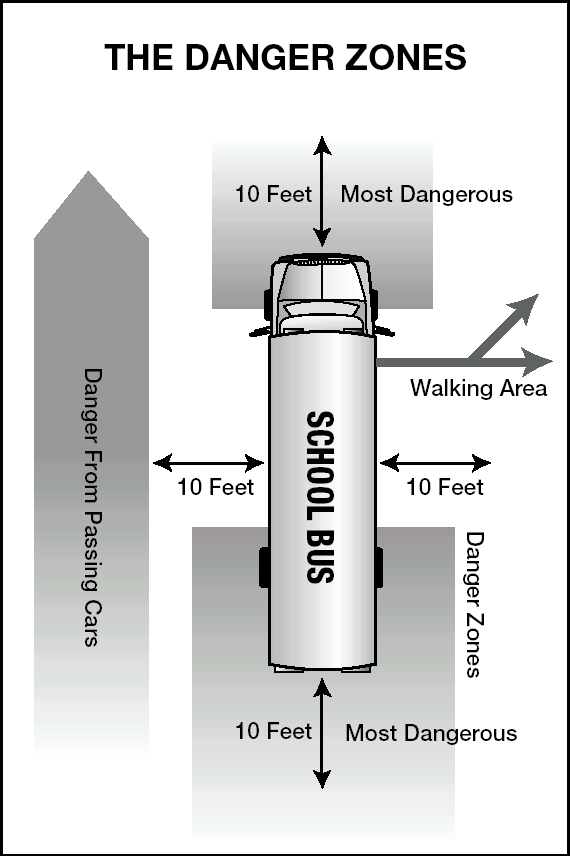
SCHOOL BUSES
Figure SB. 2 SB.1.4 – Outside Left and Right Side Convex Mirrors The convex mirrors are located below the outside flat mirrors. They are used to monitor the left and right sides at a wide angle. They provide a view of traffic, clearances and students at the side of the bus. These mirrors present a view of people and objects that does not accurately reflect their size and distance from the bus. You should position these mirrors to see: □The entire side of the bus up to the mirror mounts. □Front of the rear tires touching the ground. □At least one traffic lane on either side of the bus. Figure SB.3 shows how both the outside left and right side convex mirrors should be adjusted.
SB.1.5 – Outside Left and Right Side Crossover Mirrors These mirrors are mounted on both left and right front corners of the bus. They are used to see the front bumper “danger zone” area directly Figure SB. 3 in front of the bus that is not visible by direct vision, and to view the “danger zone” area to the left side and right side of the bus, including the service door and front wheel area. The mirror presents a view of people and objects that does not accurately reflect their size and distance from the bus. The driver must ensure that these mirrors are properly adjusted. Ensure that the mirrors are properly adjusted so you can see: □The entire area in front of the bus from the front bumper at ground level to a point where direct vision is possible. Direct vision and mirror view vision should overlap. □The right and left front tires touching the ground. □The area from the front of the bus to the service door. □These mirrors, along with the convex and flat mirrors, should be viewed in a logical sequence to ensure that a child or object is not in any of the danger zones. Figure SB.4 illustrates how the left and right side crossover mirrors should be adjusted.
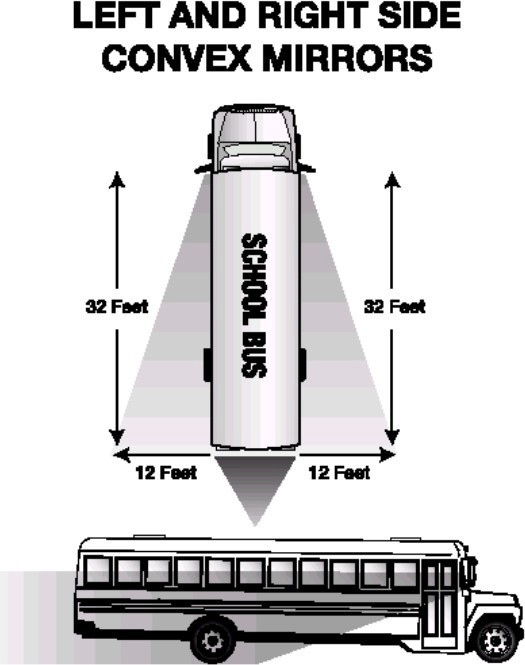
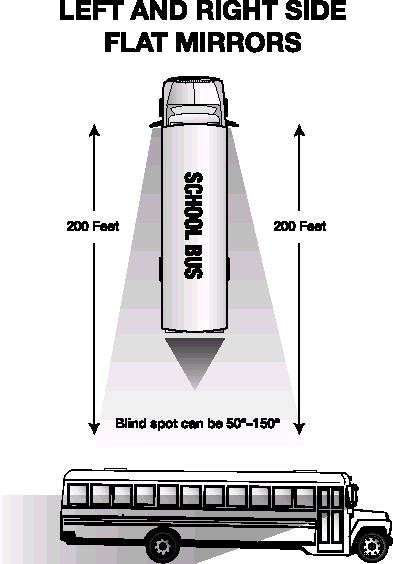
Figure SB. 4 SB.1.6 – Overhead Inside Rearview Mirror This mirror is mounted directly above the windshield on the driver’s side area of the bus. This mirror is used to monitor passenger activity inside the bus. It may provide limited visibility directly in back of the bus if the bus is equipped with a glass-bottomed rear emergency door. There is a blind spot area directly behind the driver’s seat as well as a large blind spot area that begins at the rear bumper and could extend up to 400 feet or more behind the bus. You must use the exterior side mirrors to monitor traffic that approaches and enters this area. You should position the mirror to see: □The top of the rear window in the top of the mirror. □All of the students, including the heads of the students right behind you.
SB.2 – Loading and Unloading More students are killed while getting on or off a school bus each year than are killed as passengers inside of a school bus. As a result, knowing what to do before, during and after loading or unloading students is critical. This section will give you specific procedures to help you avoid unsafe conditions which could result in injuries and fatalities during and after loading and unloading students. Dropped or Forgotten Objects. Always focus on students as they approach the bus and watch for any who disappear from sight. Students may drop an object near the bus during loading and unloading. Stopping to pick up the object, or returning to pick up the object may cause the student to disappear from the driver’s sight at a very dangerous moment. Students should be told to leave any dropped object and move to a point of safety out of the danger zones and attempt to get the driver’s attention to retrieve the object. Handrail Hang-ups. Students have been injured or killed when clothing, accessories, or even parts of their body get caught in the handrail or door as they exited the bus. You should closely observe all students exiting the bus to confirm that they are in a safe location prior to moving the bus. SB.2.2– Post-trip Inspection When your route or school activity trip is finished, you should conduct a post-trip inspection of the bus. You should walk through the bus and around the bus looking for the following: □Articles left on the bus. □Sleeping students. □Open windows and doors. • Mechanical/operational problems with the bus, with special attention to items that are unique to school buses – mirror systems, flashing warning lamps and stop signal arms. □Damage or vandalism. Any problems or special situations should be reported immediately to your supervisor or school authorities. SB.3 – Emergency Exit and Evacuation An emergency situation can happen to anyone, anytime, anywhere. It could be a crash, a stalled school bus on a railroad-highway crossing or in a high-speed intersection, an electrical fire in the engine compartment, a medical emergency to a student on the school bus, etc. Knowing what to do in an emergency–before, during and after an evacuation–can mean the difference between life and death. SB.2.1 – Special Dangers of Loading
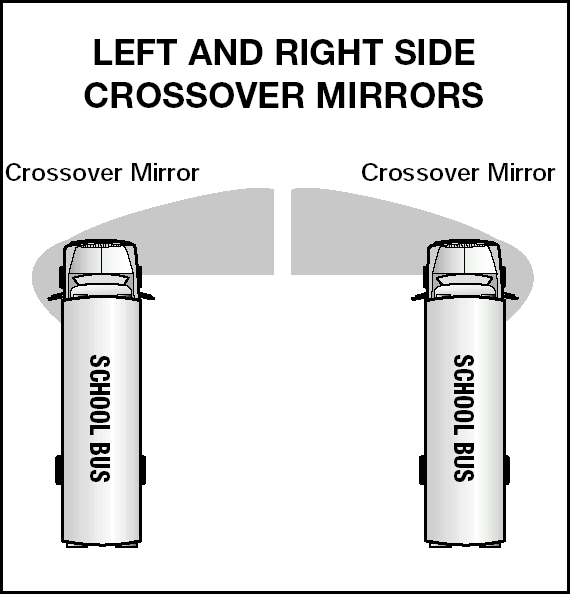
and Unloading Determine Need to Evacuate Bus. The first and most important consideration is for you to recognize the hazard. If time permits, school bus drivers should contact their dispatcher to explain the situation before making a decision to evacuate the school bus. As a general rule, student safety and control is best maintained by keeping students on the bus during an emergency and/or impending crisis situation, if so doing does not expose them to unnecessary risk or injury. Remember, the decision to evacuate the bus must be a timely one. A decision to evacuate should include consideration of the following conditions: □ Is there a fire or danger of fire? □ Is there a smell of raw or leaking fuel? □ Is there a chance the bus could be hit by other vehicles? □ Is the bus in the path of a sighted tornado or rising waters? □ Are there downed power lines? □ Would removing students expose them to speeding traffic, severe weather, or a dangerous environment such as downed power lines? □ Would moving students complicate injuries such as neck and back injuries and fractures? □ Is there a hazardous spill involved? Sometimes, it may be safer to remain on the bus and not come in contact with the material. Mandatory Evacuations. The driver must evacuate the bus when: □ The bus is on fire or there is a threat of a fire. □ The bus is stalled on or adjacent to a railroad-highway crossing, whether or not a train is in sight. □ The position of the bus may change and increase the danger. □ There is an imminent danger of collision. □ There is a need to quickly evacuate because of a hazardous materials spill. SB.3.2 – Evacuation Procedures Be Prepared and Plan Ahead. When possible, assign two responsible, older student assistants to each emergency exit. Teach them how to assist the other students off the bus. Assign another student assistant to lead the students to a safe place” after evacuation. However, you must recognize that there may not be older, responsible students on the bus at the time of the emergency. Therefore, emergency evacuation procedures must be explained to all students. This includes knowing how to operate the various emergency exits and the importance of listening to and following all instructions given by you. Some tips to determine a safe place: □ A safe place will be at least 100 feet off the road in the direction of oncoming traffic. This will keep the students from being hit by debris if another vehicle collides with the bus. □ Lead students upwind of the bus if fire is present. □ Lead students as far away from railroad tracks as possible and in the direction of any oncoming train. □ Lead students upwind of the bus at least 300 feet if there is a risk from spilled hazardous materials. □ If the bus is in the direct path of a sighted tornado and evacuation is ordered, escort students to a nearby ditch or culvert if shelter in a building is not readily available, and direct them to lie face down, hands covering their head. They should be far enough away so the bus cannot topple on them. Avoid areas that are subject to flash floods. General Procedures. Determine if evacuation is in the best interest of safety. □ Determine the best type of evacuation: Front, rear or side door evacuation,or some combination of doors. Roof or window evacuation. □ Secure the bus by: Placing transmission in Park, or if there is no shift point, in Neutral. Setting parking brakes. Shutting off the engine. Removing ignition key. Activating hazard-warning lights. □ If time allows, notify dispatch office of evacuation location, conditions and type of assistance needed. SB.3.1 – Planning for Emergencies
SB.4 – Railroad-highway Crossings SB.4.1 – Types of Crossings Passive Crossings. This type of crossing does not have any type of traffic control device. You must stop at these crossings and follow proper procedures. However, the decision to proceed rests entirely in your hands. Passive crossings require you to recognize the crossing, search for any train using the tracks and decide if there is sufficient clear space to cross safely. Passive crossings have yellow circular advance warning signs, pavement markings and crossbucks to assist you in recognizing a crossing. Active Crossings. This type of crossing has a traffic control device installed at the crossing to regulate traffic at the crossing. These active devices include flashing red lights, with or without bells and flashing red lights with bells and gates. SB.4.2 – Warning Signs and Devices Advance Warning Signs. The round,black-on-yellow warning sign is placed ahead of a public railroad-highway crossing. The advance warning sign tells you to slow down, look and
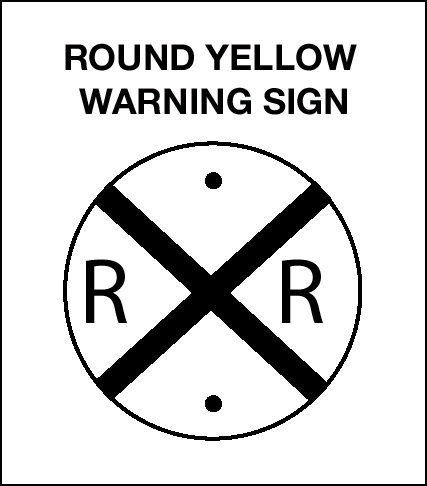
Figure SB. 5 Pavement Markings. Pavement markings mean the same as the advance warning sign. They consist of an “X” with the letters “”RR” and a no-passing marking on two-lane roads. There is also a no passing zone sign on two-lane roads. There may be a white stop line painted on the pavement before the railroad tracks. The front of the school bus must remain behind this line while stopped at the crossing. See Figure SB.6.
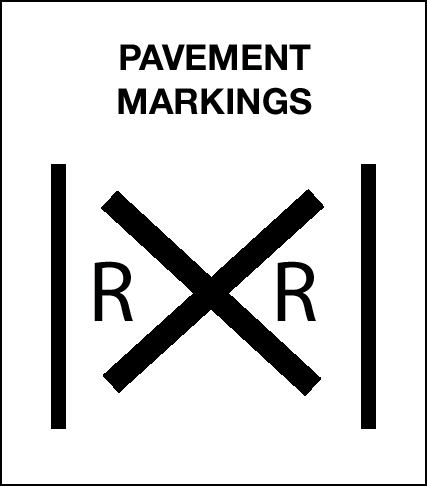
Figure SB. 6 listen for the train, and be prepared to stop at the tracks. See Figure SB.5. • Dangle radio microphone or telephone out of driver’s window for later use, if operable. □ If no radio, or radio is inoperable, dispatch a passing motorist or area resident to call for help. As a last resort, dispatch two older, responsible students to go for help. □ Order the evacuation. □ Evacuate students from the bus. Do not move a student you believe may have suffered a neck or spinal injury unless his or her life is in immediate danger. Special procedures must be used to move neck spinal injury victims to prevent further injury. □ Direct a student assistant to lead students to the nearest safe place. □ Walk through the bus to ensure no students remain on the bus. Retrieve emergency equipment. □ Join waiting students. Account for all students and check for their safety. □ Protect the scene. Set out emergency warning devices as necessary and appropriate. □ Prepare information for emergency responders. Flashing Red Light Signals. At many highway-rail grade crossings, the crossbuck sign has flashing red lights and bells. When the lights begin to flash, stop! A train is approaching. You are required to yield the right-of-way to the train. If there is more than one track, make sure all tracks are clear before crossing. See Figure SB.8. Gates. Many railroad-highway crossings have gates with flashing red lights and bells. Stop when the lights begin to flash and before the gate lowers across the road lane. Remain stopped until the gates go up and the lights have stopped flashing. Proceed when it is safe. If the gate stays down after the train passes, do not drive around the gate. Instead, call your dispatcher. If the gate comes down after you have started across, drive through it even if it means you will break the gate. See Figure SB.8.
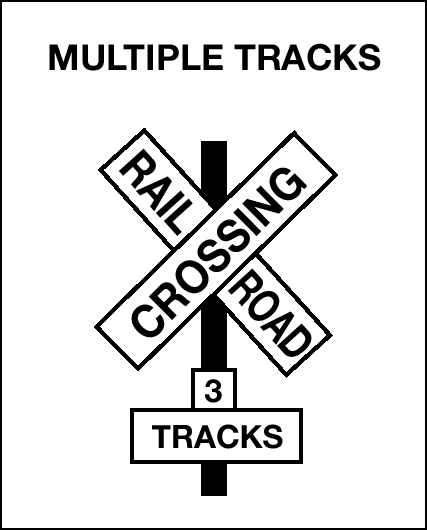
Figure SB. 7
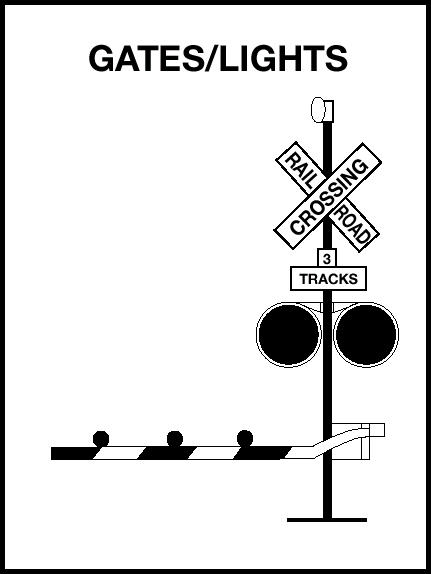
Figure SB. 8 SB.4.3– Special Situations Bus Stalls or Trapped on Tracks. If your bus stalls or is trapped on the tracks, whether or not a train is in sight, get everyone out and off the tracks immediately. Move everyone far from the bus at an angle, which is both away from the tracks and toward the train. Emergency Notification System (ENS) for Highway-Rail Grade Crossings. Every highway-rail crossing has an Emergency Notification System (ENS) sign that provides a 24/7/365 telephone number to call to report problems or emergencies at the railroad location. The blue colored ENS sign is located on the railroad crossing posts or the metal control box near the tracks. The ENS is for those emergencies that would require stopping train traffic due to an obstruction or any other problem at the crossing. By providing the DOT number on the sign, the dispatchers know exactly where the grade crossing is and can notify trains moving in that direction to either come to a stop or be placed on a speed restriction. Police Officer at the Crossing. If a police officer is at the crossing, obey directions. If there is no police officer, and you believe the signal is malfunctioning, call your dispatcher to report the situation and ask for instructions on how to proceed. Crossbuck Signs. This sign marks the crossing. It requires you to yield the right-of-way to the train. If there is no white line painted on the pavement, you must stop the bus before the crossbuck sign. When the road crosses over more than one set of tracks, a sign below the crossbuck indicates the number of tracks. See Figure SB.7. the offender or offenders. Speak in a courteous manner with a firm voice. Remind the offender of the expected behavior. Do not show anger, but do show that you mean business. □ If a change of seating is needed, request that the student move to a seat near you. Never put a student off the bus except at school or at his or her designated school bus stop. If you feel that the offense is serious enough that you cannot safely drive the bus, call for a school administrator or the police to come and remove the student. Always follow your state or local procedures for requesting assistance. Containment or Storage Areas. If it won’t fit, don’t commit! Know the length of your bus and the size of the containment area at highway-rail crossings on the school bus route, as well as any crossing you encounter in the course of a school activity trip. When approaching a crossing with a signal or stop sign on the opposite side, pay attention to the amount of room there. Be certain the bus has enough containment or storage area to completely clear the railroad tracks on the other side if there is a need to stop. As a general rule, add 15 feet to the length of the school bus to determine an acceptable amount of containment or storage area. SB.6 – Antilock Braking Systems (ABS) SB.6.1 – Vehicles Required to Have Antilock Braking Systems The Department of Transportation requires that antilock braking systems be on: □ Air brakes vehicles, (trucks, buses, SB.5 – Student Management trailers and converter dollies) built on or after March 1, 1998. □ Hydraulically braked trucks and buses SB.5.1 – Don’tDealwithOn-bus Problems When Loading and Unloading with a gross vehicle weight rating of 10,000 lbs or more built on or after March 1, 1999. Many buses built before these dates have been voluntarily equipped with ABS. In order to get students to and from school safely and on time, you need to be able to concentrate on the driving task. Loading and unloading requires all your concentration. Don’t take your eyes off what is happening outside the bus. Your school bus will have a yellow ABS malfunction lamp on the instrument panel if it is equipped with ABS. If there is a behavior problem on the bus, wait until the students unloading are safely off the bus and have moved away. If necessary, pull the bus over to handle the problem. SB.6.2 – How ABS Helps You When you brake hard on slippery surfaces in a vehicle without ABS, your wheels may lock up. When your steering wheels lock up, you lose steering control. When your other wheels lock up, you may skid or even spin the vehicle. SB.5.2 – Handling Serious Problems Tips on handling serious problems: ABS helps you avoid wheel lock up and maintain control. You may or may not be able to stop faster with ABS, but you should be able to steer around an obstacle while braking, and avoid skids caused by over braking. •Follow your school’s procedures for discipline or refusal of rights to ride the bus. □ Stop the bus. Park in a safe location off the road, perhaps a parking lot or a driveway. □ Secure the bus. Take the ignition □ Stand up and speak respectfully to Obstructed View of Tracks. Plan your route so it provides maximum sight distance at highway-rail grade crossings. Do not attempt to cross the tracks unless you can see far enough down the track to know for certain that no trains are approaching. Passive crossings are those that do not have any type of traffic control device. Be especially careful at “passive” crossings. Even if there are active railroad signals that indicate the tracks are clear, you must look and listen to be sure it is safe to proceed.
key with you if you leave your seat. • Use only the braking force necessary to stop safely and stay in control. • Brake the same way, regardless of whether you have ABS on the bus. However, in emergency braking, do not pump the brakes on a bus with ABS. • As you slow down, monitor your bus and back off the brakes (if it is safe to do so) to stay in control. SB.6.4 – Braking if ABS is Not Working Without ABS, you still have normal brake functions. Drive and brake as you always have. Vehicles with ABS have yellow malfunction lamps to tell you if something is not working. The yellow ABS malfunction lamp is on the bus’s instrument panel. As a system check on newer vehicles, the malfunction lamp comes on at start-up for a bulb check and then goes out quickly. On older systems, the lamp could stay on until you are driving over five mph. If the lamp stays on after the bulb check, or goes on once you are under way, you may have lost ABS control at one or more wheels. Remember, if your ABS malfunctions, you still have regular brakes. Drive normally, but get the system serviced soon. SB.6.5 – Safety Reminders • ABS won’t allow you to drive faster, follow more closely, or drive less carefully. • ABS won’t prevent power or turning skids– ABS should prevent brake-induced skids but not those caused by spinning the drive wheels or going too fast in a turn. • ABS won’t necessarily shorten stopping distance. ABS will help maintain vehicle control, but not always shorten stopping distance. • ABS won’t increase or decrease ultimate stopping power–ABS is an “add-on” to your normal brakes, not a replacement for them. • ABS won’t change the way you normally brake. Under normal brake conditions, your vehicle will stop as it always stopped. ABS only comes into play when a wheel would normally have locked up because of over braking. • ABS won’t compensate for bad brakes or poor brake maintenance. • Remember: The best vehicle safety feature is still a safe driver. • Remember: Drive so you never need to use your ABS. • Remember: If you need it, ABS could help to prevent a serious crash.
SB.7 –Special Safety Considerations SB.7.1– Driving in High Winds Strong winds affect the handling of the school bus! The side of a school bus acts like a sail on a sailboat. Strong winds can push the school bus sideways. They can even move the school bus off the road or, in extreme conditions, tip it over. If you are caught in strong winds: • Keep a strong grip on the steering wheel. Try to anticipate gusts. • You should slow down to lessen the effect of the wind, or pull off the roadway and wait. • Contact your dispatcher to get more information on how to proceed. SB.7.2 - Tail Swing A school bus can have up to a three-foot tail swing. You need to check your mirrors before and during any turning movements to monitor the tail swing. SB.6.3 – Braking with ABS When you drive a vehicle with ABS, you should brake as you always have. In other words:
These questions may be on your test. If you can’t answer them all, re-read this School Bus Driver’s Handbook. Test Your Knowledge
- 1. Define the danger zone. How far does the danger zone extend around the bus?
- 2. What should you be able to see if the outside flat mirrors are adjusted properly? The outside convex mirrors? The crossover mirrors?
- 3. Under what conditions must you evacuate the bus?
- 4. What is a passive highway-rail crossing? Why should you be extra cautious at this type of crossing?
- 5. How should you use your brakes if your vehicle is equipped with antilock brakes (ABS)?
- 6. You are loading students along the route. When should you activate your alternating flashing amber warning lights?
- 7. You are unloading students along your route. Where should students walk to after exiting the bus?
- 8. Why should you walk through the bus when your route is finished?
- 9. What position should students be in front of the bus before they cross the roadway?
- 10. How far from the nearest rail should you stop at a highway-rail crossing?








2005 CDL Testing Model Version: July 2017 CDL Drivers Manual COPYRIGHT © 2005 AAMVA All Rights Reserved COPYRIGHT © 2005 AAMVA. All rights reserved This material has been created for and provided to State Driver License Agencies (SDLAs) by AAMVA for the purpose of educating Driver License applicants (Commercial or Non-Commercial). Permission to reproduce, use, distribute or sell this material has been granted to SDLAs only. No part of this book may be reproduced or transmitted in any form or by any means, electronic or mechanical, including photocopying, recording, or by any information storage and retrieval system without express written permission from the author / publisher. Any unauthorized reprint, use, distribution or sale of this material is prohibited. This material is based upon work supported by the Federal Motor Carrier Safety Administration under Cooperative Agreement No. DTFH61-97-X-00017. Any opinions, findings, conclusions or recommendations expressed in this publication are those of the Author(s) and do not necessarily reflect the view of the Federal Motor Carrier Safety Administration.
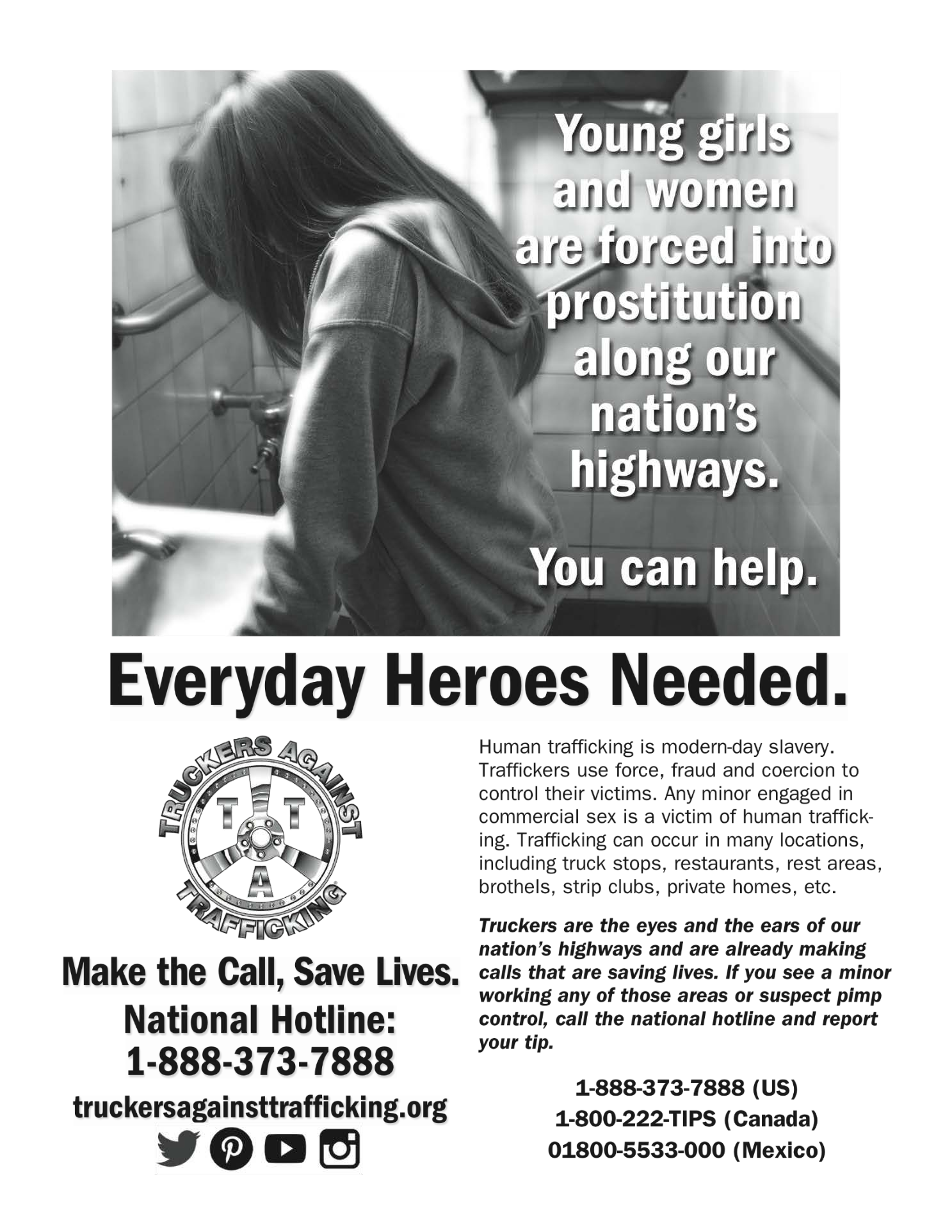
Make the Call, Save Lives.



Kevin Kimmel, truck driver for Con-way Truckload and winner of TAT’s 2015 Harriet Tubman Award






In January 2015, an RV pulled into a truck stop in Virginia. Observant professional truck driver Kevin Kimmel recognized suspicious activity around that RV, which had pulled back by the truck line, and decided something was off. Instead of turning a blind eye, he made a call that brought law enforcement out to the scene within a few minutes. After interviewing the occupants of the vehicle, they discovered that a young woman, 20 years old, had been kidnapped from Iowa two weeks prior. She had been beaten, raped, her whole body burned by instruments heated on the RV stove, branded and starved. She was being sold by her traffickers, Laura Sorenson and Aldair Hodza, through sex ads on Craigslist, where men were purchasing her and then arriving at the RV to rape her. She was dying from malnutrition and the torture she was subjected to … had the call not been made that brought law enforcement out to that truck stop, doctors said she would have died within the next few days. Now a recovering survivor, this young woman calls Kimmel her guardian angel. He calls himself a Trucker Against Trafficking. Truckers Against Trafficking is a non-profit organization that has been working with the trucking industry since 2009 to provide the needed training and tools to enable members of the industry to both recognize human trafficking when they see it happening and to know what actions to take to enable law enforcement to effectively fight this crime. Through this training and these tools, truckers are becoming Everyday Heroes like Kevin Kimmel, who was also named TAT’s 2015 Harriet Tubman Award winner.

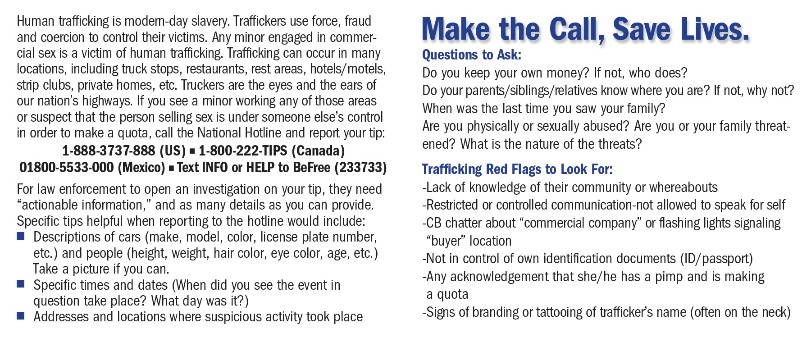
One of the tools TAT provides is a wallet card with red flags to look for, questions to ask if you suspect someone is a victim and actionable information to report. This wallet card is available by App, from the appropriate App Store, on all smart phones, whether Android, iPhone or Windows format, as well as by emailing tat.truckers@gmail.com, for a version to carry in your wallet. Additionally, TAT provides a powerful, 26-minute training video on its website (www.truckersagainsttrafficking.org), which, when watched along with taking and passing a short test, certifies drivers as TAT-Trained, a designation which can go on your resume. Because professional drivers often find themselves in locations frequented and exploited by human traffickers, they are in a unique position to recognize the signs of human trafficking and to make the call that can lead to victim recovery and perpetrator arrests. Get your wallet card today. Be an Everyday Hero! Make the call (1-888-3737-888); save lives


1-888-3737-888 (US)

1-800-222-TIPS (Canada)

01800-5533-000 (Mexico)


Text INFO or HELP to BeFree (233733)


INTRODUCTION This Section Covers • Commercial Driver License Tests • Driver Disqualifications • Other Safety Rules • International Registration Program • Medical Requirements There is a federal requirement that each state have minimum standards for the licensing of commercial drivers. This manual provides driver license testing information for drivers who wish to have a commercial driver license (CDL). This manual does NOT provide information on all the federal and state requirements needed before you can drive a commercial motor vehicle (CMV). You may have to contact your state driver licensing authority for additional information. You must have a CDL to operate: Any single vehicle with a gross vehicle weight rating (GVWR) of 26,001 pounds or more. A combination vehicle with a gross combination weight rating of 26,001 or more pounds, if the trailer(s) has a GVWR of 10,001 or more pounds. A vehicle designed to transport 16 or more passengers (including the driver). Any size vehicle which requires hazardous material placards or is carrying material listed as a select agent or toxin in 42 CFR part 73. Federal regulations through the Department of Homeland Security require a background check and fingerprinting for the Hazardous Materials endorsement. Contact your local department of driver licensing for more information. (Your state may have additional definitions of CMVs). To get a CDL, you must pass knowledge and skills tests. This manual will help you pass the tests. This manual is not a substitute for a truck driver training class or program. Formal training is the most reliable way to learn the many special skills required for safely driving a large commercial vehicle and becoming a professional driver in the trucking industry. Figure 1.1 helps you determine if you need a CDL. Do You Need a CDL?
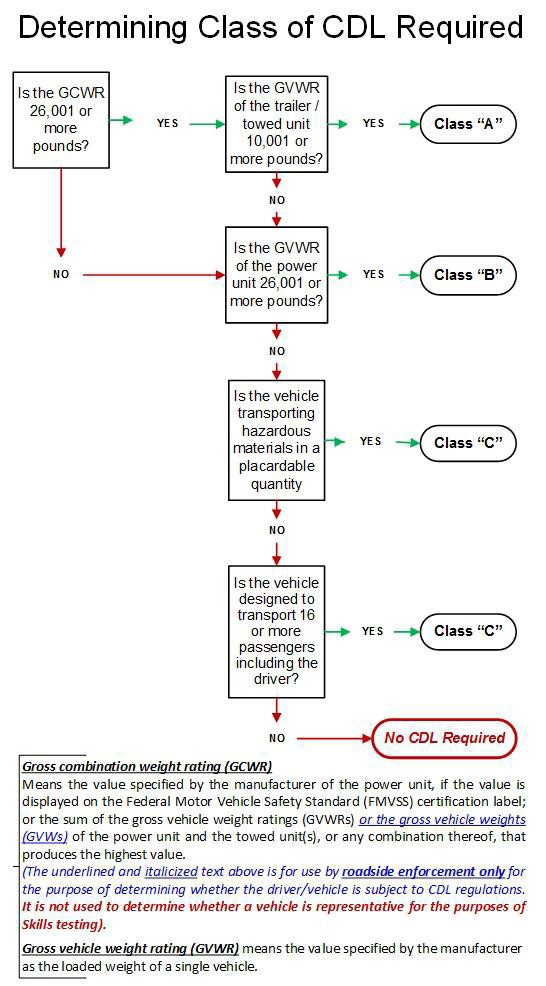
Figure 1.1 NOTE: A bus may be Class A, B, or C depending on whether the GVWR is over 26,001 pounds or is a combination vehicle. 1.1.1 – Knowledge Tests You will have to take one or more knowledge tests, depending on what class of license and what endorsements you need. The CDL knowledge tests include: The general knowledge test, taken by all applicants. The passenger transport test, taken by all bus driver applicants. The air brakes test, which you must take if your vehicle has air brakes, including air over hydraulic brakes. The combination vehicles test, which is required if you want to drive combination vehicles. The hazardous materials test, required if you want to haul hazardous materials as defined in 49 CFR 383.5. In order to obtain this endorsement you are also required to pass a Transportation Security Administration (TSA) background check. The tank vehicle test, required if you want to haul any liquid or gaseous materials in a tank or tanks having an individual rated capacity of more than 119 gallons and an aggregate rated capacity of 1,000gallons or more that is either permanently or temporarily attached to the vehicle or chassis. The doubles/triples test, required if you want to pull double or triple trailers. The School Bust test, required if you want to drive a school bus. 1.1.2 – Skills Tests If you pass the required knowledge test(s), you can take the CDL skills tests. There are three types of general skills that will be tested: pre-trip inspection, basic vehicle control and on-road driving. You must take these tests in the type of vehicle for which you wish to be licensed. Any vehicle that has components marked or labeled cannot be used for the Pre-Trip Inspection Test. Pre-trip Vehicle Inspection. You will be tested to see if you know whether your vehicle is safe to drive. You will be asked to do a pre-trip inspection of your vehicle and explain to the examiner what you would inspect and why. Basic Vehicle Control. You will be tested on your skill to control the vehicle. You will be asked to On-road Test. You will be tested on your skill to safely drive your vehicle in a variety of traffic situations. The situations may include left and right turns, intersections, railroad crossings, curves, up and down grades, single or multi-lane roads, streets, or highways. The examiner will tell you where to drive. Figure 1.2 details which sections of this manual you should study for each particular class of license and for each endorsement.
What Sections Should You Study? | | | | | | | | |
| | | | | | | | |
| | LICENSE TYPE | | | ENDORSEMENT | | | |
| | Class A | Class B | Class C | Hazardous | Double/Triple | Tank Vehicles | Passenger | School Bus
Sections to Study | Minn A | X | X | X | | | | X | X
| Minn B | | | | | | | | X
| 1 | X | X | X | | | | |
| 2 | X | X | X | X | X | X | X | X
| 3 | X | X | X | | X | X | |
| 4 | | | | | | | X | X
| 5* | X | X | X | | X | | X | X
| 6 | X | | | | X | | |
| 7 | | | | | X | | |
| 8 | | | | | | X | |
| 9 | | | | X | | X | |
| 10 | X | X | X | X | | | X | X
| 11 | X | X | X | X | | | X | X
| 12 | X | X | X | X | | | X | X
*Study section 5 if you plan to operate vehicles equipped with air brakes. | | | | | | | | |
Figure 1.2 – What to Study move your vehicle forward, backward and turn it within a defined area. These areas may be marked with traffic lanes, cones, barriers, or something similar. The examiner will tell you how each control test is to be done. 1.1 – Commercial Driver License Tests 1.2.1 – General You may not drive a commercial motor vehicle if you are disqualified for any reason. 1.2.2 – Alcohol, Leaving the Scene of an Accident and Commission of a Felony It is illegal to operate a CMV if your blood alcohol concentration (BAC) is .04% or more. If you operate a CMV, you shall be deemed to have given your consent to alcohol testing. You will lose your CDL for at least one year for a first offense for: Driving a CMV if your blood alcohol concentration is .04% or higher. Driving a CMV under the influence of alcohol. Refusing to undergo blood alcohol testing. Driving a CMV while under the influence of a controlled substance. Leaving the scene of an accident involving a CMV. Committing a felony involving the use of a CMV. Driving a CMV when the CDL is suspended. Causing a fatality through negligent operation of a CMV. You will lose your CDL for at least three years if the offense occurs while you are operating a CMV that is placarded for hazardous materials. You will lose your CDL for life for a second offense. You will lose your CDL for life if you use a CMV to commit a felony involving controlled substances. You will be put out-of-service for 24 hours if you have any detectable amount of alcohol under .04%. 1.2.3 – Serious Traffic Violations Serious traffic violations are excessive speeding (15 mph or more above the posted limit), reckless driving, improper or erratic lane changes, following a vehicle too closely, traffic offenses committed in a CMV in connection with fatal traffic crashes, driving a CMV without obtaining a CDL or having a CDL in the driver’s possession, and driving a CMV without the proper class of CDL and/or endorsements. For at least 60 days if you have committed two serious traffic violations within a three-year period involving a CMV. For at least 120 days for three or more serious traffic violations within a three-year period involving a CMV. 1.2.4 – Violation of Out-of-Service Orders You will lose your CDL: For at least 90 days if you have committed your first violation of an out-of-service order. For at least one year if you have committed two violations of an out-of-service order in a 10 year period. For at least three years if you have committed three or more violations of an out-of-service order in a 10 year period. 1.2.5 – Railroad-highway Grade Crossing Violations You will lose your CDL: For at least 60 days for your first violation. For at least 120 days for your second violation within a three-year period. For at least one year for your third violation within a three-year period. These violations include violation of a federal, state or local law or regulation pertaining to one of the following six offenses at a railroad-highway grade crossing: For drivers who are not required to always stop, failing to stop before reaching the crossing if the tracks are not clear. For drivers who are not required to always stop, failing to slow down and check that the tracks are clear of an approaching train. For drivers who are always required to stop, failing to stop before driving onto the crossing. For all drivers failing to have sufficient space to drive completely through the crossing without stopping. For all drivers failing to obey a traffic control device or the directions of an enforcement official at the crossing. For all drivers failing to negotiate a crossing because of insufficient undercarriage clearance. 1.2 – CDL Disqualifications You will lose your CDL: If you require a hazardous materials endorsement you will be required to submit your fingerprints and be subject to a background check. You cannot have more than one license. If you break this rule, a court may fine you up to $5,000 or put you in jail and keep your home state license and return any others. You must notify your employer within 30 days of conviction for any traffic violations (except parking). This is true no matter what type of vehicle you were driving. You must notify your motor vehicle licensing agency within 30 days if you are convicted in any other jurisdiction of any traffic violation (except parking). This is true no matter what type of vehicle you were driving. You must notify your employer within two business days if your license is suspended, revoked, or canceled, or if you are disqualified from driving. You must give your employer information on all driving jobs you have held for the past10 years. You must do this when you apply for a commercial driving job. No one can drive a commercial motor vehicle without a CDL. A court may fine you up to $5,000 or put you in jail for breaking this rule. If you have a hazardous materials endorsement you must notify and surrender your hazardous materials endorsement to the state that issued your CDL within 24 hours of any conviction or indictment in any jurisdiction, civilian or military, for, or found not guilty by reason of insanity of a disqualifying crime listed in 49 CFR 1572.103; who is adjudicated as lacking mental capacity or have been involuntarily committed to a mental institution as specified in 49 CFR 1572.109; or who renounces his or her U. S. citizenship. Your employer may not let you drive a commercial motor vehicle if you have more than one license or if you’re CDL is suspended or revoked. A court may fine the employer up to $5,000 or put him/her in jail for breaking this rule. All states are connected to one computerized system to share information about CDL drivers. The states will check on driver’s accident records to be sure that drivers do not have more than one CDL. You are not allowed to hold a mobile telephone to conduct a voice communication or dial a mobile telephone by pressing more than a single button when driving. You will be denied or you will lose your hazardous materials endorsement if you: Are not a lawful permanent resident of the United States. Renounce your United States citizenship. Are wanted or under indictment for certain felonies. Have a conviction in military or civilian court for certain felonies. Have been adjudicated as lacking mental capacity or have been involuntarily committed to a mental health facility as specified in §1572.109. Are considered to pose a security threat as determined by the Transportation Security Administration. The background check procedures vary from jurisdiction to jurisdiction. Your licensing agency will provide you with all the information you need to complete the required TSA background check procedures. 1.2.7 – Traffic Violations in Your Personal Vehicle The Motor Carrier Safety Improvement Act (MCSIA) of 1999 requires a CDL holder to be disqualified from operating a commercial motor vehicle if the CDL holder has been convicted of certain types of moving violations in their personal vehicle. If your privilege to operate your personal vehicle is revoked, cancelled, or suspended due to violations of traffic control laws (other than parking violations) you will also lose your CDL driving privileges. If your privilege to operate your personal vehicle is revoked, cancelled, or suspended due to alcohol, controlled substance or felony violations, you will lose your CDL for 1 year. If you are convicted of a second violation in your personal vehicle or CMV you will lose your CDL for life. If your license to operate your personal vehicle is revoked, cancelled, or suspended you may not obtain a “hardship” license to operate a CMV. 1.2.6 – Hazardous Materials Endorsement Background Check and Disqualifications 1.3 – Other CDL Rules There are other federal and state rules that affect drivers operating CMVs in all states. Among them are:
1.4 – International Registration Plan
International Fuel Tax Agreement If you operate a CDL required vehicle in interstate commerce, the vehicle, with few exceptions, is required to be registered under the International Registration Plan (IRP) and the International Fuel Tax Agreement (IFTA). These federally mandated programs provide for the equitable collection and distribution of vehicle license fees and motor fuels taxes for vehicles traveling throughout the 48 contiguous United States and 10 Canadian provinces. Under the IRP, jurisdictions must register apportioned vehicles which includes issuing license plates and cab cards or proper credentials, calculate, collect and distribute IRP fees, audit carriers for accuracy of reported distance and fees and enforce IRP requirements. Registrant responsibilities under the Plan include applying for IRP registration with base jurisdiction, providing proper documentation for registration, paying appropriate IRP registration fees, properly displaying registration credentials, maintaining accurate distance records and making records available for jurisdiction review. The basic concept behind IFTA is to allow a licensee (motor carrier) to license in a base jurisdiction for the reporting and payment of motor fuel use taxes. Under the IFTA, a licensee is issued one set of credentials which will authorize operations through all IFTA member jurisdictions. The fuel use taxes collected pursuant to the IFTA are calculated based on the number of miles (kilometers) traveled and the number of gallons (liters) consumed in the member jurisdictions. The licensee files one quarterly tax return with It is the base jurisdiction's responsibility to remit the taxes collected to other member jurisdictions and to represent the other member jurisdictions in the tax collection process, including the performance of audits. An IFTA licensee must retain records to support the information reported on the IFTA quarterly tax return. The IRP registrant and the IFTA licensee may be the vehicle owner or the vehicle operator. The requirement for acquiring IRP plates for a vehicle and IFTA license for a motor carrier is determined by the definitions from the IRP Plan and the IFTA for Qualified Vehicle and Qualified Motor Vehicle: For purposes of IRP: A Qualified Vehicle is (except as provided below) any Power Unit that is used or intended for use in two or more Member Jurisdictions and that is used for the transportation of persons for hire or designed, used, or maintained primarily for the transportation of property, and: (i) has two Axles and a gross Vehicle weight or registered gross Vehicle weight in excess of 26,000 pounds (11,793.401 kilograms), or (ii)has three or more Axles, regardless of weight, or (iii)is used in combination, when the gross Vehicle weight of such combination exceeds 26,000 pounds (11,793.401 kilograms), or (iv)a power unit involved in intrastate transportation outside the state of Minnesota regardless of gross vehicle weight or axles. IFTA Qualified Vehicles. The following vehicles are required to display fuel credentials and report fuel use under the IFTA program if operating in two or more member jurisdictions. While similar, the Qualified Motor Vehicle in IFTA means a motor vehicle used, designed or maintained for transportation of persons or property, and: 1) Having two axles and a gross vehicle weight or registered gross vehicle weight exceeding 26,000 pounds or 11,797 kilograms; or You are not allowed to send or read text messages while driving. You must be properly restrained by a safety belt at all times while operating a commercial motor vehicle. The safety belt design holds the driver securely behind the wheel during a crash, helping the driver to control the vehicle and reduces the chance of serious injury or death. If you do not wear a safety belt, you are four times more likely to be fatally injured if you are thrown from the vehicle. Your state may have additional rules that you must also obey. the base jurisdiction by which the licensee will report all operations through all IFTA member jurisdictions.
If the vehicle you operate is registered under IRP and you are a motor carrier licensed under IFTA, then you are required to comply with the mandatory record keeping requirements for operating the vehicle. A universally accepted method of capturing this information is through the completion of an Individual Vehicle Distance Record (IVDR), sometimes referred to as a Driver Trip Report. This document reflects the distance traveled and fuel purchased for a vehicle that operates interstate under apportioned (IRP) registration and IFTA fuel tax credentials. Although the actual format of the IVDR may vary, the information that is required for proper record keeping does not. In order to satisfy the requirements for Individual Vehicle Distance Records, these documents must include the following information: Distance Per Article IV of the IRP Plan (i) Date of trip (starting and ending) (ii)Trip origin and destination – City and State or Province (iii)Route(s) of travel (iv)Beginning and ending odometer or hub odometer reading of the trip (v)Total distance traveled (vi)In-Jurisdiction distance (vii) Power unit number or vehicle identification number. Fuel Per Section P560 of the IFTA Procedures Manual .300 An acceptable receipt or invoice must include, but shall not be limited to, the following: .005 Date of purchase .010 Seller's name and address .015 Number of gallons or liters purchased; .020 Fuel type .025 Price per gallon or liter or total amount of sale An example of an IVDR that must be completed in its entirety for each trip can be found in Figure 1 below. Each individual IVDR should be filled out for only one vehicle. The rules to follow when trying to determine how and when to log an odometer reading are the following: At the beginning of the day When leaving the state or province At the end of the trip/day Not only do the trips need to be logged, but the fuel purchases need to be documented as well. You must obtain a receipt for all fueling and include it with your completed IVDR. Make sure that any trips that you enter are always filled out in descending order and that your trips include all state/provinces that you traveled through on your route. There are different routes that a driver may take, and most of the miles may be within one state or province. Whether or not the distance you travel is primarily in one jurisdiction or spread among several jurisdictions, all information for the trip must be recorded. This includes the dates, the routes, odometer readings and fuel purchases. By completing this document in full and keeping all records required by both the IRP and the IFTA, you will have ensured that you and your company are in compliance with all State and Provincial laws surrounding fuel and distance recordkeeping requirements. The IVDR serves as the source document for the calculation of fees and taxes that are payable to the jurisdictions in which the vehicle is operated, so these original records must be maintained for a minimum of four years. In addition, these records are subject to audit by the taxing jurisdictions. Failure to maintain complete and accurate records could result in fines, penalties and suspension or revocation of IRP registrations and IFTA licenses. For additional information on the IRP and the requirements related to the IRP, contact your base jurisdiction motor vehicle department or IRP, Inc. the official repository for the IRP. Additional information can be found on the IRP, Inc. website at www.irponline.org. There is a training video on 2) Having three or more axles regardless of weight; or 3) Is used in combination, when the weight of such combination exceeds 26,000 pounds or 11,797 kilograms gross vehicle or registered gross vehicle weight. Qualified Motor Vehicle does not include recreational vehicles. .030 Unit number or other unique vehicle identifier .035 Purchaser's name For additional information on IFTA and the requirements related to IFTA, contact the appropriate agency in your base jurisdiction. You will also find useful information about the Agreement at the official repository of IFTA athttp://www.iftach.org/index.php. the website home page available in English, Spanish and French.
Figure 1 – Individual Vehicle Mileage & Fuel Record (Example) 1.5 – Medical Documentation Requirements For the purpose of complying with the requirements for medical certification, it is important to know how you are using the CMV. The following information will help you decide how to self-certify: If you are applying for a CDL Permit; or are renewing, upgrading, adding endorsements to or transferring a CDL from another state you are required to provide information to your State Driver’s License Agency (SDLA) regarding the type of commercial motor vehicle operation you drive in or expect to drive in with your CDL. Drivers operating in certain types of commerce will be required to submit a current medical examiner’s certificate and/or any medical variance documents that you have been issued (i.e. Vision, Skills Performance or Diabetic waivers, or other exemptions) to your SDLA to obtain a “certified” medical status as part of your driving record. You must contact your SDLA to obtain information regarding the requirement for submitting these documents. 1.5.1 – Interstate or Intrastate Commerce Do you, or will you, use a CDL to operate a CMV in interstate or intrastate commerce? Interstate commerce is when you drive a CMV: From one state to another state or a foreign country; Between two places within a state, but during part of the trip, the CMV crosses into another state or foreign country; or Between two places within a state, but the cargo or passengers are part of a trip that began or will end in another state or foreign country. If you are required to have a “certified” medical status and fail to provide and keep up-to-date your medical examiner’s certificate you become “not-certified” and may lose your CDL. Intrastate commerce is when you drive a CMV within a state and you do not meet any of the descriptions above for interstate commerce.
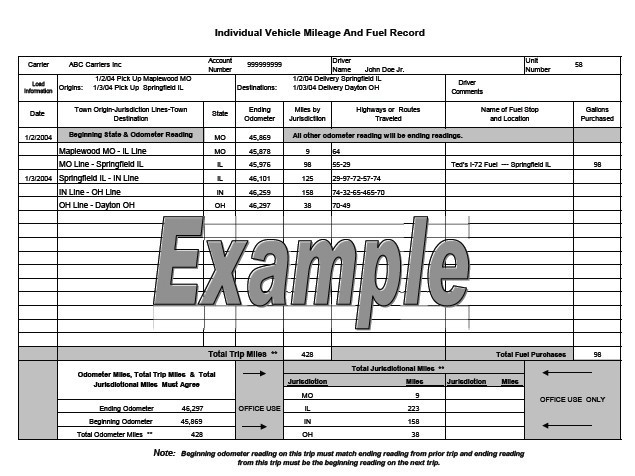
1.5.2 – Inter/Intrastate Commerce: Status Non-
excepted or Excepted? Once you decide whether you will operate in interstate commerce or intrastate commerce, you must decide whether you will operate (or expect to operate) in a non-excepted or excepted status. This decision will tell you to which of the four types of commerce you must self-certify. Interstate Commerce: You operate in excepted interstate commerce when you drive a CMV in interstate commerce only for the following excepted activities: To transport school children and/or school staff between home and school; As Federal, State or local government employees; To transport human corpses or sick or injured persons; Fire truck or rescue vehicle drivers during emergencies and other related activities; Primarily in the transportation of propane winter heating fuel when responding to an emergency condition requiring immediate response such as damage to a propane gas system after a storm or flooding; In Response to a pipeline emergency condition requiring immediate response such as a pipeline leak or rupture; In custom harvesting on a farm or to transport farm machinery and supplies used in the custom harvesting operation to and from a farm or to transport custom harvested crops to storage or market; Beekeeper in the seasonal transportation of bees; Controlled and operated by a farmer, but is not a combination vehicle (power unit and towed unit), and is used to transport agricultural products, farm machinery or farm supplies (no placardable hazardous materials) to and from a farm and within 150 air-miles of the farm; As a private motor carrier of passengers for non-business purposes ; or To transport migrant workers. If you answered yes to one or more of the above If you answered no to all of the above activities, you operate in non-excepted interstate commerce and are required to provide a current medical examiner’s certificate (49 CFR 391.45),commonly referred to as a medical certificate or DOT card, to your State Driver Licensing Agency (SDLA). Most CDL holders who drive CMVs in interstate commerce are non-excepted interstate commerce drivers. If you operate in both excepted interstate commerce and non-excepted interstate commerce, you must choose non-excepted interstate commerce to be qualified to operate in both types of interstate commerce. Intrastate Commerce: You operate in excepted intrastate commerce when you drive a CMV only in intrastate commerce activities for which your State of licensure has determined do not require you to meet the State’s medical certification requirements (contact your SDLA about their requirements). You operate in non-excepted intrastate commerce when you drive a CMV only in intrastate commerce and are required to meet your State of MN licensure’s medical certification requirements (contact your SDLA about their requirements). If you operate in both excepted intrastate commerce and non-excepted intrastate commerce, you must choose non-excepted intrastate commerce. 1.5.3 – Self-Certification Statements When completing an application for your CDL, you will be required to check the box next to the statement that describes your status. The actual statements on your application may vary from those shown below: Interstate Non-excepted: I certify that I operate or expect to operate in interstate commerce, that I am subject to and meet the Federal DOT medical card requirements under 49 CFR part 391; and that I am required to obtain a medical examiner’s certificate. activities as the only operation in which you drive, you operate in excepted interstate commerce and do not need a Federal medical examiner’s certificate. If you operate in both intrastate commerce and interstate commerce, you must choose interstate commerce.
Intrastate Non-excepted: I certify that I operate or expect to operate entirely in intrastate commerce, that I am subject to and meet the medical requirements for my State; and that I am required to obtain a medical examiner’s certificate. Intrastate Excepted: I certify that I operate or expect to operate entirely in intrastate commerce, that I am not subject to the medical requirements for my State; and that I am not required to obtain a medical examiner’s certificate. Interstate Excepted: I certify that I operate or expect to operate in interstate commerce, but engage exclusively in transportation or operations excepted under 49 CFR §§390.3(f), 391.2, 391.68 or 398.3 from all or parts of the qualification requirements of 49 CFR part 391; and that I am not required to obtain a medical examiner’s certificate.