Section 1 of 13
Introduction
Introduction
Oregon

Commercial Driver Manual
2022 - 2023

D R I V E R A N D M O T O R V E H I C L E S E RV I C E S
and road conditions
TRUCKER WARNING


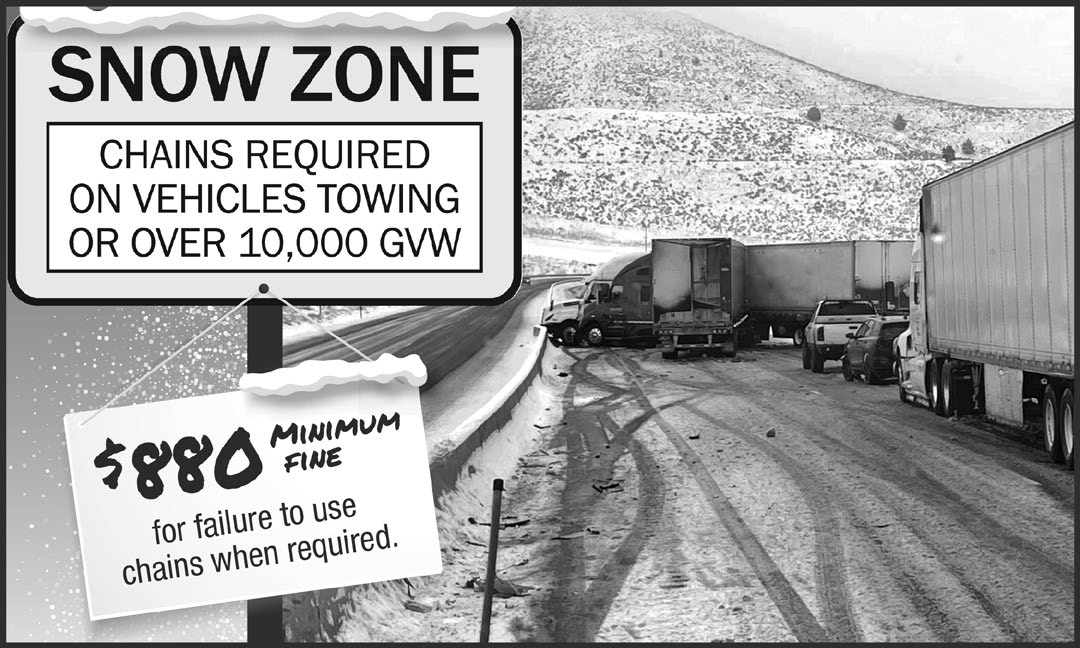
The Siskiyou Pass, commonly called “The Siskiyous,” is one of the most hazardous stretches of road along Interstate 5. Truckers Beware The summit is at an elevation of 4,310 feet. You’ll lose about 2,300 feet of elevation in six miles at a 6 percent downgrade while maneuvering your truck through sharp curves and some of the most hazardous visibility (fog) and road surface conditions in Oregon. More than 13,000 vehicles travel this stretch of highway daily. Approximately half of the vehicles involved in accidents on this stretch of highway were commercial trucks with trailers. Extreme Caution Urged Escape ramps are located Northbound at Mileposts 6.3 and 9.5 When in doubt about snow and ice conditions, chain-up your truck. It is better to be over prepared than to chain-up after you jackknife. Why Do I Have to Chain-Up Here? Chain-up areas are set up prior to inspection sites so that chains can be installed with ample shoulder space. Sometimes this needs to be done some distance from the snow line itself. Highway personnel are there to help you get over the pass safely. Be cooperative. Work with them. If you are not fully chained-up prior to the inspection site you will be turned around! When required, chains need to be installed prior to the inspection site. Inspection sites are at Milepost 1, Northbound and Milepost 11, Southbound. When is it the Best Time to Go Over the Pass? Mother Nature is hard to figure. At night temperatures drop and freezing is common. Early in the morning when the sun comes up is when fresh snow is the slickest. Midday is usually the best time to travel over the pass. Reminders For a Safe Descent
- • Remember to check brakes before entering the downgrade.
- • Be aware of the safe recommended speed for your vehicle.
- • Posted speeds are maximums in good weather. Bad weather demands slower speeds.
- • Fog, snow, and black ice are common between October and April. Be prepared!
- • Descend the summit in the proper gear.
- • Oregon law requires that you carry and use tire chains when conditions warrant and/or signs posted.
- • Be sure you have emergency warning devices (triangles) and use them if you are stopped.
- • Be sure all your lights are working.
- • Don’t drive if you are fatigued! DOT Registration Information Motor carriers can obtain information and services about trucking regulations and appropriate Oregon permits at the Ashland Port of Entry located at I-5 Northbound, Milepost 18. For Oregon road conditions, call 511 (toll free within Oregon) for weather conditions on the hill
RESPECT THE PASS!
Tune radio to AM 1610 for updated weather information

or 1-800-977-6368 (toll free within Oregon), or 1-503-588-2941 (outside Oregon) Published by the Oregon Department of Transportation. Funds for this publication provided by the Motor Carrier Safety Assistance Program
This material is based upon work supported by the Federal Motor Carrier Safety Administration under Cooperative Agreement No. DTFH61-97-X-00017. Any opinions, findings, conclusions or recommendations expressed in this publication are those of the Author(s) and do not necessarily reflect the view of the Federal Motor Carrier Safety Administration. The manual has been modified for specific use in Oregon. Although DMV tries to ensure the material is current and reflects applicable law at the time of publication, it is not a legal authority and should not be referenced in a court of law.
Graphics/Layout

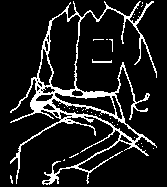
Help conserve our resources! Keep this manual in your vehicle for future reference. When you finish using the manual, please recycle or return it to a local DMV field office. Thank you! The Correct Way to Wear a Safety Belt WEAR IT LOW

Yes The lap portion of the safety belt should be two to four inches below the waist, snug across your hip and pelvic bones
- — NOT across your stomach.

In a crash, a belt worn too high places you at high risk of potentially fatal internal injuries. No WEAR IT SNUG

Yes The shoulder portion should rest smoothly over your collarbone and across your chest and shoulders. Pull the belt out and let it retract to remove slack.

Safety belts will stretch slightly in a crash. If not snug before the crash, you may slide under and out or up and over the belt. No WEAR IT RIGHT

Yes If the belt rubs against your neck, try changing the seat position or the way you sit.
Some vehicles have shoulder belt adjusters which you slide up or down to provide a correct, comfortable fit. Belt extenders may also be purchased. No Some cars feature a shoulder belt that automatically comes across your chest, but you must fasten the lap portion manually to achieve proper use and compliance with Oregon law. No

Safety belts should be worn over the front of the shoulder, never behind your back or under your arm.
ii Table Of Contents
Section 1 Introduction....................................................................................................... 1-1 1.1 – Commercial Driver License Types.................................................................................................................................. 1-2 1.2 – Obtaining Your Commercial Driving Privilege............................................................................................................... 1-2 1.3 – Endorsements and Restrictions........................................................................................................................................ 1-3 1.4 – Commercial Tests............................................................................................................................................................ 1-5 1.5 – Driver Disqualifications and Penalties............................................................................................................................ 1-6 1.6 – Other Commercial Motor Vehicle Rules......................................................................................................................... 1-8 Section 2 Driving Safely.................................................................................................... 2-1 2.1 – Vehicle Inspection............................................................................................................................................................ 2-1 2.2 – Basic Control of Your Vehicle......................................................................................................................................... 2-6 2.3 – Shifting Gears.................................................................................................................................................................. 2-7 2.4 – Seeing ............................................................................................................................................................................. 2-8 2.5 – Communicating............................................................................................................................................................... 2-9 2.6 – Controlling Speed.......................................................................................................................................................... 2-11 2.7 – Managing Space............................................................................................................................................................ 2-13 2.8 – Seeing Hazards.............................................................................................................................................................. 2-15 2.9 – Distracted Driving......................................................................................................................................................... 2-17 2.10 – Aggressive Drivers/Road Rage.................................................................................................................................... 2-18 2.11 – Driving at Night........................................................................................................................................................... 2-19 2.12 – Driving in Fog............................................................................................................................................................. 2-20 2.13 – Driving in Winter......................................................................................................................................................... 2-20 2.14 – Driving in Very Hot Weather....................................................................................................................................... 2-21 2.15 – Railroad-highway Crossings....................................................................................................................................... 2-22 2.16 – Mountain Driving........................................................................................................................................................ 2-24 2.17 – Driving Emergencies................................................................................................................................................... 2-25 2.18 – Antilock Braking Systems (ABS)................................................................................................................................ 2-26 2.19 – Skid Control and Recovery......................................................................................................................................... 2-27 2.20 – Crash Procedures......................................................................................................................................................... 2-28 2.21 – Fires ........................................................................................................................................................................ 2-29 2.22 – Alcohol, Other Drugs, and Driving............................................................................................................................. 2-30 2.23 – Staying Alert and Fit to Drive..................................................................................................................................... 2-31 2.24 – Hazardous Materials Rules For All Commercial Drivers............................................................................................ 2-32 Section 3 Transporting Cargo Safely............................................................................... 3-1 3.1 – Inspecting Cargo.............................................................................................................................................................. 3-1 3.2 – Weight and Balance......................................................................................................................................................... 3-1 3.3 – Securing Cargo................................................................................................................................................................ 3-2 3.4 – Cargo Needing Special Attention.................................................................................................................................... 3-3 Section 4 Transporting Passengers Safely....................................................................... 4-1 4.1 – Vehicle Inspection............................................................................................................................................................ 4-1 4.2 – Loading and Trip Start..................................................................................................................................................... 4-1 4.3 – On the Road..................................................................................................................................................................... 4-2 4.4 – After-trip Vehicle Inspection........................................................................................................................................... 4-3 4.5 – Prohibited Practices......................................................................................................................................................... 4-3 4.6 – Use of Brake-door Interlocks.......................................................................................................................................... 4-3 Section 5 Air Brakes.......................................................................................................... 5-1 5.1 – The Parts of an Air Brake System................................................................................................................................... 5-1 5.2 – Dual Air Brake................................................................................................................................................................. 5-5 5.3 – Inspecting Air Brake Systems......................................................................................................................................... 5-5 5.4 – Using Air Brakes............................................................................................................................................................. 5-7
iii Section 7 Doubles and Triples........................................................................................... 7-1 7.1 – Pulling Double/Triple Trailers......................................................................................................................................... 7-1 7.2 – Coupling and Uncoupling................................................................................................................................................ 7-1 7.3 – Inspecting Doubles and Triples....................................................................................................................................... 7-3 7.4 – Doubles/Triples Air Brake Check.................................................................................................................................... 7-3 Section 8 Tank Vehicles..................................................................................................... 8-1 8.1 – Inspecting Tank Vehicles................................................................................................................................................. 8-1 8.2 – Driving Tank Vehicles..................................................................................................................................................... 8-1 8.3 – Safe Driving Rules.......................................................................................................................................................... 8-2 Section 9 Hazardous Materials......................................................................................... 9-1 9.1 – The Intent of the Regulations.......................................................................................................................................... 9-1 9.2 – Hazardous Materials Transportation—Who Does What................................................................................................. 9-2 9.3 – Communication Rules..................................................................................................................................................... 9-2 9.4 – Loading and Unloading................................................................................................................................................... 9-8 9.5 – Bulk Packaging Marking, Loading and Unloading....................................................................................................... 9-10 9.6 – Hazardous Materials -- Driving and Parking Rules...................................................................................................... 9-11 9.7 – Hazardous Materials -Emergencies............................................................................................................................... 9-12 9.8 – Hazardous Materials Glossary....................................................................................................................................... 9-15 Section 10 School Bus........................................................................................................ 10-1 10.1 – Danger Zones and Use of Mirrors............................................................................................................................... 10-1 10.2 – Loading and Unloading............................................................................................................................................... 10-3 10.3 – Emergency Exit and Evacuation.................................................................................................................................. 10-5 10.4 – Railroad-highway Crossings....................................................................................................................................... 10-6 10.5 – Student Management................................................................................................................................................... 10-8 10.6 – Antilock Braking Systems........................................................................................................................................... 10-8 10.7 – Special Safety Considerations..................................................................................................................................... 10-9 Section 11 Pre-Trip Vehicle Inspection Test.................................................................... 11-1 11.1 – Engine Compartment................................................................................................................................................... 11-1 11.2 – External Inspection...................................................................................................................................................... 11-2 11.3 – Truck/Tractor Trailer.................................................................................................................................................... 11-3 11.4 – Lights & In Cab........................................................................................................................................................... 11-5 11.5 – Coach/Transit Bus Only............................................................................................................................................... 11-7 11.6 – School Bus Only.......................................................................................................................................................... 11-7 11.7 – Taking the CDL Pre-trip Inspection Test..................................................................................................................... 11-8 Section 12 Basic Control Skills Test................................................................................. 12-1 12.1 – Scoring......................................................................................................................................................................... 12-1 12.2 – Exercises...................................................................................................................................................................... 12-1 Section 13 On-Road Driving Test.......................................................................................13-1 13.1 – How You Will Be Tested............................................................................................................................................. 13-1 Section 6 Combination Vehicles........................................................................................ 6-1 6.1 – Driving Combination Vehicles Safely............................................................................................................................. 6-1 6.2 – Combination Vehicle Air Brakes..................................................................................................................................... 6-4 6.3 – Antilock Brake Systems.................................................................................................................................................. 6-6 6.4 – Coupling and Uncoupling................................................................................................................................................ 6-7 6.5 – Inspecting a Combination Vehicle................................................................................................................................... 6-9
iv
Section 1
Introduction This Section Covers a skills test. This manual is not a substitute for a truck driver training class or program. Formal training is the most reliable way to learn the many special skills required for safely driving a large commercial vehicle and becoming a professional driver in the trucking industry.
- • Commercial Driver License Types
- • Special Endorsements and Permits
- • Obtaining Your Commercial Driver License
- • Commercial Driver License Tests
- • Driver Disqualifications and Penalties
- • Other CDL Rules Figure 1.1 helps you determine if you need a CDL. There is a federal requirement that each state have minimum standards for the licensing of commercial drivers. This manual provides driver license testing information for drivers who want a commercial driver license (CDL) or commercial learner permit (CLP). The manual does NOT provide information on all the federal and state requirements needed before you can operate a commercial motor vehicle (CMV). The Federal Motor Carrier Safety Administration (www.fmcsa.dot.gov) publishes rules for operation of commercial motor vehicles and private companies offer printed copies of these rules for a fee. In addition, the Oregon Vehicle Code (www.oregon.gov/ODOT/DMV/pages/form/vehiclecodebk.aspx) includes statutes that are specific to Oregon CMV operators and operations. Do You Need a CDL? Does the vehicle or combination of vehicles have a manufacturer’s weight rating (GVWR) or actual gross vehicle weight (GVW) over 26,000 pounds? No Ye s Is the vehicle a combination vehicle towing a unit or units over 10,000 pounds GVWR or GVW? Ye You need a Class A CDL s . No Does the single vehicle have a GVWR or GVW over 26,000 pounds? You must have a CDL if you operate: You need a Class B CDL Yes
- • Any single vehicle with a gross vehicle weight rating or actual gross vehicle weight, whichever is greater, of 26,001 pounds or more;
- • A trailer, or multiple trailers, with a total gross vehicle weight rating or actual gross vehicle weight of more than 10,000 pounds when the gross combination weight rating or actual gross combination weight, whichever is greater, of all vehicles combined is 26,001 pounds or more;
- • A vehicle that transports 16 or more passengers (including the driver); or
- • Any size vehicle that is used in the transportation of any material that requires hazardous materials placards or any amount of a material listed as a select agent or toxin in 42 CFR, Part 73. . No Is the vehicle designed to carry 16 or more people (including the driver)? You need a Class C CDL Yes . No Does the vehicle require hazardous material placards or transport a select agent or toxin? Yes u need a Class C CDL Yo There are exceptions for: No
- • Personal-use recreational vehicles;
- • Emergency fire vehicles used by firefighters (ORS 652.050); or
- • Emergency vehicles used by qualified emergency service volunteers (ORS 401.358). ou DO Y NO T need CD a . L WR NO TE : is over 26,001 pounds or is a combination A bus may be Class A, B, or C depending on whether GV vehicle. the To get a CDL, you must pass knowledge tests, obtain and hold a Commercial Learner Permit (CLP) for at least 14 days and pass Figure 1.1 1-1 1.1.1 – License classifications Remember, along with the license class, you must also obtain the proper endorsements to be eligible to operate specific types of commercial vehicles. For example, a Class A CDL does not allow you to pull double and triple trailers unless you have a double and triple trailer endorsement (see section 1.2).
- • A Class A CDL authorizes a person to operate any vehicle or combination of vehicles except that the person may not operate any vehicle for which an endorsement is required unless the person obtains the endorsement.
- • A Class B CDL authorizes a person to operate any single vehicle regardless of weight. You may tow a trailer if the trailer’s GVWR or GVW, whichever is greater, does not exceed 10,000 pounds. If the trailer you are towing has a GVWR or GVW, whichever is greater, of more than 10,000 pounds, and the GCWR or GCW, whichever is greater, of all vehicles combined is more than 26,000 pounds, you will need a Class A CDL. The person may not operate any vehicle for which an endorsement is required unless the person obtains the endorsement.
- • A Class C CDL authorizes a person to operate. Beginning on February 7, 2022, you will need to complete entry level driver training before taking a skills test if you are applying to:
- • Obtain a Class A or Class B CDL for the first time;
- • Upgrade an existing Class B CDL to a Class A CDL; or
- • Obtain a passenger (P) or school bus (S), endorsement for the first time. You will also need to complete entry level driver training before talking a hazardous materials endorsement knowledge test for the first time.
- — Any vehicle that is designed to transport 16 or more persons, including the driver, if the gross vehicle weight rating or gross vehicle weight, whichever is greater, of the vehicle is less than 26,001 pounds and the person has the proper endorsement to operate a vehicle described in this paragraph;
- — Any vehicle that is used in the transportation of hazardous You will not need to take ELDT if you are issued a CLP before February 7, 2022, and obtain your CDL before your CLP expires. You will not be required to take ELDT if you are applying for a Class A or B CDL and have a military skills test waiver. materials if the gross vehicle weight rating or gross vehicle weight, whichever is greater, of the vehicle is less than 26,001 pounds and the person has the proper endorsement. You must take entry level driver training from a training provider listed on the Training Provider Registry. Only training providers that are registered with FMCSA through the Training Provider Registry can provide entry level driver training. A CDL authorizes a person to operate any vehicle that may be operated by the holder of a Class C non-commercial license. Most drivers will want to certify a driving type of non-excepted interstate. If there is any chance that you may operate a vehicle in non-excepted interstate commerce and you qualify, you should certify that driving type. Otherwise, your CDL and/or CLP may be needlessly restricted to use in Oregon only. 1.2 – Obtaining Your Commercial Driving Privilege 1.2.1 – Commercial Driver License Your options in Oregon are: To obtain an Oregon CDL you must: 1.1 – Commercial Driver License Types
- • Present proof of your full legal name, legal presence in the United States, identity, date of birth and residence address; Please visit www.oregondmv.com for a list of acceptable documents;
- • Provide your Social Security Number on the application;
- • Have at least one year driving experience in a non-commercial Class C vehicle;
- • Complete requirements for any CDL endorsements you may need (Note: Beginning February7, 2022, you will need to complete Entry Level Driver Training before taking a hazardous materials endorsement knowledge test for the first time.);
- • Pass a vision screening;
- • Submit a copy of a valid Medical Examiner’s Certificate and, when required, a State medical waiver or federal exemption or Skill Performance Evaluation (SPE) Certificate;
- • Get and hold a valid Oregon commercial learner permit for at least 14 days before you take the Commercial Skills Test;
- • Beginning February 7, 2022, complete entry level driver training before taking a CDL Skills test for a Class A or B CDL, or a passenger or school bus endorsement for the first time;
- • Pass the CDL Skills Test;
- • Pay the applicable fees;
- • Not be suspended or otherwise disqualified from holding a commercial driver license in any state; and
- • Certify the type of driving you expect to do while holding a CDL. Oregon issues three classes of licenses and five endorsement types to drivers of CMV’s. Each class of license grants driving privileges for that class and all lower classes. However, no license class grants driving privileges which require an endorsement. For example, a Class B CDL does not permit you to operate a tank vehicle unless you also have a tank endorsement.
- • Non-excepted interstate – You operate or expect to operate in interstate commerce that is not excepted by federal regulations. You meet and will continue to meet all federal requirements, including medical qualifications for operation of a CMV in interstate commerce while holding a CDL or CLP. You may also operate a CMV in excepted interstate commerce and intrastate commerce.
- • Have or meet the qualifications for an Oregon Driver License (non-commercial Class C).
- • Be at least 18 years of age, you must be at least 21 years old to drive commercial vehicles in interstate commerce. (Note: “Interstate commerce” includes vehicle operation within Oregon, if the trade, traffic or transportation originates or terminates outside Oregon.); 1-2 state, or political subdivision.
- — Occasional transport of personal property not for compensation or for a commercial enterprise.
- — Transportation of human corpses or sick and injured persons.
- — Emergency delivery of propane winter heating fuel and pipeline response.
- — Farm custom operations (custom harvesters).
- — Operation of a vehicle by a beekeeper engaged in seasonal transportation of bees.
- — Non-articulated farm vehicle operation within 150 miles of the farm. 1.3 – Endorsements and Restrictions
- • Non-excepted intrastate – You operate a Class A, B, or C CMV only in intrastate commerce. You will not be required to maintain federal medical standards but you will have to meet Oregon CDL medical standards. A person who operates a CMV must have an endorsement on their CDL or CLP to be eligible to drive specific types of commercial vehicles. To add an endorsement or remove a restriction you must pass the appropriate knowledge test. You must also pass a skills test in a representative CMV to add a passenger or school bus endorsement or remove a CDL restriction. A person who has a CDL issued by another state must obtain an Oregon CDL within 30 days of being domiciled in Oregon. If you are convicted of giving a false statement on your application, such as a false social security number, a false or fictitious name or document, or giving a false address or age, you may face a maximum fine of $6,250, a one-year jail sentence, or both. DMV will also suspend your driving privileges for one year if you are convicted of one of these offenses or if DMV otherwise determines you committed one of these offenses. 1.3.1 – CDL and CLP Endorsements
- • (N) Tank endorsement – required to operate a commercial motor vehicle (over 26,000 pounds) designed to transport any liquid or gaseous material within a tank or tanks having an individual rated capacity of 119 gallons and an aggregate rated capacity of 1,000 gallons or more that is either permanently or temporarily attached to the vehicle or chassis. 1.2.2 – Commercial Learner Permits A commercial motor vehicle transporting an empty storage You must get and hold a CLP for at least 14 days prior to taking a CDL skills test. Your CLP is valid for one year. The CLP must be in the class and with the proper endorsements for the type of CMV you will be driving. container tank that has a rated capacity of 1,000 gallons or more and that is temporarily attached to a flatbed trailer is not considered a tank vehicle.
- • (P) Passenger endorsement –Required to operate a Class A or Class B CMV designed to transport people in commerce or a Class C CMV designed to transport 16 or more persons, including the driver. A passenger endorsement does not authorize operation of a school bus.
- • (S) School bus endorsement – Required to operate a vehicle that is marked with or displays the words “school bus” and is used to transport students to or from school and may be used to transport students to or from authorized school activities. A school bus manufacturer, dealer or mechanic is not required to have the endorsement while operating a school bus that is not transporting students. A driver must also hold a valid passenger endorsement. The CLP must be in your immediate possession. You must be accompanied, in the seat next to you, by a person who is least 21 years of age and has the appropriate class CDL and proper endorsement(s) that grant the driving privileges required to operate the vehicle. You may not operate any vehicle transporting hazardous materials, towing double or triple trailers, or operate passenger vehicles while transporting passengers. Any tank vehicle you operate must be empty. To obtain an Oregon CLP you must: 1.3.2 – CDL-Only Endorsements
- • Provide a valid social security number;
- • Pass a CDL general knowledge test;
- • Pass a combination vehicle knowledge test (for a Class A CLP);
- • Pass a passenger knowledge test for a CLP with a passenger endorsement;
- • Pass a school bus knowledge test for a CLP with a school bus endorsement;
- • Pass a tank vehicle knowledge test for a CLP with a tank endorsement;
- • Pass an airbrake knowledge test to operate, with a CLP, vehicles with airbrakes;
- • Not be suspended or otherwise disqualified from holding a commercial driver license in any state;
- • Certify the type of driving you expect to do while holding a CLP;
- • Submit a copy of a valid Medical Examiner’s Certificate and, when required, a State medical waiver or federal exemption or Skill Performance Evaluation (SPE) Certificate; and
- • Pay the required fee.
- • Excepted interstate – You operate or expect to operate in interstate commerce, but engage exclusively in transportation or operations that are excepted under 49 CFR 390.3 (f), 391.2, 391.68, or 398. You will not be required to maintain federal medical standards but you will have to meet Oregon CDL medical standards. Operations that are excepted interstate include:
- — Transportation performed by the federal government, a
- • Be at least 18 years old, you must be at least 21 years old to operate in interstate commerce;
- • Have at least one year of driving experience;
- • Have a valid, unexpired Oregon driver license or CDL;
- • Present proof of your full legal name, legal presence in the United States, identity, date of birth and residence address; Please visit www.oregondmv.com for a list of acceptable documents;
- • (H) Hazardous materials endorsement – required to operate any vehicle carrying hazardous materials that require placards 1-3 1.3.3 – CDL Restrictions
- • (L) Air brake restriction – A person may not operate a CMV with air brakes, including air-over-hydraulic brakes. To remove the air brake restriction on a CDL, you must pass both an air brake knowledge test and a skills test in a vehicle equipped with air brakes.
- • (Z) Full air brake restriction – A person may not operate a CMV with brakes that operate solely on compressed air but may operate a CMV with air- over- hydraulic brakes. To remove a full air brake restriction on a CDL, you must pass a skills test in a CMV equipped with brakes that operate solely on compressed air.
- • (E) Manual transmission restriction – A person may not operate a CMV that has a manual transmission. To remove the restriction, you must pass a skills test in a CMV with a manual transmission.
- • (M) or (N) Passenger endorsement restrictions – A CDL holder with a passenger endorsement may not operate a passenger vehicle that is in a higher class than the class of passenger vehicle the person used for testing.
- • (O) Tractor-trailer restriction – A person may not operate a Class A combination vehicle that is connected by a fifth wheel coupling. To remove the restriction, you must pass a skills test in a Class A combination vehicle that is connected by a fifth wheel coupling.
- • (V) Medical variance restriction – A person who meets federal CMV medical qualifications only under the conditions of a federal exemption and/or skills performance evaluation (SPE) may not operate a CMV without having the exemption letter and/or SPE in his or her possession.
- • (K) Intrastate restriction – A person who does not meet all requirements for operating a CMV in non-excepted interstate commerce may not operate a CMV in non-excepted interstate commerce. Such persons who have a CDL or CLP may operate a vehicle in intrastate commerce only. See driving types in Section 1.3 for additional information 1.3.5 – Farm Endorsement A farm endorsement may be added to a CDL or non-commercial license. A farm endorsement allows you to drive a farm vehicle that is controlled or operated by a farmer. More information about the Farm Endorsement and farm operations can be found in the Guide to Farm Trucking in Oregon. https:// www.oregon.gov/odot/Forms/Motcarr/9942.pdf. 1.3.6 – Hazardous Materials Endorsement Requirements Federal Transportation Security Administration (TSA) rules require every person who applies for a HAZMAT endorsement to undergo a security background check that includes submission of fingerprints for FBI review. Oregon is using an agent under contract with TSA to collect fingerprints and initiate the security background checks. You will be required to pay a fee to the agent for this security background check. For information on requirements for the criminal background check, locations and hours of operation of fingerprint sites, or to complete the application and submit fees, visit the TSA website at https://www.tsa.gov/for-industry/hazmat-endorsement or call (855) 347-8371. Persons who are wanted or under indictment, have been found not guilty by reason of insanity, have a felony conviction within the previous 7 years, or were released from incarceration during the previous 5 years for a felony conviction of certain crimes may be considered a security threat by TSA and disqualified from holding a hazardous materials endorsement. Also, an individual is not qualified for a hazardous materials endorsement if the individual has a mental defect as defined in TSA rules or has renounced their U.S. Citizenship. A person issued an original CDL may obtain or add an endorsement at a later date. If you add an endorsement or remove a restriction at a later date, DMV will charge a replacement fee, as well as any testing fee(s), unless you are also renewing your CDL. 1.3.4 – CLP Restrictions DMV will not issue a CDL with a hazardous materials endorsement until a TSA background check has been received and entered into the applicant’s Oregon driver record. If TSA determines that you present a security threat, DMV will not issue a CDL with a hazardous materials endorsement. DMV will not issue a CDL with a hazardous materials endorsement to a person that is not a U.S. citizen or permanent legal resident.
- • (P) Passenger - May not operate any class or type of passenger vehicle that is carrying passengers (other than government auditors and inspectors, examiners, the trainer and other trainees).
- • (V) Medical variance restriction – A person who meets federal CMV medical qualifications only under the conditions of a federal exemption and/or skills performance evaluation (SPE) may not operate a CMV without having the exemption letter and/or SPE in his or her possession.
- • (K) Intrastate restriction – A person who does not meet all requirements for operating a CMV in non-excepted interstate commerce may not operate a CMV in non-excepted interstate commerce. Such persons who have a CDL or CLP may operate a vehicle in intrastate commerce only. See driving types in Section 1.3 for additional information. or transporting any amount of material listed in the Federal Department of Health and Human Services regulations as a select agent or toxin.
- • (T) Double and Triple Trailer – Required to operate a CMV towing more than one trailer.
- • (X) Tank and Hazardous Materials.
- • (L) Air brake - A CLP holder may not operate a CMV with air brakes, including air-over-hydraulic brakes. To remove an air brake restriction from a CLP you must pass an air brake knowledge test.
- • (N) Tank – A CLP holder with a tank endorsement may not operate a CMV tank vehicle unless the tank vehicle is empty and, when applicable, purged of hazardous materials residue.
- • (M) or (N) Passenger endorsement restrictions– CLP holder may not operate a passenger vehicle that is in a higher class than the class of CLP issued. Beginning February 7, 2022, you will need to complete entry level driver training before taking the HAZMAT endorsement knowledge test for the first time. 1-4 1.4.1 – Knowledge Tests You may go to any full-service DMV office to take your knowledge tests. Many offices do not conduct knowledge tests after 4:00 p.m. Look for signs in the lobby or ask the office staff. Go early enough to give yourself plenty of time to take the tests before the office closes. NOTE: knowledge test results are valid for six months from the date the test is passed. Drivers applying for a CLP must complete all application requirements within those six months to be issued a CLP or they will be required to take and pass the knowledge test(s) again. The hazardous materials and double/triples endorsements cannot be applied to a CLP. Drivers applying for a CDL must complete all application requirements to be issued a CDL with those endorsements within the six month timeframe or they will be required to take and pass the knowledge test(s) again. You will have to take one or more knowledge tests, depending on what class of CDL or CLP and what endorsements you need. All tests are offered in English only. Commercial knowledge tests include:
- • The general knowledge test, taken by all applicants.
- • The combination vehicles test required if you want to operate Class A combination vehicles.
- • The passenger endorsement test, if you want to operate a Class A or B CMV designed to transport persons in commerce or a Class C vehicle designed to transport 16 or more persons, including the driver.
- • The school bus test, required in addition to the passenger endorsement knowledge test, if you want to operate a school bus.
- • The air brakes test, required if you want to operate a CMV with air brakes, including air over hydraulic brakes. (A CDL is not required to operate a non-CMV with air brakes.)
- • The hazardous materials test, required if you want to transport hazardous materials or waste in amounts that require placarding or any quantity of a material listed as a select agent or toxin in 42 CFR, Part 73. Beginning February 7, 2022, you will need to complete entry level driver training before taking the hazardous materials knowledge test for the first time. You must also pass the hazardous materials knowledge test every time you renew your CDL with a hazmat endorsement.
- • The tank vehicle test required if your CMV is designed to transport a liquid or gas in a cargo tank or tanks rated at more than 119 gallons with an aggregate capacity of 1,000 gallons or more.
- • The doubles and triples vehicle test, required if your CMV combination includes double or triple trailers. (Contact your employer about additional requirements for operation of a triple trailer combination.) 1.4.2 – Skills Test You must hold a CLP for at least 14 days before you may take a CDL skills test. The CLP must be in the same class or higher and have the appropriate endorsements for the vehicle in which you will be taking the skills test. Beginning on February 7, 2022, you will need to complete entry level driver training before taking a skills test if you are applying to:
- • Obtain a Class A or Class B CDL for the first time;
- • Upgrade an existing Class B CDL to a Class A CDL; or
- • Obtain a passenger (P) or school bus (S), endorsement for the first time; You will not need to take ELDT if you are issued a CLP before February 7, 2022, and obtain your CDL before your CLP expires. You will not be required to take ELDT if you are applying for a Class A or B CDL and have a military skills test waiver. You must take entry level driver training from a training provider listed on the Training Provider Registry. Only training providers that are registered with FMCSA through the Training Provider Registry can provide entry level driver training.
What Sections Should You Study? | | | | | | | | |
| | License Type | | | Endorsement | | | |
| | Class A | Class B | Class C | Hazardous Materials | Double/ Triple | Tank Vehicles | Passenger | School Bus
Sections to Study | 1 | X | X | X | | | | |
| 2 | X | X | X | | X | X | X |
| 3 | X | X | X | | | | |
| 4 | | | | | | | X |
| 5* | X | X | X | | X | | |
| 6 | X | | | | X | X | |
| 7 | | | | | X | | |
| 8 | | | | | | X | |
| 9 | | | | X | | X | |
| 10 | | | | | | | | X
| 11 | X | X | X | | | | X | X
| 12 | X | X | X | | | | X | X
| 13 | X | X | X | | | | X | X
Most other sections in this manual have titles to coincide with the different endorsements. Read the section(s) you need to obtain the desired endorsement(s). Endorsement knowledge tests cover not only the material from individual endorsement sections, but also from other sections. Figure 1.2 details which sections of this manual you should study for each particular class of license and for each endorsement. DMV may waive all commercial knowledge tests EXCEPT the hazardous materials knowledge test if you surrender a current valid, or expired for less than one year, CDL from another jurisdiction for an Oregon CDL with the same class and endorsements. A CLP issued by another state may not be used to waive CDL knowledge tests. 1.4 – Commercial Tests taking, or cheating of any kind. If you do not follow the testing rules and guidelines or it is determined that you are cheating, your test will be stopped immediately. You will not be allowed to test again for 90 days.
All knowledge tests are closed book. Only testers are allowed in the testing area. During the knowledge test there is no talking, cellphone use, operation of any electronic devices, writing or note * Study section 5 if you plan to operate vehicles equipped with air brakes.
1-5 All CDL skills tests in Oregon must be conducted in English only. Oregon will accept the results of a CDL skills test administered by a state or third party examiner in another state, if the driver attended training in that state and was issued an Oregon CLP prior to taking the CDL skills test. Pre-trip Vehicle Inspection Test. You will be tested to see if you know whether your vehicle is safe to drive. You will be asked to do a pre-trip inspection of your vehicle and explain to the examiner how you would inspect various components for safety. DMV cannot permit use of a vehicle that has components marked or labeled in any way. An exception exists for those components that have been marked or labeled by the manufacturer. Section 11 of this manual explains the details of the testing process. NOTE: CDL skills test results are valid for six months from the date the test is passed. Drivers applying for a CDL must complete all application requirements to be issued a CDL within those six months, or they will need to satisfy any prerequisites (up to and including re-taking/passing knowledge tests and obtaining a new CLP) in order to take and pass the CDL skills test again. DMV may waive CDL skills testing when a member, or recent member, of the military provides evidence of a specialty (MOS, AFSC or Rating) whose principal duty is operation of a commercial motor vehicle. Additional provisions and application details are available at www.oregondmv.com under Commercial Skills Tests or from DMV Customer Assistance at 503-945-5000. Basic Control Skills Test. You will be tested on your skill to control the vehicle. You will be asked to move your vehicle forward, backward, and turn it within a defined area. These areas may be marked with traffic lanes, cones, barriers, or something similar. The examiner will tell you how each control test is to be done. Section 12 of this manual provides additional details. On-road Drive Test. You will be tested on your skill to safely drive your vehicle in a variety of traffic situations. The situations may include left and right turns, intersections, railroad crossings, curves, up and down grades, single or multi-lane roads, streets, or highways. Section 13 of this manual explains more about this test. 1.4.3 – Fees The cost of your original CDL or CLP will vary depending upon the number of tests you must take. DMV will charge for each test you take. In addition, if you fail knowledge or skills test, you need to pay the test fee again each time you take the test. Test fees must be paid prior to taking the test. Please bring a separate payment for your issuance fee. For example, bring one check for your test(s) and one check for your CDL issuance. If you bring one check for both (the test and issuance fee) and you fail your test, DMV cannot refund the difference. If you are applying for a CDL with a passenger endorsement, the vehicle used on the skills test must qualify as a passenger vehicle. The skills test for a school bus endorsement must be taken in a school bus. If you are applying for a CDL without the air brake restriction, the vehicle used on the skills test must have full air brakes. If you are a new resident applying for a CDL and you have a valid out-of-state CDL, or one that is expired for less than one year, DMV may waive the skills test for the class of CDL you held in the previous state. A CDL fee schedule may be found online at: https://www.oregon.gov/ ODOT/DMV/Pages/Fees/CDL.aspx
1.5 – Driver Qualifications and Penalties
Skills Test Appointments You may not operate a commercial motor vehicle if you are disqualified for any reason. Suspensions of commercial driving privileges are applied consecutively if the offenses occurred in separate incidents. If you need to take the skills tests, you may make an appointment with DMV by calling (503) 945-5000. It’s a good idea to phone a minimum of three weeks in advance of the date you want to take your test(s). You may also take your skills test through a CDL Third Party Tester. CDL Third Party Testers can often schedule tests more quickly and at times or on days not available at DMV. Testing costs may be greater when using a Third Party Tester, however. 1.5.1 – Alcohol, Leaving the Scene of an Accident, Commission of a Felony, Driving a CMV While Suspended, and Severe Forms of Human Trafficking Contact DMV or visit the DMV web site at www.oregondmv.com for the nearest CDL third party tester. You must have a CLP for at least 14 days and completed entry level driver training (if applicable) before taking the CDL skills test. Other Information There are currently three types of general skills that will be tested: pre-trip vehicle inspection, basic vehicle control and on-road drive test. You must take these tests in the type of vehicle for which you wish to be licensed. DMV will not conduct a skills test in a vehicle with hazardous materials on board, with double/triple trailers, towing a trailer that has no brakes or uses surge brakes, or is transporting any commercial load. A tractor, without trailer, may not be used for any class of test. Appropriate seating must be available for driver and examiner. The vehicle must be equipped with operable seat belts for driver and examiner unless it is a bus without passenger seat belts. If you fail any portion of the CDL Skills Test, you may retake the failed segment and any other required segments as early as the next day. Testing is subject to examiner availability and CDL Third Party Examiners are required to schedule tests at least 48 hours in advance.
It is illegal to operate a CMV if your blood alcohol concentration (BAC) is .04% or more. Oregon’s implied consent law means that by driving a motor vehicle you have agreed that you will take a breath, blood or urine test when asked by a police officer if you are arrested for driving under the influence of intoxicants (DUII). You will lose your commercial driving privileges for at least one year for a first offense of: 1-6 fatal accident.
- • Driving a commercial motor vehicle while holding commercial driving privileges:
- — Speeding by 15 or more miles per hour above a speed limit;
- — Reckless driving;
- — Failure to drive within a lane;
- — Unsafe passing on the left;
- — Unsafe passing on the right;
- — Following too closely;
- — Violating a traffic control law in the same incident as a in a CMV. You will lose your commercial driving privileges for at least three years if the offense occurs while you are operating a CMV containing hazardous materials. fatal accident;
- — Driving while using a mobile electronic device (text A refusal to submit to a blood, breath or urine test when asked by a police officer if you are arrested for driving under the influence of intoxicants (DUII) in any vehicle will also result in loss of your commercial driving privileges for at least 3 years. If the offense occurs while operating a CMV containing a hazardous material, you will lose your commercial driving privileges 5 years. messages or phone use);
- — Driving without a proper license classification or endorsement;
- — Driving without driving privileges;
- — Failing to carry or present to a police officer proof of commercial driving privileges. . You will lose your CDL and/or CLP: You will lose your commercial driving privileges for life for a second occurrence of any combination of offenses described above. You will lose your commercial driving privileges for life if you use a any motor vehicle to commit a felony involving controlled substances.
- • For at least 60 days if you have committed two serious traffic offenses within a three-year period.
- • For at least 120 days for three serious traffic offenses within a three-year period. Beginning September 23, 2022, you will lose your commercial driving privileges for life if you use a CMV to commit a felony involving certain severe forms of human trafficking. 1.5.3 – Violation of Out-of-Service Orders You will be put out-of-service for 24 hours by a commercial motor vehicle inspector if you have any detectable amount of alcohol under .04%. You will lose your commercial driving Privileges:
- • For 180 days if you committed your first violation of an out-of-service order or notice and you were neither transporting hazardous materials nor operating a vehicle designed to transport 16 or more passengers including the driver.
- • For one year if you committed your first violation of an out-of-service order or notice and you were transporting hazardous materials or operating a vehicle designed to transport 16 or more passengers including the driver.
- • For three years if you have committed a second or subsequent violation of an out-of-service order or notice in a ten-year period and you were neither transporting hazardous materials nor operating a vehicle designed to transport 16 or more passengers including the driver.
- • For five years if you have committed a second or subsequent violation of an out-of-service order or notice in a ten-year period and you were transporting hazardous materials or operating a vehicle designed to transport 16 or more passenger including the driver. A person who holds commercial driving privileges is not eligible for diversion or any other action that prevents conviction for a traffic offense from appearing on his/her driving record. A person “holds” commercial driving privileges even if the commercial driving privileges are suspended, cancelled or revoked. A person holds commercial driving privileges even the person’s CDL has expired. Hardship Permits - If your driving privileges are suspended for any reason, you will not be able to get a hardship permit to drive a commercial motor vehicle. If you are eligible to obtain a hardship permit to drive non-commercial vehicles, you will have to surrender your CDL. 1.5.2 – Serious Traffic Offenses Serious Traffic Offenses are:
- • Driving any vehicle that is not a commercial motor vehicle while holding commercial driving privileges if the conviction results in the suspension, cancellation, or revocation of your driving privileges:
- — Speeding by 15 or more miles per hour above a speed
- • Driving a CMV if your blood alcohol concentration is .04% or higher.
- • Driving any vehicle if your blood alcohol concentration is 0.08% or higher (beginning January 1, 2023).
- • Driving any vehicle under the influence of alcohol, cannabis, psilocybin, a controlled substance, or an inhalant (intoxicants).
- • Entering a diversion program for driving under the influence of intoxicants (beginning January 1, 2023).
- • Leaving the scene of an accident while driving any vehicle.
- • Committing a felony involving the use of any vehicle.
- • Driving a CMV while suspended as a result of prior violations
- — Unsafe passing on the left;
- — Unsafe passing on the right;
- — Following too closely; or
- — Violating a traffic control law in the same incident as a It is a class A misdemeanor to violate an out-of-service order. In addition, DMV will impose a civil penalty, in the amount of at least $2,500 for a first offense and 5,000 for a second and subsequent offense if you violate an out-of-service order or notice. A civil penalty will be imposed (up to $25,000) on an employer who knowingly allows or requires violation. limit;
- — Reckless driving;
- — Failure to drive within a lane; These rules improve highway safety for you and for all highway users. 1-7
- • Be at least 18 years old to operate a CMV intrastate and at least 21 years old to operate in interstate commerce. (In some cases, you may be operating a vehicle in interstate commerce even if your vehicle does not leave the state. When in doubt, check with your employer or ODOT CCD at 503-378-6963.
- • Speak, read and write English well enough to understand traffic signs and signals in English, to respond to officials and to complete reports and records.
- • Be able to operate the vehicle safely.
- • Be able to properly locate, distribute and secure cargo on the vehicle.
- • Pass a physical examination and have a valid medical certificate and, if required, a valid medical waiver or exemption.
- • Have a valid CDL or CLP for the class and type of vehicle you operate.
- • Pass a road test given by your employer.
- • Fill out a detailed job application to include a report of all traffic violations.
- • Meet controlled substance and alcohol testing requirement.
- • For drivers who are not required to always stop, failing to stop before reaching the crossing if the tracks are not clear.
- • For drivers who are not required to always stop, failing to slow down and check that the tracks are clear of an approaching train.
- • For drivers who are always required to stop, failing to stop before driving onto the crossing.
- • For all drivers, failing to have sufficient space to drive completely through the crossing without stopping.
- • For all drivers, failing to obey a traffic control device or the directions of an enforcement official at the crossing.
- • For all drivers, failing to negotiate a crossing because of insufficient undercarriage clearance. You will lose your commercial driving privileges:
- • For 60 days for your first violation.
- • For 120 days for your second violation within any three-year period.
- • For one year for your third violation within any three-year period. 1.6.2 – Annual Report to Employer You may be required to furnish your employer, at least once every 12 months, a list of all the convictions for traffic violations (other than parking violations) you have received throughout the previous 12-month period. This list will become part of your qualification file. 1.5.5 – Hazardous Materials Endorsement Background Check and Disqualifications If you require a hazardous materials endorsement you will be required to submit your fingerprints and be subject to a background check. 1.6.3 – Physical Examination You will be denied or you will lose your hazardous materials endorsement if you: To qualify for a CDL or CLP you must undergo a Department of Transportation (DOT) medical examination performed in accordance with CFR 49 §391.41 and CFR 49 §391.43.
- • Renounce your United States citizenship.
- • Are wanted or under indictment for certain felonies.
- • Have a conviction in military or civilian court for certain felonies.
- • Have been adjudicated as a mental defective or committed to a mental institution.
- • Are considered to pose a security threat as determined by the The medical examination may only be performed by a Medical Examiner listed on the National Registry of Certified Medical Examiners. 49 CFR, Part 390, Subpart D describes the requirements to be listed in the National Registry. Additional information about the National Registry is available at: https://www.fmcsa.dot.gov/ regulations/national-registry/national-registry-certified-medicalexaminers. Transportation Security Administration.
- • Fail to obtain a background check from TSA, as required. DMV will send you a notice prior to expiration of a previous background check. Checks are good for no more than 5 years. The examiner will provide you with a Medical Examiner’s Certificate. You must submit a copy of the Medical Examiner’s Certificate to DMV before original issuance of a CDL or CLP. You must maintain a valid, unexpired Medical Examiner’s Certificate on file with DMV. The copy you send to DMV must be complete and legible. 1.6 – Other Commercial Motor Vehicle Rules The Oregon Department of Transportation (ODOT), Commerce and Compliance Division (CCD) has adopted the Federal Motor Carrier Safety Regulations. Some of these regulations are summarized below. For detailed information, you should check with your nearest DOT office and/or familiarize yourself with 49 CFR Parts 382, 383, 385, and 390-399. Oregon CDL and CLP holders who have submitted a current medical examiner’s certificate to DMV are no longer required to carry on their person the medical examiner’s certificate, or a copy, for more than 15 days after the date it was issued as valid proof of medical certification. This allows time for the medical examiner’s certificate information to be entered to the driver record. 1.5.4 – Railroad-highway Grade Crossing Violations 1.6.1 – Driver Qualifications These violations include violation of a federal, state or local law or regulation pertaining to one of the following six offenses at a railroad-highway grade crossing in a CMV: To meet minimum CMV driver qualifications in Oregon, you must: The medical certificate is valid for no more than two years. While you hold a CDL or CLP, DMV will monitor the validity of your certificate. If it expires, you will be notified that you must submit 1-8 Some physical conditions will disqualify you from driving a CMV, as defined in FMCSR 390.5. A medical waiver may be issued for some otherwise disqualifying conditions, but a medical waiver issued by DMV is valid for no more than two years and applies only to drivers operating a CMV in intrastate commerce. An application for a medical waiver is available from DMV by calling 503-945-0891. A medical waiver or exemption to operate a CMV in non-excepted interstate commerce may be issued by the U.S. DOT, Federal Motor Carrier Safety Administration (FMCSA). If you believe you qualify for a federal waiver or exemption, call 503-399-5775. If the federal motor carrier safety administration or DMV has issued a medical exemption letter or skill performance evaluation certificate, the driver must have the current and valid documentation in physical possession. 1.6.4 – Hours of Service There are rules on how many hours commercial drivers can drive. There are different rules depending on whether you are operating a vehicle in interstate commerce or intrastate commerce only and whether the vehicle is transporting property or passengers. Consult 49 CFR, Part 395 for information about interstate hours-of-service limits and Oregon Administrative Rule 740-100-0010 (2)(g) through (j) for information about intrastate hours-of-service limits. Both of these regulations are discussed in detail. https://www.oregon.gov/ odot/MCT/Pages/TruckSafety.aspx. information about commercial drivers. All states check drivers’ records to be sure they do not have more than one CDL.
- • FMCSA rules and Oregon statutes do not permit courts to offer diversion for traffic offenses if you held commercial driving privileges at the time of the offense. This includes the ability to plead guilty to a first DUII and get a diversion. You are considered to hold commercial driving privileges even if your privileges are suspended, canceled, revoked or expired.
- • You may not operate a CMV with a hardship permit.
- • You must be properly restrained by a safety belt at all times while operating a CMV.
- • With some exceptions, Oregon law prohibits idling the primary engine of a CMV for more than five minutes in any continuous 60 minute period. See Oregon Revised Statute 825.605 for additional details. 1.6.5 – Other Rules There are other federal and state rules that affect drivers operating CMV’s in all states. Among them are:
- • You cannot have more than one license. If you break this rule, a court may fine you up to $6,500 or put you in jail and keep your home state license and return any others.
- • You must notify your employer within 30 days of conviction for any traffic violations (except parking). This is true no matter what type of vehicle you were driving. a new certificate to DMV, or surrender your CDL or CLP. DMV must cancel your CDL or CLP if you do neither.
- • You must notify your employer if your license is suspended, revoked, or canceled, or if you are disqualified from driving.
- • You must give your employer information on all driving jobs you have held for the past 10 years. You must do this when you apply for a commercial driving job.
- • No one can operate a commercial motor vehicle without a CDL or CLP. A court may fine you or put you in jail for breaking this rule.
- • If you have a hazardous materials endorsement you must notify and surrender your hazardous materials endorsement to the state that issued your CDL within 24 hours of any conviction or indictment in any jurisdiction, civilian or military, for, or found not guilty by reason of insanity of a disqualifying crime listed in 49 CFR 1572.103; if you are adjudicated as a mental defective or committed to a mental institution as specified in 49 CFR 1572.109; or if you renounce your U. S. citizenship.
- • Your employer may not let you operate a commercial motor vehicle if you have more than one license or if your commercial driving privilege is suspended, cancelled or revoked. A court may fine the employer or put him/her in jail for breaking this rule.
- • All states are connected to one computerized system to share

1-9 1-10