Section 1 of 13
Introduction
Introduction
V E R M O N T
COMMERCIAL
DRIVER’S
MANUAL
Phil Scott, Governor State of Vermont
2023
Joe Flynn, Secretary Agency of Transportation

Wanda Minoli, Commissioner Department of Motor Vehicles
Acronyms ................................................................................................................................................................................ 2 Office Locations ....................................................................................................................................................................... 3 Skills Test Locations................................................................................................................................................................. 3 Contact Information ................................................................................................................................................................ 4 Fees ......................................................................................................................................................................................... 4 Age Requirements ................................................................................................................................................................... 4 Exemptions.............................................................................................................................................................................. 4 Drug and Alcohol Testing Requirements ................................................................................................................................ 5 Commercial Learner’s Permit ................................................................................................................................................. 6 Entry-Level Driver Training (ELDT) .......................................................................................................................................... 7 Appointments ......................................................................................................................................................................... 7 Medical Self-Certification ........................................................................................................................................................ 8 Pre-Trip Inspection Test ........................................................................................................................................................ 11 Skills Test ............................................................................................................................................................................... 11 Municipal/Government Employees: ..................................................................................................................................... 11 Military Knowledge Skills Test Waiver .................................................................................................................................. 12 No Full Air Brake Equipped CMV (Z) ..................................................................................................................................... 12 Hazardous Materials (HazMat) Endorsement....................................................................................................................... 13 Lost or Damaged Commercial Driver’s License ..................................................................................................................... 14 Name or Address Change ...................................................................................................................................................... 14 Vision Test ............................................................................................................................................................................. 14 School Bus Endorsements ............................................................................................................................................ 14 United States Border Crossing Requirements ....................................................................................................... 15 Federal Section...................................................................................................................................................................... 15
VN-111 1 2 /2022 MTC Contents A MESSAGE FROM THE COMMISSIONER ................................................................................................................... 2 Today there are nearly 6 million commercial motor vehicle drivers in the United States. It is widely recognized that driving a commercial motor vehicle requires special skills, knowledge and training. The Commercial Driver License program will ensure that each operator is tested on information and skills representative of the type of vehicle they will be driving. This manual contains all the information on which every person who applies for a Commercial Driver’s License will be tested. We urge you to study this manual closely to strengthen your understanding of the knowledge and skills necessary to operate the largest, most complex and potentially dangerous vehicles to occupy our highways. The Department of Motor Vehicles deals with most areas of commercial vehicle operation. These areas include commercial vehicle driver licensing, truck driver training, motor carrier safety inspections, special weight and size permits, and numerous other areas of commercial vehicle enforcement and education. As the need arises, please call on us for assistance with information in any of these areas. The responsibility for ensuring the safest possible travel on Vermont's highways lies with all of us. Working together, we can carry out that responsibility.
Wanda Minoli Commissioner
Acronyms used throughout this manual AAMVA American Association of Motor Vehicle Administrators CDL Commercial Driver’s License CDP Commercial Driver’s Permit CFR Code of Federal Regulations DOT US Department of Transportation EA Excepted Intrastate EDL Enhanced Driver’s License ELDT Entry Level Driver Training EI Excepted Interstate FMSCA Federal Motor Carrier Safety Administration HazMat Hazardous materials endorsement NA Non-Excepted Intrastate NI Non-Excepted Interstate TSA Transportation Security Administration A MESSAGE FROM THE COMMISSIONER
Appointments recommended for all visits
Visit mydmv.vermont.gov to schedule
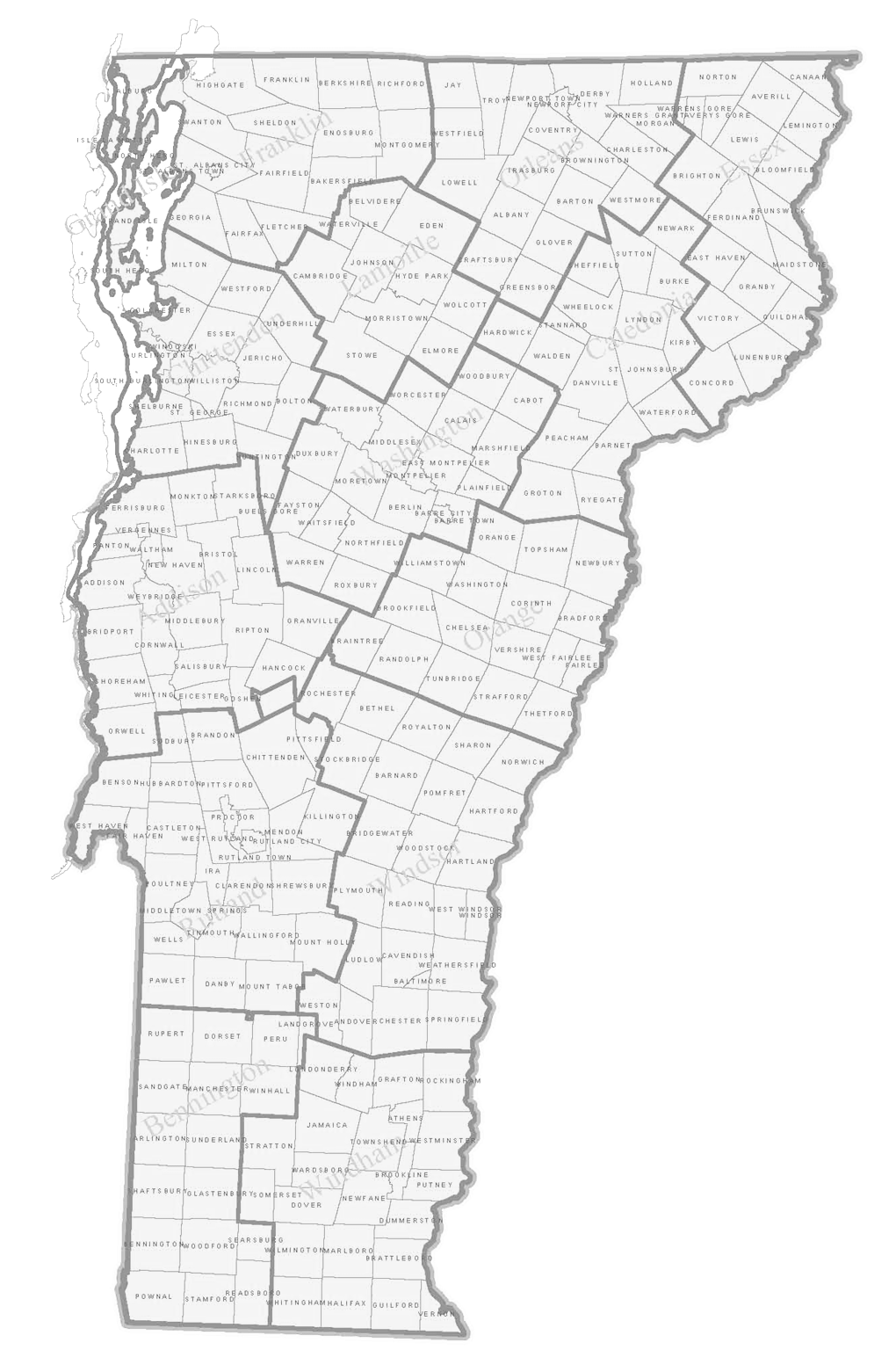
Office Locations Skills Test Locations Bennington Bennington County 530 Main St Dummerston1 Windham County AOT District #2 Office, 870 US Route 5 Montpelier Washington County - Main Office 120 State Street Newport Orleans County 100 Main Street Saint Albans1 Franklin County 27 Fisher Pond Rd Saint Johnsbury1 Caledonia County Green Mtn Mall, 1998 Memorial Dr South Burlington Chittenden County 4 Market Street Springfield Windsor County 100 Mineral St, Suite 103 Rutland Rutland County 101 State Place White River Junction1 Windsor County 221 Beswick Drive Barre Barre Auditorium 20 Auditorium Hill Bennington AOT Garage (Summer Only) Bowen Rd Colchester (Fort Ethan Allen) Agency of Transportation Garage 5 Barnes Ave (end of road on right) Rutland 280 Seward Road Foley Distributing Saint Johnsbury 1998 Memorial Drive Green Mountain Mall Springfield Hartness State Airport Airport Road, N Springfield
1 No cash accepted at this location Martin Luther King, Jr. Day 3rd Monday in January Presidents’ Day 3rd Monday in February Town Meeting Day 1st Tuesday in March Memorial Day Last Monday In May Independence Day July 4th Bennington Battle Day August 16th Labor Day 1st Monday in September Veterans Day November 11th Thanksgiving Day 4th Thursday in November Christmas Day December 25th Commercial Driver’s License Fees CDP (Learner’s Permit) $15 CDL, 2 Year $60 CDL, 4 Year $90 Duplicate or Corrected CDL $15 Endorsement Tests (each) $14 Knowledge or Skills Test (each) $32 Motorcycle Endorsement (per year) $3 Skills Test Scheduling Deposit $24 School Bus – Type I endorsement & skills test have a fee: type II School Bus no fee. All fees above accurate as of January 2023 and are subject to change. Commercial Driver’s License Age Requirements You must be at least 18 years old and hold a valid Vermont Class D Operator’s License to obtain a Commercial Learner’s Permit. You must be at least 18 years old to obtain a Commercial Driver’s License to operate a commercial vehicle within Vermont (Intrastate commerce). You must be at least 21 years old to operate a commercial motor vehicle between Vermont and another state (Interstate commerce).
Commercial Driver’s License Exemptions The following vehicles are not considered commercial motor vehicles. Operators of these vehicles are exempt from Commercial Driver’s License requirements: Authorized emergency vehicles such as law enforcement, fire department, public or private Department of Motor Vehicles Contact Information Commercial Driver Training 802.828.2114 Commercial Vehicle Enforcement 802.828.2078 DMV Website dmv.vermont.gov Exam Scheduling mydmv.vermont.gov General Information 802.828.2000 | 888-99-VERMONT (1-888-998-3766) Oversize/Overweight Permit 802.828.2064 Vermont State Holidays New Year's Day January 1st
ambulance, and volunteer rescue squads. Farm vehicles that are: Controlled and operated by a farmer, Used to transport agricultural products, farm machinery or supplies not used in the operation of a common or contract carrier to or from a farm, and Used within 150 air miles of the farm.
Drug and Alcohol Testing Requirements Federal DOT regulations state that drivers who are subject to CDL requirements and who operate commercial motor vehicles are subject to federal DOT drug and alcohol testing requirements. The various types of commercial motor vehicles are described in Section 1 of this Manual. The testing requirements apply to all drivers who are required to hold a CDL or CDP, including drivers employed by state, county, and municipal governments, and drivers who employ themselves. Testing is directed by the driver’s employer in accordance with the DOT regulations. Drivers and their employers who do not comply with the testing regulations are subject to federally imposed fines and penalties. The requirements can be found in the Code of Federal Regulations, Title 49, Section 382. The DOT regulations require drivers to undergo testing under several circumstances including:
- • Pre-employment drug testing
- • Random drug and alcohol testing
- • Post-accident drug and alcohol testing
- • Drug and/or alcohol testing when the driver’s employer has reasonable suspicion of a violation The drugs the employer must test for are:
- • Marijuana metabolites
- • Cocaine metabolites
- • Amphetamines
- • Opioids
- • Phencyclidine (PCP) Marijuana is a controlled substance in accordance with federal law. Drivers who are required to comply with DOT drug testing requirements are prohibited from using marijuana for recreational or medicinal purposes. Employers of commercial motor vehicle drivers are required to provide their drivers with a written policy concerning drug and alcohol use, misuse, and testing. Among other topics, the policy must describe testing procedures, the circumstances under which drivers will be tested, prohibited driver conduct, and consequences for drivers who violate the drug and alcohol testing rules. Motor homes and trailer coaches utilized for personal recreational use. Military equipment owned by the U.S. Department of Defense and operated by military personnel. Additional information concerning DOT drug and alcohol testing requirements can be found at on the Federal Motor Carrier Safety Administration (FMCSA) website fmcsa.dot.gov. A Vermont Commercial Learner’s Permit allows a person to receive commercial driving instruction and behind-the-wheel driving experience on public highways. While driving on the road, the holder of a Commercial Learner’s Permit must be accompanied by a person who holds a valid CDL for the type of vehicle driven, including any endorsements, and who occupies a seat beside the individual, or in the case of a vehicle designed to transport more than 15 passengers, occupies a seat directly behind, or in the first row behind the driver, for the purpose of giving instruction in driving the commercial motor vehicle. A person must hold a valid Vermont Operator’s License and pass the knowledge tests for the class of license for which they are applying to qualify for a Commercial Learner’s Permit. Knowledge tests may be required to operate certain types of vehicles, which require a separate endorsement on the Commercial Driver’s License. A skills test must be taken in a vehicle which represents the license class for which you have applied. A Commercial Learner’s Permit will be valid for one year from the date of issue. No renewals will be allowed. In order to obtain another CDP, you will be required to retake the knowledge tests. You must carry your Vermont Class D Operator’s License along with your Commercial Learner’s Permit. Note: You must acquire and hold a Commercial Learner’s Permit for a minimum of 14 days before you can obtain a Commercial Driver’s License. A Commercial Learner’s Permit holder has certain restrictions regarding the Hazardous Materials, Passenger, School Bus and Tank Vehicle Endorsements: A Commercial Learner’s Permit holder is prohibited from operating a commercial vehicle which is transporting hazardous materials. A Commercial Learner’s Permit holder with a Passenger Endorsement must have taken and passed the Passenger Endorsement knowledge test but are prohibited from operating a commercial motor vehicle carrying passengers, other than federal or state auditors and inspectors, test examiners, other trainees, and the CDL holder accompanying the Commercial Learner’s Permit holder. A Commercial Learner’s Permit holder with a Tank Vehicle Endorsement must have taken and passed the Tank Vehicle Endorsement Knowledge Test but may only operate an empty tank vehicle and is prohibited from operating any tank vehicle that previously contained hazardous materials that has not been purged of any residue. A Commercial Learner’s Permit may have a School Bus endorsement, but cannot operate a passenger vehicle with passengers, except for a trainer who is properly licensed with endorsements, federal/state auditors and test examiners. All other federal endorsements are prohibited on a Commercial Learner’s Permit. Commercial Learner’s Permit You must have a valid Commercial Driver’s License or Commercial Learner’s Permit to drive a commercial motor vehicle. When applying for a Commercial Learner’s Permit, you must provide proof of age, proof of citizenship or lawful permanent residency and you must know your social security number. A DOT medical is required if your Medical Self-Certification is NI or NA (see page 8). ELDT requirements must be met by individuals who apply for: A Class A or Class B commercial driver’s license (CDL) for the first time An upgrade of an existing CDL to a higher class [Class C to B or A, Class B to A] A school bus (S), passenger (P), or hazardous materials (H) endorsement for the first time ELDT must be completed before an applicant can take the CDL skills exam. Individuals applying for a hazardous materials (H) endorsement must complete ELDT prior to taking the endorsement knowledge exam. Applicants subject to ELDT can find training providers from the public list located on the Training Provider Registry (TPR) website tpr.fmcsa.dot.gov. Applicants may contact the training provider directly and secure their services outside of the Registry. The FMCSA TPR will retain a record of which CDL applicants have completed the new training and certification process outlined in the ELDT regulations. Commercial Driver’s License Appointments To schedule a test, please visit mydmv.vermont.gov. Note: Customers who do not schedule an appointment in advance cannot be tested. Once you pass the knowledge test, you are qualified to take the skills test (if you have held a Commercial Learner’s Permit for a minimum of 14 days prior to taking the skills test). If you have not held a Commercial Learner’s Permit for at least 14 days, you will not be allowed to take the skills test until 14 days have passed. A scheduling deposit must be submitted to the Department before making an appointment for the skills test. Once the Department receives the deposit, you may make an appointment for the skills test. When making an appointment you will need to know vehicle class, endorsements and test history. If you do not appear for the skills test at the scheduled time, you will forfeit the deposit unless you give the Department 48 hours’ notice of cancellation. If you fail the skills test the fee is still due. A subsequent test will be scheduled without an additional deposit; however, the subsequent test fee is still payable prior to actual testing. See fees on page 4. Entry-Level Driver Training The Federal Motor Carrier Safety Administration (FMCSA) has established minimum training standards for entry-level drivers. The Entry-Level Driver Training (ELDT) requirements incorporate performance-based concepts by requiring driver-trainees to demonstrate proficiency in both behind-the-wheel (BTW) instruction and knowledge portions of the curriculum during classroom and range training sessions. The ELDT training curriculum is outlined in 49 CFR 380. You can pick up a CDL Application and Commercial Driver Manual at any DMV Customer Services Office, or you can download the application and manual from our website, dmv.vermont.gov. You should bring the completed application with you when you appear for your scheduled appointment. Your current valid Driver’s License Your current valid Commercial Learner Permit Proof of liability insurance and a valid registration certificate for the vehicle (and trailer if applicable) you will use for your skills tests. You will not be allowed to take any of the skills tests without these. DOT Medical Card, if applicable. The vehicle used for the skills test must have a valid inspection sticker and meet all inspection requirements. For School Bus Endorsement: DOT Medical Card and must have completed school bus clinic within previous 6 months (Instructor reports completion to DMV). Skills Test Cancellation For safety reasons, CDL skills tests may be canceled due to inclement weather. Please call 802.828.2000 prior to your appointment if the weather is bad in your area.
- • If you must cancel a skills test, call at least 48 hours prior to your appointment. If notice of cancellation is not given at least 48 hours prior to appointment, a new deposit must be submitted to reschedule an appointment. Commercial Driver’s License Medical Self-Certification The Federal Motor Carriers Safety Regulations require all CDL holders to self-certify as part of any CDL issuance as to what type of driving they perform or expect to perform. You must self-certify that you operate in one of the following:
- 1. Non-Excepted Interstate (NI): You operate, or expect to operate, in Interstate Commerce and you are subject to 49 CFR Part 391, for which you must provide a current Medical Examiner's Certificate plus any waivers indicated on the certificate.
- 2. Non-Excepted Intrastate (NA): You operate, or expect to operate, only in Intrastate Commerce and are required to meet FMSCA driver qualification requirements, for which you must provide a current “Vermont Only” Medical Examiner's Certificate.
- 3. Excepted Interstate (EI): You operate, or expect to operate, in Interstate Commerce, but engage exclusively in operations that qualify for exception of the requirement to maintain a Medical Examiner's Certificate.
- 4. Excepted Intrastate (EA): You operate, or expect to operate, in a city, county state or federal vehicle ONLY, and are exempt from the FMCSA driver qualification requirements. Those certifying in Non-Excepted Interstate Commerce, or Non-Excepted Intrastate Commerce (numbers 1 or 2 above), must also provide their Medical Examiner’s Certificate or DOT card to DMV where it will be added to your personal driving history. Failure to present valid medical documentation will result in the denial of the issuance or renewal of your CDL or CDP. Failure to maintain current medical documentation on file with DMV may result in a suspension and/or downgrade of your CDL or CDP. When you come to your scheduled skills test appointment, you must bring the following items with you: You must ensure that your medical documentation on file with DMV remains current and accurate. If you self-certify in a category exempt from medical certification requirements (numbers 3 and 4 above), and later change to a non-excepted type of operation (numbers 1 or 2 above), you must recertify in the appropriate category and provide proof of current medical certification to avoid potential enforcement actions and the loss of your commercial driving privilege. Determining What Category Applies to You For the purpose of complying with requirements for self-certification it is important to know how you are using the commercial motor vehicle. To help you accurately determine this, you must determine how you are using the Commercial Motor Vehicle (CMV). Follow these steps:
- 1. Do you, or will you, use a CDL to operate a CMV in Interstate Commerce or Intrastate Commerce? Interstate Commerce is when you drive a CMV: From one state to another state or a foreign country, Between two places within a state, but during part of the trip, the CMV crosses into another state or foreign country, or Between two places within a state, but the cargo is part of a trip that began or will end in another state or foreign country. You must be 21 years of age or older. Intrastate Commerce is when you drive a CMV within a state and you do not meet any of the descriptions above for Interstate Commerce. If you operate in both Intrastate Commerce and Interstate Commerce, you must choose Interstate Commerce.
- 2. Once you decide you operate, or will operate, in Interstate Commerce or Intrastate Commerce, you must decide whether you operate, or expect to operate, in an excepted or non-excepted status. This decision will tell you to which of the four types of commerce you must self-certify.
- 3. If you are currently not operating a commercial motor vehicle and wish to retain your Commercial Driver’s License, you may certify as Excepted Interstate (EI)2. When you begin operation of a commercial motor vehicle, you will be required to update your certification and provide a valid DOT Medical Card. Interstate Commerce You operate in excepted interstate commerce when you drive a CMV in interstate commerce only for the following exempted activities: As federal, state or local government employees. To obtain medical forms visit bit.ly/FMCSAMedForms. To read more about the Medical Certification Federal Requirement visit the U.S. Department of Transportation, Federal Motor Carrier Safety Administration at: bit.ly/MedSelfCert. 2 This does not apply to School Bus Endorsement Primarily in the transportation of propane winter heating fuel when responding to an emergency condition requiring immediate response such as damage to a propane gas system after a storm or flooding. In response to a pipeline emergency such as a leak or rupture. In custom harvesting on a farm or for transportation of farm machinery and supplies used in the custom harvesting operation to and from a farm or within 150 miles of the farm (does not apply to the transport of hazardous materials requiring a placard or to combination vehicles). o Note: Medical card required for articulated farm vehicle >10,000 pounds. Beekeeper in the seasonal transportation of bees. As a private motor carrier of passengers for non-business purposes. To transport migrant workers. If you answered ‘yes’ to one or more of the above activities as the only operation in which you drive, you operate in Excepted Interstate Commerce and do not need a federal Medical Examiner’s Certificate. If you answered ‘no’ to all of the above activities, you operate in Non-Excepted Interstate Commerce and are required to provide a current Medical Examiner’s Certificate (49 CFR 391.45), commonly referred to as a Medical Certificate or DOT Card. Most CDL holders who drive in Interstate Commerce are Non-Excepted Interstate Commerce drivers. If you operate in both Excepted and Non-Excepted Interstate Commerce, you must select Non- Excepted Interstate Commerce to be qualified to operate in both types of interstate commerce. Intrastate Commerce You operate in Excepted Intrastate Commerce when you drive a CMV only in intrastate commerce activities for which Vermont statutes do not require you to meet medical certification requirements. Most CDL drivers operating in Vermont operate in Non-Excepted Intrastate Commerce and are required to obtain a medical certificate. This includes: Drivers of vehicles over 26,000 pounds Gross Vehicle Weight Rating, or Gross Vehicle Weight over 26,000 pounds. Drivers of vehicles that carry hazardous materials that require a placard. Drivers of vehicles designed to transport 16 or more passengers including the driver. Waivers If your Medical Examiner’s Certificate is only valid with a vision, diabetes or a Skills Performance Evaluation Waiver granted by the Federal Motor Carrier Safety Association (FMCSA), you must also provide a copy of your Waiver. The transportation of human corpses or sick or injured persons. The operation of fire truck or rescue vehicles while involved in emergency and related operations. Pre-Trip Inspection Test A pre-trip inspection will be required before the skills test. If your vehicle fails the pre-trip inspection for safety reasons, it will be considered a test failure. No additional testing will occur during this appointment, you will be required to pay the skills test fee. You must make an appointment to retake the complete test. A new test scheduling deposit is not required. Note: Vehicles must display proper side and rear reflective sheeting per Federal Safety Motor Regulations 49 CFR Parts 393, et al. Skills Test Note: You must hold a Commercial Learner’s Permit for at least 14 days before you can take the skills test. Applicants who fail one segment of the skills test will be prohibited from proceeding to the next segment on the same day. Test Vehicles: For the pre-trip inspection and skills test, you must provide a vehicle that represents the license class for which you have applied (see diagram page 15). The vehicle must have clean, operable safety belts; school buses are exempt. The cargo portions of all vehicles must be empty at the time of your skills test. The vehicle must pass inspection at the time of the test in order to be used for the skills test. If you wish to be licensed to drive a commercial vehicle equipped with air brakes or air over hydraulic brakes, you must pass the air brake knowledge test and provide a commercial vehicle with air brakes or air over hydraulic brakes for your skills test. If you take the skills test in a vehicle without air brakes, you will receive an air brake restriction (L) on your license. This means you can operate only commercial vehicles that do not have airbrakes. If the vehicle is equipped with air over hydraulic brakes, you will receive a Z restriction. Note: If you fail a Skills test three (3) times, you will have to wait six (6) months before you can take the exam again. Municipal/Government Employees: Municipal and government employees are exempt from the medical requirements when operating a commercial vehicle as part of official work duties for the municipality or government agency. An applicant wishing to have a restriction removed (i.e. automatic transmission, air brake, no tractor-trailer or endorsement added i.e. SB or Passenger) will be required to obtain a commercial learner permit and hold permit for a minimum of 14 days. A test fee is required as well as a skills deposit. If you need more information, please call 802.828.0598 Monday – Friday, 7:45 AM – 4:15 PM, except for holidays, or contact us: dmv.vermont.gov/contact Note: The transfer of a CDL School Bus (S) Endorsement under this Waiver Program is prohibited. Commercial Driver’s License Upgrade To upgrade your Commercial Driver’s License to a higher class, you must complete a new Commercial Driver’s License Application. To drive Combination Vehicles, or add endorsements, you must take and pass the appropriate knowledge tests. Additionally, a skills test (pre-trip inspection, basic controls and on-road driving test) will be required in a vehicle representative of the class of vehicle you wish to drive. There will be a skills test fee due for this examination. Applicants upgrading to a higher class, adding a passenger endorsement or removing a restriction are required to acquire and hold a Commercial Learner's Permit for a minimum of 14 days before being eligible to take the skills test. A skills test fee is required at time of permit issuance. A skills test deposit is also required before scheduling the skills test. No Full Air Brake Equipped CMV (Z) If an applicant performs the skills test in a vehicle equipped with air over hydraulic brakes, the State must indicate on the CDL, if issued, that the person is restricted from operating a CMV equipped with any braking system operating fully on the air brake principle. For the purposes of the skills test and the restriction, air over hydraulic brakes include any braking system operating partially on the air brake and partially on the hydraulic brake principle. Commercial Driver’s License Transfer In accordance with State and Federal law, any person holding a Commercial Driver’s License from another state must transfer their out-of-state Commercial Driver’s License within 30 days after establishing residency in Vermont. A written test will be required for a Hazardous Materials Endorsement, unless you provide written proof that a test was taken and passed within a two-year period preceding the transfer. In addition, we must be able to verify your current TSA Background Check and fingerprinting. Commercial Driver’s License Expiration and Renewal A Vermont Commercial Driver’s License is issued to expire on the fourth (or second) birthday anniversary from the date of issue (2-year option is not available for holders of a valid School Bus Endorsement). Approximately one month (6 months for School Bus and/or HazMat) before your CDL expires; you will receive a renewal notice in the mail, assuming you have notified us of any changes to your current mailing address, as is required by law. You must appear in person to renew your CDL. Military Skills Test Waiver The CDL knowledge and skills tests may be waived for service members who are currently licensed, and who are or were, employed within the last year in a military position requiring the operation of a military motor vehicle equivalent to a Commercial Motor Vehicle (CMV). This waiver allows a qualified service member to apply for a CDL without skills testing, and in some cases endorsement knowledge testing (passenger, hazmat and tanker may be waived). To apply for this waiver, you must complete the Application for Military Skills test Waiver (form VL-054); this application is available on our website and at any DMV Customer Services Office. Completion of ELDT Completion of a HAZMAT knowledge test Completion of aFederal Security Threat FBI Fingerprint check Federal criminal history background check; and Additional fees for fingerprinting and Assessment Proof of U.S. Citizenship or Permanent background check. Resident Card
appointment. Applicants must complete the Federal Security Threat Assessment online at universalenroll.dhs.gov, or call 855-DHS-UES1 (855-347-8371) between 8am – 10pm prior to | Applicants | | must | complete the Federal Security Threat Assessment online |
at | | , or call 855-DHS-UES1 (855-347-8371) between 8am – 10pm prior to | | |
taking the Vermont endorsement examination | | | | |
Standards for Federal Security Threat Assessment A Hazardous Materials Endorsement may not be obtained, renewed or transferred if the applicant: Is not a citizen of the United States or a lawful permanent resident of the United States, Has a disqualifying criminal offense (must be a felony) for which the applicant was either convicted or found not guilty by reason of insanity in any jurisdiction, civil or military of any of the following: Arson Espionage Sedition Terrorism Treason A crime involving a severe transportation Improper transportation of a hazardous material. Unlawful possession, use, sale, distribution or manufacture of an explosive, explosive device, firearm or other weapon. Conspiracy to commit any of the above offenses. Or, security incident.
Has one of the following disqualifying criminal offenses (must be a felony) for which the applicant was either convicted or found not guilty by reason of insanity in any jurisdiction, civil or military, during the 7 years prior to the application; and/or was released from incarceration for any of the listed offenses during the 5 years prior to application: Assault with intent to murder Bribery Extortion Immigration violations Kidnapping or hostage taking Murder Rape or aggravated sexual abuse Robbery Smuggling Dishonesty, fraud, or misrepresentation, substance. Violations of the Racketeer Influenced and Corrupt Organizations (RICO). Conspiracy to commit any of the above offenses. Has been adjudicated as a mental defective (including a finding of insanity by a court and a finding of incompetence to stand trial by reason of lack of mental responsibility) or committed to a mental institution (does not include commitment for observation or voluntary admission). including identity fraud. Distribution of, intent to distribute, possession, or importation of a controlled Hazardous Materials (HazMat) Endorsement The federal requirements for Hazmat drivers include:
Additionally, all commercial vehicle drivers with a HME have a continuing responsibility to report any change of status that takes them out of compliance to the Department of Motor Vehicles within 24 hours and surrender the Hazardous Materials Endorsement. For questions about the Federal Security Threat Assessment or to check the status of an application, visit universalenroll.dhs.gov or call 855-DHS-UES1. Lost or Damaged Commercial Driver’s License If you lose or damage your CDL or Commercial Learner’s Permit, you must apply in person for a duplicate with 2 acceptable forms of identification. Name or Address Change If you change your name, mailing address or legal residence, you must apply in person within 30 days for a corrected CDL or Commercial Learner’s Permit. For name changes, documents proving legal name change must be provided: marriage certificate, divorce decree or court ordered legal name change. Vision Test The Motor Vehicle Customer Service Specialist will conduct a vision test before a CDL is issued if you are coming in from another state. If you wear glasses or contact lenses to pass the vision tests, you will be required to wear them when you drive. A corrective lenses restriction will be placed on your CDL. If you fail the eye test, you will be given an eye referral form, which must be completed by an eye doctor and returned to the Department within 30 days. Your vision must be corrected before you will be issued a CDL. If you have monocular vision, call CDL information in Montpelier at 802.828.0598 for further information. School Bus Endorsements An out-of-state CDL with both the School Bus and Passenger Endorsements is acceptable proof of having passed the knowledge and skills tests. In all instances the holder must attend and pass a Vermont school bus driver training clinic. This must be done prior to issuance of a Vermont License. For a list of current School Bus Driver Training Clinics visit dmv.vermont.gov or call 802.828.3757.
Classes have an enrollment maximum of 25. If you wish to be guaranteed a seat, you must register in advance. Walk-ins will not be accepted if the maximum number of students is in attendance. School Bus Driver Training consists of eight (8) hours of classroom instruction. Upon completion of the clinic, the instructor will notify DMV. The clinic is valid for a period of 6 months from date of issue. If you do not obtain your school bus endorsement within 6 months, another clinic will be required. If an individual does not meet these standards or if the individual has been notified by TSA that they have been determined to be a security risk, they must return their CDL to any of DMV’s offices for the purpose of having their Hazardous Materials Endorsement removed from their license. A new CDL without the Hazardous Materials Endorsement will be issued.
In all instances, the CDL holder must fulfill all Vermont requirements. United States Border Crossing Requirements Federal rules require U.S. citizens traveling from Canada, Mexico, the Caribbean or Bermuda, by land or sea, to present a U.S. Passport, U.S. Passport Card or an Enhanced Driver's License (EDL). EDL issuance requires, at a minimum, presentation and verification of a photo identity document; documentation showing date of birth; proof of social security number; and documentation showing the name and address of principle residence. Plan to allow at least 2 weeks for delivery of an Enhanced Driver’s License (EDL). A temporary license will be issued upon application. The temporary license can NOT be used for border crossing, so please plan accordingly. Visit dmv.vermont.gov for more information about Enhanced Driver Licenses.
Federal Section The following pages contain the Federal portion of the CDL manual.
Copyright©: The body of this document is copyrighted by the American Association of Motor Vehicle Administrators (AAMVA) and is reprinted herein with their permission. Sections specific to Vermont are property of the Vermont Department of Motor Vehicles.

Note: To obtain a Vermont School Bus Endorsement, you will need to study the Vermont School Bus Driver’s Manual in addition to this manual.




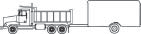
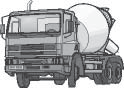
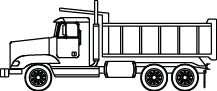




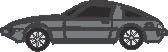



Vehicles Groups (FMCSR 383.91) and Associated CDL Tests | | | |
Class | Vehicle Description | Typical Vehicle in Group | Knowledge Tests Required | Skills tests Required
A | Any combination of vehicles with a GCWR of 26,001 or more pounds provided the GVWR of the vehicle(s) being towed is in excess of 10,000 pounds. | | • General Knowledge • Combination Vehicles • Air Brakes (if equipped) • Passenger Transport (if applicable) | • Vehicle Inspection • Basic Control Skills • Road
B | Any single vehicle with a GVWR of 26,001 or more pounds or any such vehicle towing a vehicle not in excess of 10,000 pounds GVWR. | | • General Knowledge • Air brakes (if equipped) • Passenger Transport (if applicable) • School bus (if applicable) | • Vehicle Inspection • Basic Control Skills • Road
C | Any single vehicle, or combination of vehicles, that does not meet the definition of group A or group B as contained herein, but that either is designed to transport 16 or more passengers including the driver, or is placarded for hazardous materials. | | • General Knowledge • Air Brakes (if equipped) • Hazardous Materials (if applicable) • Passenger Transport (if applicable) • School bus (if applicable) | • Vehicle Inspection • Basic Control Skills • Road
Endorsements | | | |
T | Combination vehicles with double or triple trailers. | | • Doubles/Triples |
N | Vehicles used to haul liquids or gaseous materials in permanent tanks or in portable tanks having a rating capacity of 1,000 gallons or more. | | • Tank Vehicle | Skills tests applicable to class of vehicle brought in for testing.
P | | | • Passenger Transport |
H | | | • Hazardous Materials |
X | | | • Tank Vehicle • Hazardous Materials |
S | | | • School Bus |
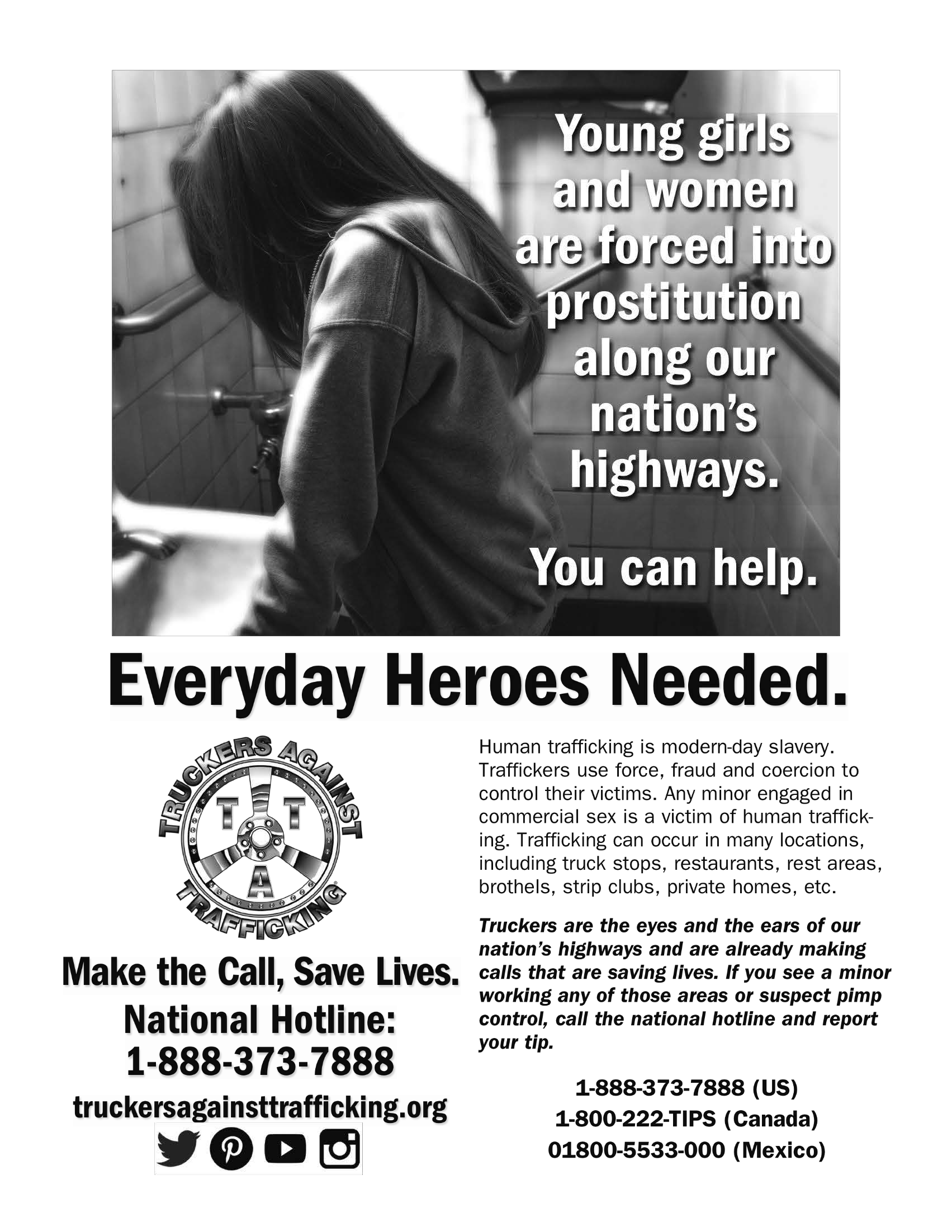

















In January 2015, an RV pulled into a truck stop in Virginia. Observant professional truck driver Kevin Kimmel recognized suspicious activity around that RV, which had pulled back by the truck line, and decided something was off. Instead of turning a blind eye, he made a call that brought law enforcement out to the scene within a few minutes. After interviewing the occupants of the vehicle, they discovered that a young woman, 20 years old, had been kidnapped from Iowa two weeks prior. She had been beaten, raped, her whole body burned by instruments heated on the RV stove, branded and starved. She was being sold by her traffickers, Laura Sorenson and Aldair Hodza, through sex ads on Craigslist, where men were purchasing her and then arriving at the RV to rape her. She was dying from malnutrition and the torture she was subjected to … had the call not been made that brought law enforcement out to that truck stop, doctors said she would have died within the next few days. Now a recovering survivor, this young woman calls Kimmel her guardian angel. He calls himself a Trucker Against Trafficking.
Truckers Against Trafficking is a non-profit organization that has been working with the trucking industry since 2009 to provide the needed training and tools to enable members of the industry to both recognize human trafficking when they see it happening and to know what actions to take to enable law enforcement to effectively fight this crime. Through this training and these tools, truckers are becoming Everyday Heroes like Kevin Kimmel, who was also named TAT’s 2015 Harriet Tubman Award winner.

One of the tools TAT provides is a wallet card with red flags to look for, questions to ask if you suspect someone is a victim and actionable information to report. This wallet card is available by App, from the appropriate App Store, on all smart phones, whether Android, iPhone or Windows format, as well as by emailing tat.truckers@gmail.com, for a version to carry in your wallet.
Additionally, TAT provides a powerful, 26-minute training video on its website (www.truckersagainsttrafficking.org), which, when watched along with taking and passing a short test, certifies drivers as TAT-Trained, a designation which can go on your resume. Because professional drivers often find themselves in locations frequented and exploited by human traffickers, they are in a unique position to recognize the signs of human trafficking and to make the call that can lead to victim recovery and perpetrator arrests. Get your wallet card today. Be an Everyday Hero! Make the call (1-888-3737-888); save lives!








Introduction ......................................................................................................................................... 1-1
Driving Safely ................................................................................................................................... 2-1
Transporting Cargo Safely ............................................................................................... 3-1
Transporting Passengers Safely ............................................................................... 4-1
Air Brakes ............................................................................................................................................. 5-1
Combination Vehicles ............................................................................................................ 6-1
Doubles and Triples ................................................................................................................. 7-1
Tank Vehicles .................................................................................................................................. 8-1
Hazardous Materials ................................................................................................................ 9-1
School Bus ........................................................................................................................................ 10-1
Vehicle Vehicle Inspection ............................................................................................. 11-1
Basic Vehicle Control Skills Test ............................................................................ 12-1
On-Road Driving ......................................................................................................................... 13-1
This material is based upon work supported by the Federal Motor Carrier Safety Administration under Cooperative Agreement No. DTFH61-97-X-00017. Any opinions, findings, conclusions or recommendations expressed in this publication are those of the Author(s) and do not necessarily reflect the view of the Federal Motor Carrier Safety Administration.
COPYRIGHT © 2005 AAMVA. All rights reserved This material has been created for and provided to State Driver License Agencies (SDLAs) by AAMVA for the purpose of educating Driver License applicants (Commercial or Non- Commercial). Permission to reproduce, use, distribute or sell this material has been granted to SDLAs only. No part of this book may be reproduced or transmitted in any form or by any means, electronic or mechanical, including photocopying, recording, or by any information storage and retrieval system without express written permission from the author / publisher. Any unauthorized reprint, use, distribution or sale of this material is prohibited.
Table of Contents
This Section Covers Commercial Driver License Tests Medical Requirements Driver Disqualifications Other Safety Rules International Registration Program
There is a federal requirement that each state have minimum standards for the licensing of commercial drivers.
This manual provides driver license testing information for drivers who wish to have a commercial driver license (CDL). This manual does NOT provide information on all the federal and state requirements needed before you can drive a commercial motor vehicle (CMV). You may have to contact your state driver licensing authority for additional information.
You must have a CDL to operate: Any single vehicle with a gross vehicle weight rating (GVWR) of 26,001 pounds or more. A combination vehicle with a gross combination weight rating (GCWR) of 26,001 or more pounds, provided the GVWR of the vehicle(s) being towed is in excess of 10,000 pounds. A vehicle designed to transport 16 or more passengers (including the driver). Any size vehicle which requires hazardous material placards or is carrying material listed as a select agent or toxin in 42 CFR part 73. Federal regulations through the Department of Homeland Security require a background check and fingerprinting for the Hazardous Materials endorsement. Contact your local department of driver licensing for more information.
(Your state may have additional definitions of CMVs.)
CDL Classifications The CDL vehicle classification included in the federal standard, together with the type of cargo to be transported, determine what type of CDL license and endorsement an applicant must apply for. There are three basic vehicle classes or groups: Class B Heavy Straight Vehicles. Any single vehicle with a GVWR of 26,001 or more pounds falls in Group B, or any such vehicle towing another vehicle not in excess of 10,000 pounds GVWR. Class B includes straight trucks and large buses, including articulated buses. Safely driving these heavy vehicles requires considerably more knowledge and skill than driving the small trucks and buses found in Class C. Since they include the skills required to drive Class C vehicles, drivers who have qualified for a Class B license may also drive vehicles in Class C. Class C Small Vehicles. Any single vehicle with a GVWR less than 26,001 pounds falls in Group C, or any such vehicle towing another vehicle not in excess of 10,000 pounds GVWR. However, vehicles of this size are included in the CDL program only if they are: 1) Designed to carry 16 or more passengers including the driver, or (2) Used to transport hazardous materials in quantities requiring placarding under the Hazardous Materials Regulations (49 CFR Part 172, Subpart F) or is carrying material listed as a select agent or toxin in 42 CFR part 73.
There are a great variety of vehicles in Class C. Some rather large Class C vehicles may require more skill and knowledge to operate than do the smaller ones. However, the licensing category is based principally on the type of cargo carried. Because of the seriousness of a crash involving hazardous material or human passengers, the safe operation of even the smaller vehicles in Class C requires special knowledge and the drivers of these vehicles must have a CDL.
STATE OPTIONS: Some states may include more drivers and vehicles in their CDL programs. For example, in some states, a CDL may be required for buses designed to carry fewer than 16 passengers. Going beyond the federal standard is acceptable and the state will need to decide which battery of tests applies to these drivers, or develop a new battery. Class A Combination Vehicles. Any combination of vehicles with gross combination weight rating (GCWR) of 26,001 or more pounds falls in Group A provided the GVWR of the vehicle(s) being towed is more than 10,000 pounds. Most Class A vehicles are trucks such as truck-tractor/semi-trailer or truck and trailer combinations. However, tractor-trailer buses may be found in a few communities. Driving a Class A vehicle requires considerably more skill and knowledge than driving vehicles in Classes B and C. Since these skills include those required to drive a B and C vehicle, a driver who has a Class A license also may drive vehicles in Classes B and C.
INTRODUCTION
Endorsements All commercial drivers who drive certain types of vehicles or haul certain types of cargo must add endorsements to their CDL license and/or Commercial Learner’s Permit (CLP) to show that they have the specialized knowledge required for these operations. There are six kinds of CDL endorsements that may be required, depending on the vehicle or type of cargo. NOTE: The only endorsements that may be added to a Commercial Learner’s Permit (CLP) are: - Passenger (P); - School bus (S); and - Tank vehicle (N). Double and Triple Trailers (T). Many drivers who are qualified to drive Class A vehicles may wish to pull double or triple trailers. Research shows that considerable additional knowledge and skill is necessary to safely pull double and triple trailers in various traffic conditions and driving environments. Consequently, adding the endorsement to the licenses of Class A drivers is necessary if they wish to pull double or triple trailers. A special knowledge examination on the problems associated with pulling multiple trailers must be passed. Tank Vehicle (N). Drivers ofany commercial motor vehicle that is designed to transport any liquid or gaseous materials within a tank or tanks having an individual rated capacity of more than 119 gallons and an aggregate rated capacity of 1,000 gallons or more that is either permanently or temporarily attached to the vehicle or the chassis must obtain this endorsement.Applies to Class A, B and C (only applicable to Class C if the vehicle is hauling hazardous materials) vehicles. Liquids in bulk cause driving control problems because the cargo is heavy, prone to shifting, and has a high center of gravity. These drivers must pass a special knowledge examination on the problems posed by large volume liquid cargos to add the endorsement to their CDL/CLP. Passengers (P). Drivers who wish to drive a vehicle having a design capacity to carry 16 or more people, including the driver, must add a passenger endorsement to their CDL/CLP. They must pass a special knowledge examination on safety considerations when transporting passengers and must pass skills tests in a passenger vehicle. The endorsement applies to applicants who wish to drive a bus in any class (A, B, or C). The Transportation Security Administration (TSA) and the US Department of Transportation require background checks on commercial drivers who are certified to transport hazardous materials. The background checks include a review of criminal, immigration and FBI records. If the driver is found to represent a security threat, TSA will notify the person and the state will deny issuance of an endorsement. Combination Hazardous Materials and Tank Vehicle (X). Drivers of tank vehicles who haul hazardous materials or waste in amounts requiring placards must add an X endorsement to their CDL, showing that they have passed the special knowledge examinations for both tank vehicles and hazardous materials. School Buses (S). Drivers who wish to drive a school bus, must add a school bus endorsement to their CDL/CLP. They must pass a special knowledge examination on safety considerations when transporting passengers in a school bus and must pass skills tests in a school bus. The endorsement applies to applicants who wish to drive a school bus in any class (A, B, or C). In addition to these six required endorsements, states may add special endorsements of their own as they see fit.
Restrictions Restrictions may be added to Commercial Driver Licenses/Permits based upon the type of vehicle and equipment that the driver uses for the Skills Test. There are ten standardized restriction codes. NOTE: If a CLP is issued with a Passenger (P) or a School Bus (S) endorsement, it must also contain a (P) – No passengers in a CMV bus restriction. If a CLP is issued with a Tanker (N) endorsement, it must also contain a (X) – No cargo in a CMV tank vehicle. CDL Endorsements & Restrictions Hazardous Materials (H). Any driver, regardless of the vehicle Class/Group (A, B, or C) who wishes to haul any material that has been designated as hazardous under 49 U.S.C. 5103 and is required to be placarded under subpart F of 49 CFR part 172; or any quantity of a material listed as a select agent or toxin 42 CFR Part 73 must add a hazardous materials endorsement to their CDL. S/he must pass a special written examination on how to recognize, handle, and transport hazardous materials. (K) - Intrastate only: If an applicantcertifies their status as either Non-Excepted Intrastate or Excepted Intrastate, the state must indicate on the CDL, if issued, that person is restricted from operating a CMV in interstate commerce. States may impose this restriction for reasons other than those specified above. (L) - No Air brake equipped CMV: If an applicant does not take or fails the air brake component of the knowledge test, or performs the skills test in a vehicle not equipped with air brakes, the State must indicate on the CLP or CDL, if issued, that the person is restricted from operating a CMV equipped with any type of air brakes. For the purposes of the skills test and the restriction, air brakes include any braking system operating fully or partially on the air brake principle. (M)- No Class A passenger vehicle: If an applicant applying for a passenger endorsement performs the skills test in a passenger vehicle requiring a Group B CDL, the State must indicate on the CDL, if issued, that the person is restricted from operating a passenger vehicle requiring a Group A CDL. (N)- No Class A and B passenger vehicle: If an applicant applying for a passenger endorsement performs the skills test in a passenger vehicle requiring a Group C CDL, the State must indicate on the CDL, if issued, that the person is restricted from operating a passenger vehicle requiring a Group A or B CDL (O)- No tractor trailer CMV: If an applicant performs the skills test in a combination vehicle for a Group A CDL with the power unit and towed unit connected with a pintle hook or other non-fifth wheel connection, the State must indicate on the CDL, if issued, that the person is restricted from operating a tractor-trailer combination connected by a fifth wheel that requires a Group A CDL. An applicant who passes a skills test using a combination vehicle that is NOT a Truck Tractor Semi-Trailer combination, but is otherwise equipped with a fifth wheel, will be issued a CDL with an “O” restriction. A CLP holder with a S endorsement is prohibited from operating a school bus with passengers, other than Federal/State auditors and inspectors, test examiners, other trainees, and the CDL holder accompanying the CLP holder as prescribed by §CFR 383.25(a)(1) of this part. (V) - Medical Variance: If the State is notified according to § 383.73(o)(3) that the driver has been issued a medical variance, the State must indicate the existence of such a medical variance on the CDLIS driver record and the CDL document, if issued, using the restriction code ‘‘V’’ to indicate there is information about a medical variance on the CDLIS driver record. (X) - No cargo in CMV tank vehicle: A CLP holder with an N endorsement may only operate an empty tank vehicle and is prohibited from operating any tank vehicle that previously contained hazardous materials that has not been purged of any residue. (Z) - No full air brake equipped CMV: If an applicant performs the skills test in a vehicle equipped with air over hydraulic brakes, the State must indicate on the CDL, if issued, that the person is restricted from operating a CMV equipped with any braking system operating fully on the air brake principle. For the purposes of the skills test and the restriction, air over hydraulic brakes includes any braking system operating partially on the air brake and partially on the hydraulic brake principle. Any additional jurisdictional restrictions that apply to the CLP driving privilege.
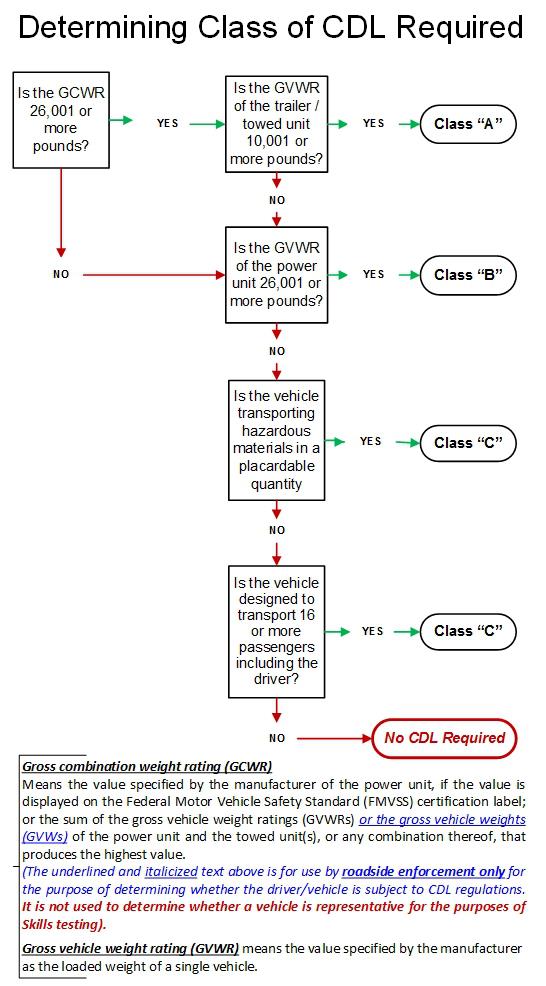
To Get a CDL or CLP To get a CDL or CLP, you must pass knowledge and skills tests. This manual will help you pass the tests, however, it is not a substitute for a truck driver training class or program. Formal training is the most reliable way to learn the many special skills required for safely driving a large commercial vehicle and becoming a professional driver in the trucking industry. Figure 1.1 helps you determine if you need a CDL (P) - No passengers in CMV bus: A CLP holder with a P endorsement is prohibited from operating a CMV carrying passengers, other than Federal/State auditors and inspectors, test examiners, other trainees, and the CDL holder accompanying the CLP holder as prescribed by § CFR 383.25(a)(1) of this part. (E)- No manual transmission. If an applicant performs the skills test in a vehicle equipped with an automatic transmission, the State must indicate on the CDL, if issued, that the person is restricted from operating a CMV equipped with a manual transmission. For the purposes of the skills test and the restriction, an automatic transmission includes any transmission not operating fully on the gear shift and clutch principle.
Figure 1.1
NOTE: A bus may be Class A, B, or C depending on whether the GVWR is over 26,001 pounds or is a combination vehicle.
1.1.1 – Knowledge Tests
You will have to take one or more knowledge tests, depending on what class of license and what endorsements you need. The CDL knowledge tests include: The general knowledge test, taken by all applicants. The passenger transport test, taken by all bus driver applicants. The air brakes test, which you must take if your vehicle has air brakes, including air over hydraulic brakes. The combination vehicles test, which is required if you want to drive combination vehicles. The hazardous materials test, required if you want to haul hazardous materials as defined in 49 CFR 383.5. In order to obtain this endorsement you are also required to pass a Transportation Security Administration (TSA) background check. The tank vehicle test, required if you want to haul any liquid or gaseous materials in a tank or tanks having an individual rated capacity of more than 119 gallons and an aggregate rated capacity of 1,000 gallons or more that is either permanently or temporarily attached to the vehicle or chassis The doubles/triples test, required if you want to pull double or triple trailers. The School Bus test, required if you want to drive a school bus.
1.1.2 – Skills Tests
If you pass the required knowledge test(s), you can take the CDL skills testwhen you are eligible. The CDL Skills Test consists of three segments: Vehicle inspection, basic vehicle control, and on-road driving. You must take the segments in the order listed and must pass each one before moving to the next. You must take these tests in the type of vehicle for which you wish to be licensed. Any vehicle that has components marked or labeled cannot be used for the CDL Skills Test. Vehicle Inspection. You will be tested to see if you know whether your vehicle is safe to drive. You will be asked to do a Vehicle inspection of your vehicle. You must point to/touch and name the item you are inspecting and explain to the examiner what you would inspect and why. Basic Vehicle Control. You will be tested on your skill to control the vehicle. You will be asked to move your vehicle forward, backward, and turn it within a On-road Test. You will be tested on your skill to safely drive your vehicle in a variety of traffic situations. The situations may include left and right turns, intersections, railroad crossings, curves, up and down grades, single or multi-lane roads, streets, or highways. The examiner will tell you where to drive.
Figure 1.2 details which sections of this manual you should study for each particular class of license and for each endorsement.
| What Sections Should You Study? | | | | | | | | | |
| | | LICENSE TYPE | | | ENDORSEMENT | | | | |
| | | Class A | Class B | Class C | Hazardous Materials | Double / Triple | Tank Vehicles | Passenger | School Bus |
Sections to Study | | 1 | X | X | X | | | | | |
| | 2 | X | X | X | | X | X | X | |
| | 3 | X | X | X | | | | | |
| | 4 | | | | | | | X | |
| | 5* | X | X | X | | X | | | |
| | 6 | X | | | | X | X | | |
| | 7 | | | | | X | | | |
| | 8 | | | | | | X | | |
| | 9 | | | | X | | X | | |
| | 10 | | | | | | | | X |
| | 11 | X | X | X | | | | X | X |
| | 12 | X | X | X | | | | X | X |
| | 13 | X | X | X | | | | X | X |
*Study section 5 if you plan to operate vehicles equipped with air brakes. | | | | | | | | | | |
Figure 1.2 – What to Study 1.1 – Commercial Driver License Tests defined area. These areas may be marked with traffic lanes, cones, barriers, or something similar. The examiner will tell you how each control test is to be done. Starting January 30, 2012 and no later than January 30, 2014, if you are applying for a CDL Permit; or are renewing, upgrading, adding endorsements to a CDL; or transferring a CDL from another state, you are required to provide information to your State Driver’s License Agency (SDLA) regarding the type of commercial motor vehicle operation you drive in or expect to drive in with your CDL. Drivers operating in certain types of commerce will be required to submit a current medical examiner’s certificate and/or any medical variance documents that you have been issued (i.e. Vision, Skills Performance or Diabetic waivers, or other exemptions) to your SDLA to obtain a “certified” medical status as part of your driving record. You must contact your State Driver Licensing Agency (SDLA) to obtain information regarding the requirement for submitting these documents. If you are required to have a ”certified” medical status and fail to provide and keep up-to-date your medical examiner’s certificate you become ”not-certified” and may lose your CDL. For the purpose of complying with the new requirements for medical certification, it is important to know how you are using the CMV. The following information will help you decide how to self-certify:
1.2.1 – Interstate or Intrastate Commerce
Do you, or will you, use a CDL to operate a CMV in interstate or intrastate commerce?
Interstate commerce is when you drive a CMV: From one State to another State or a foreign country; Between two places within a State, but during part of the trip, the CMV crosses into another State or foreign country; or Between two places within a State, but the cargo or passengers are part of a trip that began or will end in another State or foreign country. Intrastate commerce is when you drive a CMV within a State and you do not meet any of the descriptions above for interstate commerce.
If you operate in both intrastate commerce and interstate commerce, you must choose interstate commerce. Once you decide whether you will operate in interstate commerce or intrastate commerce, you must decide whether you will operate (or expect to operate) in a non-excepted or excepted status. This decision will tell you to which of the four types of commerce you must self-certify.
Interstate Commerce:
You operate in excepted interstate commerce when you drive a CMV in interstate commerce only for the following excepted activities: To transport school children and/or school staff between home and school; As Federal, State or local government employees; To transport human corpses or sick or injured persons; Fire truck or rescue vehicle drivers during emergencies and other related activities; Primarily in the transportation of propane winter heating fuel when responding to an emergency condition requiring immediate response such as damage to a propane gas system after a storm or flooding; In Response to a pipeline emergency condition requiring immediate response such as a pipeline leak or rupture; In custom harvesting on a farm or to transport farm machinery and supplies used in the custom harvesting operation to and from a farm or to transport custom harvested crops to storage or market; Beekeeper in the seasonal transportation of bees; Controlled and operated by a farmer, but is not a combination vehicle (power unit and towed unit), and is used to transport agricultural products, farm machinery or farm supplies (no placardable hazardous materials) to and from a farm and within 150 air-miles of the farm; As a private motor carrier of passengers for non-business purposes; or To transport migrant workers. If you answered yes to one or more of the above activities as the only operation in which you drive, you operate in excepted interstate commerce and do not need a Federal medical examiner’s certificate. 1.2.2 – Inter/Intrastate Commerce: Status Non-excepted or Excepted? 1.2 – Medical Documentation Requirements
If you operate in both excepted interstate commerce and non-excepted interstate commerce, you must choose non-excepted interstate commerce to be qualified to operate in both types of interstate commerce.
Intrastate Commerce:
You operate in excepted Intrastate commerce when you drive a CMV only in intrastate commerce activities for which your State of licensure has determined do not require you to meet the State’s medical certification requirements. (contact your SDLA about their requirements).
You operate in non-excepted intrastate commerce when you drive a CMV only in intrastate commerce and are required to meet your State of licensure’s medical certification requirements (contact your SDLA about their requirements).
If you operate in both excepted intrastate commerce and non-excepted intrastate commerce, you must choose non-excepted intrastate commerce.
1.2.3 – Self-Certification Statements
When completing an application for your CDL, you will be required to check the box next to the statement that describes your status. The actual statements on your application may vary from those shown below:
Interstate non-excepted: I certify that I operate or expect to operate in interstate commerce, that I am subject to and meet the Federal DOT medical card requirements under 49 CFR part 391; and that I am required to obtain a medical examiner’s certificate.
Interstate excepted: I certify that I operate or expect to operate in interstate commerce, but engage exclusively in transportation or operations excepted under 49 CFR §§390.3(f), 391.2, 391.68 or 398.3 from all or parts of the qualification requirements of 49 CFR part 391; and that I am not required to obtain a medical examiner’s certificate. Intrastate excepted: I certify that I operate or expect to operate entirely in intrastate commerce, that I am not subject to the medical requirements for my State; and that I am not required to obtain a medical examiner’s certificate.
1.3 - CDL Disqualifications
1.3.1 – General
You may not drive a commercial motor vehicle if you are disqualified for any reason.
1.3.2 – Alcohol, Leaving the Scene of a
Crash, and Commission of a Felony It is illegal to operate a CMV if your blood alcohol concentration (BAC) is .04% or more. If you operate a CMV, you shall be deemed to have given your consent to alcohol testing.
You will lose your CDL for at least one year for a first offense for: Driving a CMV if your blood alcohol concentration is .04% or higher. Driving a CMV under the influence of alcohol. Refusing to undergo blood alcohol testing. Driving a CMV while under the influence of a controlled substance. Leaving the scene of a crash involving a CMV. Committing a felony involving the use of a CMV. Driving a CMV when the CDL is suspended. Causing a fatality through negligent operation of a CMV.
You will lose your CDL for at least three years if the offense occurs while you are operating a CMV that is placarded for hazardous materials.
You will lose your CDL for life for a second offense.
You will lose your CDL for life if you use a CMV to commit a felony involving controlled substances. Intrastate non-excepted: I certify that I operate or expect to operate entirely in intrastate commerce, that I am subject to and meet the medical requirements for my State; and that I am required to obtain a medical examiner’s certificate. If you answered no to all of the above activities, you operate in non-excepted interstate commerce and are required to provide a current medical examiner’s certificate (49 CFR 391.45),commonly referred to as a medical certificate or DOT card, to your State Driver Licensing Agency (SDLA). Most CDL holders who drive CMVs in interstate commerce are non-excepted interstate commerce drivers. 1.3.3 – Serious Traffic Violations
Serious traffic violations are excessive speeding (15 mph or more above the posted limit), reckless driving, improper or erratic lane changes, following a vehicle too closely, traffic offenses committed in a CMV in connection with fatal traffic crashes, driving a CMV without obtaining a CDL or having a CDL in the driver’s possession, and driving a CMV without the proper class of CDL and/or endorsements.
You will lose your CDL: For at least 60 days if you have committed two serious traffic violations within a three-year period involving a CMV. For at least 120 days for three or more serious traffic violations within a three-year period involving a CMV.
1.3.4 – Violation of Out-of-Service Orders
You will lose your CDL: [For at least 90 days if you have committed your first violation of an out-of-service order. For at least one year if you have committed two violations of an out-of-service order in a ten-year period. For at least three years if you have committed three or more violations of an out-of-service order in a ten-year period].
1.3.5
– Railroad-highway Grade Crossing Violations
You will lose your CDL: For at least 60 days for your first violation. For at least 120 days for your second violation within a three-year period. For at least one year for your third violation within a three-year period.
These violations include violation of a federal, state or local law or regulation pertaining to one of the following six offenses at a railroad-highway grade crossing: For drivers who are not required to always stop, failing to stop before reaching the crossing if the tracks are not clear. For drivers who are always required to stop, failing to stop before driving onto the crossing. For all drivers failing to have sufficient space to drive completely through the crossing without stopping. For all drivers failing to obey a traffic control device or the directions of an enforcement official at the crossing. For all drivers failing to negotiate a crossing because of insufficient undercarriage clearance.
1.3.6 – Hazardous Materials Endorsement
Background Check and Disqualifications
If you require a hazardous materials endorsement you will be required to submit your fingerprints and be subject to a background check.
You will be denied or you will lose your hazardous materials endorsement if you: Are not a lawful permanent resident of the United States. Renounce your United States citizenship. Are wanted or under indictment for certain felonies. Have a conviction in military or civilian court for certain felonies. Have been adjudicated as lacking mental capacity or have been involuntarily committed to a mental health facility as specified in §1572.109. Are considered to pose a security threat as determined by the Transportation Security Administration. The background check procedures vary from jurisdiction to jurisdiction. Your licensing agency will provide you with all the information you need to complete the required TSA background check procedures.
1.3.7 – Traffic Violations in Your Personal
Vehicle The Motor Carrier Safety Improvement Act (MCSIA) of 1999 requires a CDL holder to be disqualified from operating a commercial motor vehicle if the CDL holder has been convicted of certain types of moving violations in their personal vehicle. You will be put out-of-service for 24 hours if you have any detectable amount of alcohol under .04%. For drivers who are not required to always stop, failing to slow down and check that the tracks are clear of an approaching train.
If your privilege to operate your personal vehicle is revoked, cancelled, or suspended due to alcohol, controlled substance or felony violations, you will lose your CDL for 1 year. If you are convicted of a second violation in your personal vehicle or CMV you will lose your CDL for life.
If your license to operate your personal vehicle is revoked, cancelled, or suspended you may not obtain a “hardship” license to operate a CMV.
1.4 – Other CDL Rules
There are other federal and state rules that affect drivers operating CMVs in all states. Among them are: You cannot have more than one license. If you break this rule, a court may fine you up to $5,000 or put you in jail and keep your home state license and return any others. You must notify your employer within 30 days of conviction for any traffic violations (except parking). This is true no matter what type of vehicle you were driving. You must notify your motor vehicle licensing agency within 30 days if you are convicted in any other jurisdiction of any traffic violation (except parking). This is true no matter what type of vehicle you were driving. You must notify your employer within two business days if your license is suspended, revoked, or canceled, or if you are disqualified from driving. You must give your employer information on all driving jobs you have held for the past 10 years. You must do this when you apply for a commercial driving job. No one can drive a commercial motor vehicle without a CDL. A court may fine you up to $5,000 or put you in jail for breaking this rule. If you have a hazardous materials endorsement you must notify and surrender your hazardous materials endorsement to the state that issued your CDL within 24 hours of any conviction or indictment in any jurisdiction, civilian or military, for, or found not guilty by reason of insanity of a disqualifying crime listed in 49 CFR 1572.103; who is adjudicated as lacking mental capacity or have been involuntarily committed to a mental institution as specified in 49 CFR 1572.109; or who renounces his or her U. S. citizenship; All states are connected to one computerized system to share information about CDL drivers. The states will check on drivers' crash records to be sure that drivers do not have more than one CDL. You are not allowed to hold a mobile telephone to conduct a voice communication or dial a mobile telephone by pressing more than a single button when driving. You are not allowed to send or read text messages while driving.
You must be properly restrained by a safety belt at all times while operating a commercial motor vehicle. The safety belt design holds the driver securely behind the wheel during a crash, helping the driver to control the vehicle and reduces the chance of serious injury or death. If you do not wear a safety belt, you are four times more likely to be fatally injured if you are thrown from the vehicle.
Your state may have additional rules that you must also obey.
1.5 – International Registration Plan
International Fuel Tax Agreement
If you operate a CDL required vehicle in interstate commerce, the vehicle, with few exceptions, is required to be registered under the International Registration Plan (IRP) and the International Fuel Tax Agreement (IFTA). These federally mandated programs provide for the equitable collection and distribution of vehicle license fees and motor fuels taxes for vehicles traveling throughout the 48 contiguous United States and 10 Canadian provinces.
Under the IRP, jurisdictions must register apportioned vehicles which includes issuing license plates and cab cards or proper credentials, calculate, collect and distribute IRP fees, audit carriers for accuracy of reported distance and fees and enforce IRP requirements. If your privilege to operate your personal vehicle is revoked, cancelled, or suspended due to violations of traffic control laws (other than parking violations) you will also lose your CDL driving privileges. Your employer may not let you drive a commercial motor vehicle if you have more than one license or if you’re CDL is suspended or revoked. A court may fine the employer up to $5,000 or put him/her in jail for breaking this rule.
The basic concept behind IFTA is to allow a licensee (motor carrier) to license in a base jurisdiction for the reporting and payment of motor fuel use taxes.
Under the IFTA, a licensee is issued one set of credentials which will authorize operations through all IFTA member jurisdictions. The fuel use taxes collected pursuant to the IFTA are calculated based on the number of miles (kilometers) traveled and the number of gallons (liters) consumed in the member jurisdictions. The licensee files one quarterly tax return with the base jurisdiction by which the licensee will report all operations through all IFTA member jurisdictions.
It is the base jurisdiction's responsibility to remit the taxes collected to other member jurisdictions and to represent the other member jurisdictions in the tax collection process, including the performance of audits.
An IFTA licensee must retain records to support the information reported on the IFTA quarterly tax return
The IRP registrant and the IFTA licensee may be the vehicle owner or the vehicle operator.
The requirement for acquiring IRP plates for a vehicle and IFTA license for a motor carrier is determined by the definitions from the IRP Plan and the IFTA for Qualified Vehicle and Qualified Motor Vehicle:
For purposes of IRP: A Qualified Vehicle is (except as provided below) any Power Unit that is used or intended for use in two or more Member Jurisdictions and that is used for the transportation of persons for hire or designed, used, or maintained primarily for the transportation of property, and: (i) has two Axles and a gross Vehicle weight or registered gross Vehicle weight in (ii)excess of 26,000 pounds (11,793.401 kilograms), or (iii)has three or more Axles, regardless of weight, or (iv)is used in combination, when the gross Vehicle weight of such combination exceeds 26,000 pounds (11,793.401 kilograms). 1) Having two axles and a gross vehicle weight or registered gross vehicle weight exceeding 26,000 pounds or 11,797 kilograms; or 2) Is used in combination, when the weight of such combination exceeds 26,000 pounds or 11,797 kilograms gross vehicle or registered gross vehicle weight. Qualified Motor Vehicle does not include recreational vehicles. If the vehicle you operate is registered under IRP and you are a motor carrier licensed under IFTA, then you are required to comply with the mandatory record keeping requirements for operating the vehicle. A universally accepted method of capturing this information is through the completion of an Individual Vehicle Distance Record (IVDR), sometimes times referred to as a Driver Trip Report. This document reflects the distance traveled and fuel purchased for a vehicle that operates interstate under apportioned (IRP) registration and IFTA fuel tax credentials. Although the actual format of the IVDR may vary, the information that is required for proper record keeping does not. In order to satisfy the requirements for Individual Vehicle Distance Records, these documents must include the following information: Distance Per Article IV of the IRP Plan (i) Date of trip (starting and ending) (ii)Trip origin and destination – City and State or Province (iii) Route(s) of travel (iv) Beginning and ending odometer or hubometer reading of the trip (v) Total distance traveled (vi) In-Jurisdiction distance (vii) Power unit number or vehicle identification number. Fuel Per Section P560 of the IFTA Procedures Manual .300 An acceptable receipt or invoice must include, but shall not be limited to, the following: Registrant responsibilities under the Plan include applying for IRP registration with base jurisdiction, providing proper documentation for registration, paying appropriate IRP registration fees, properly displaying registration credentials, maintaining accurate distance records, and making records available for jurisdiction review. While similar, the Qualified Motor Vehicle in IFTA means a motor vehicle used, designed, or maintained for transportation of persons or property and:
.005 Date of purchase .010 Seller's name and address .015 Number of gallons or liters purchased; .020 Fuel type .025 Price per gallon or liter or total amount of sale .030 Unit number or other unique vehicle identifier .035 Purchaser's name The IVDR serves as the source document for the calculation of fees and taxes that are payable to the jurisdictions in which the vehicle is operated, so these original records must be maintained for a minimum of four years. At the beginning of the day When leaving the state or province At the end of the trip/day In addition, these records are subject to audit by the taxing jurisdictions. Failure to maintain complete and accurate records could result in fines, penalties and suspension or revocation of IRP registrations and IFTA licenses. Not only do the trips need to be logged, but the fuel purchases need to be documented as well. You must obtain a receipt for all fueling and include it with your completed IVDR.
Make sure that any trips that you enter are always filled out in descending order and that your trips include all state/provinces that you traveled through on your route. For additional information on the IRP and the requirements related to the IRP, contact your base jurisdiction motor vehicle department or IRP, Inc. the official repository for the IRP. Additional information can be found on the IRP, Inc. website at irponline.org. There is a training video on the website home page available in English, Spanish and French There are different routes that a driver may take, and most of the miles may be within one state or province. Whether or not the distance you travel is primarily in one jurisdiction or spread among several jurisdictions, all information for the trip must be recorded. This includes the dates, the routes, odometer readings and fuel purchases. By completing this document in full and keeping all records required by both the IRP and the IFTA, you will have ensured that you and your company are in For additional information on IFTA and the requirements related to IFTA, contact the appropriate agency in your base jurisdiction. You will also find useful information about the Agreement at the official repository of IFTA at iftach.org/index.php.
Figure 1 – Individual Vehicle Mileage & Fuel Record (Example)
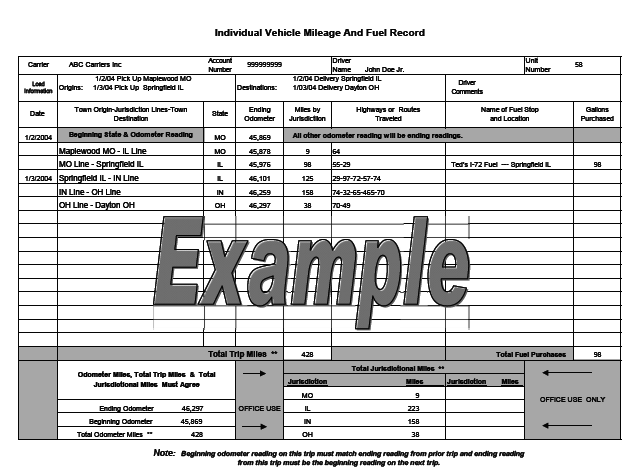
An example of an IVDR that must be completed in its entirety for each trip can be found in Figure 1 below. Each individual IVDR should be filled out for only one vehicle. The rules to follow when trying to determine how and when to log an odometer reading are the following: compliance with all State and Provincial laws surrounding fuel and distance record keeping requirements.